


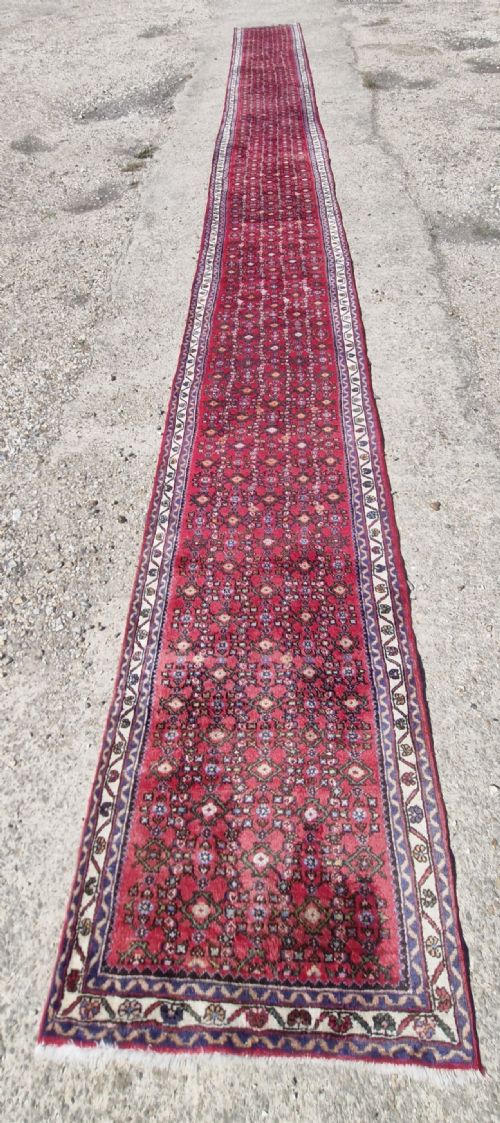
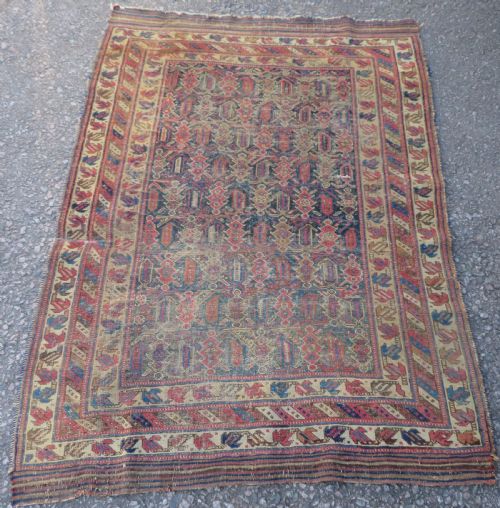
Vintage Persian Hallway Carpet
A vintage persian hallway carpet brings enduring tribal pattern and resilient natural wool into long domestic spaces.
Vintage Persian Hallway Carpet
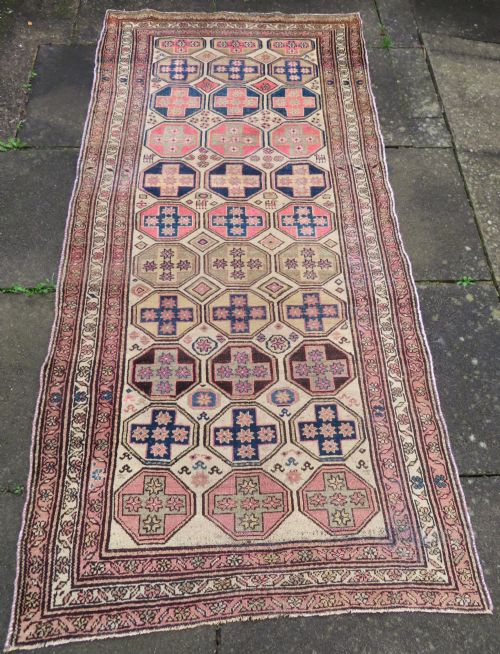
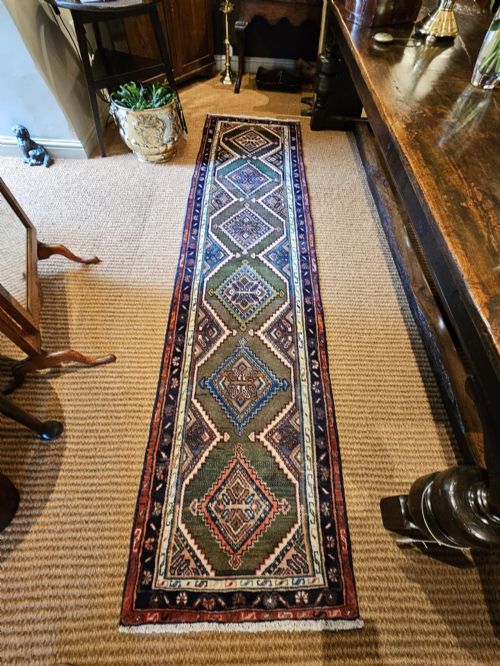
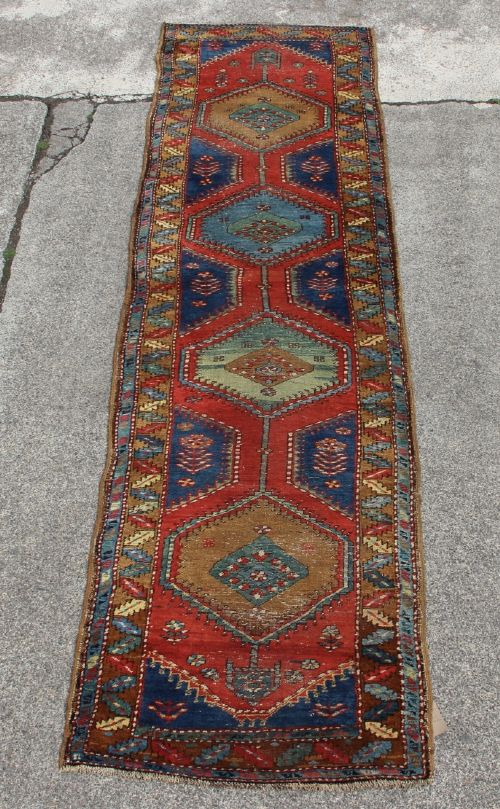
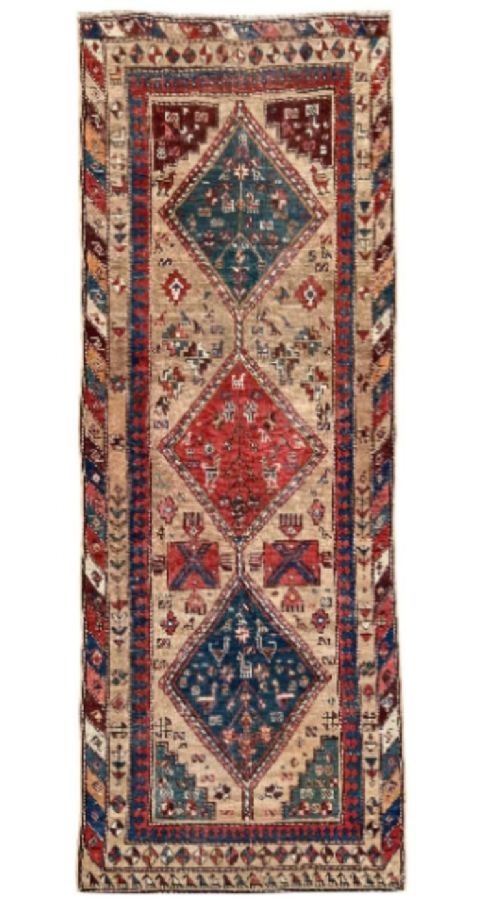
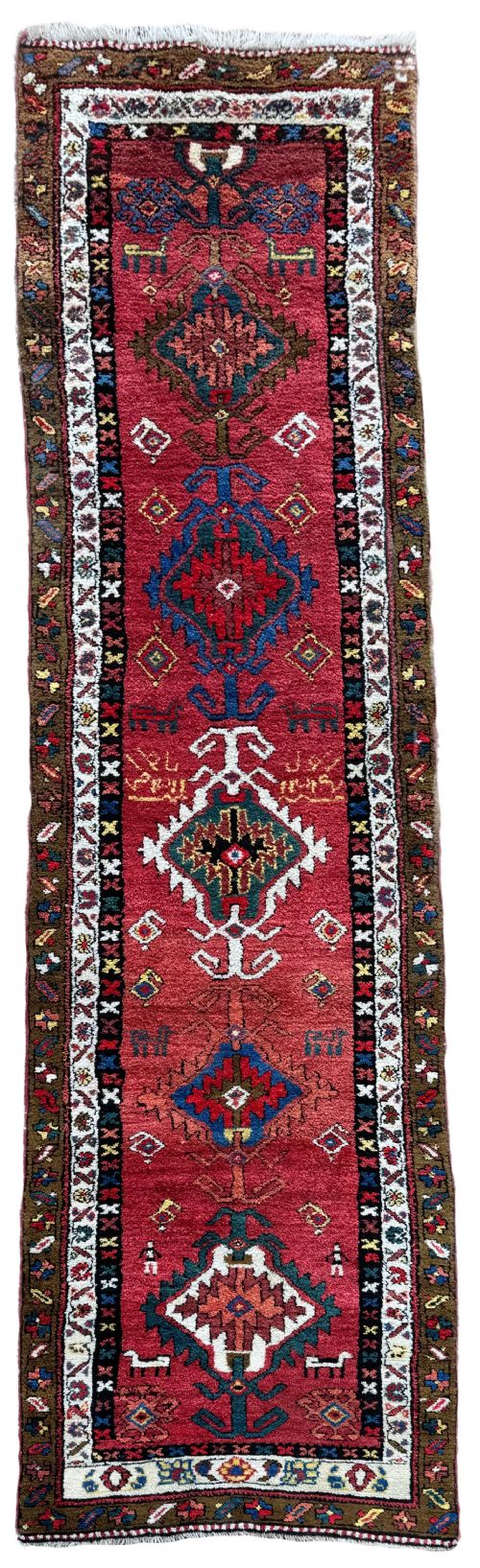
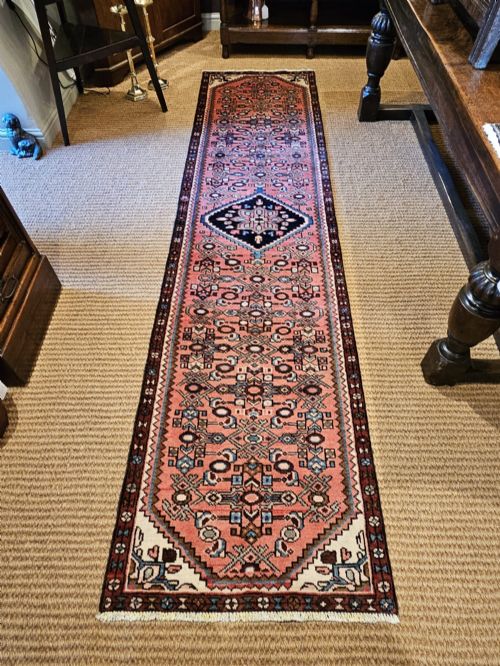
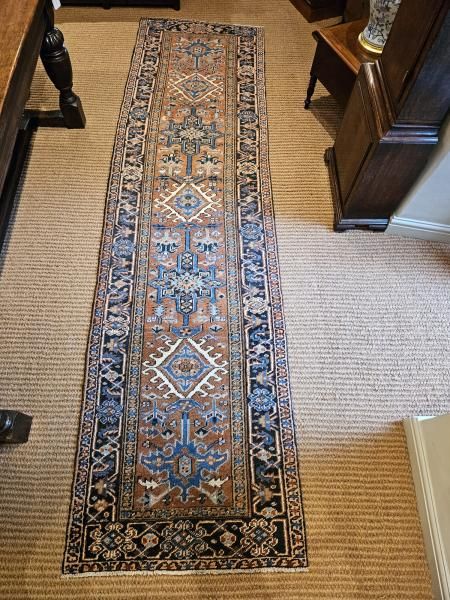
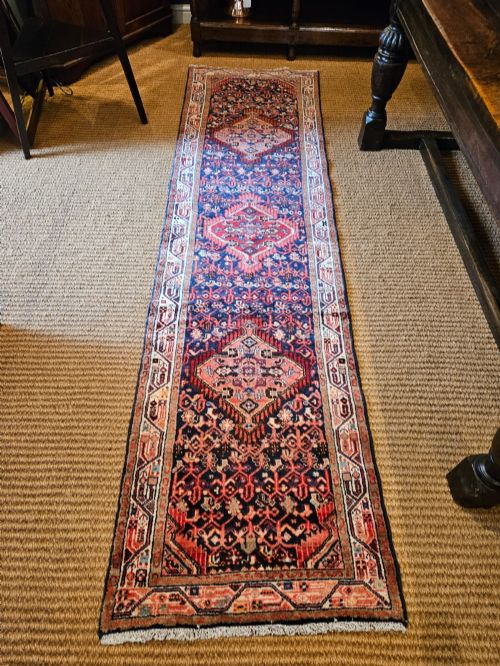
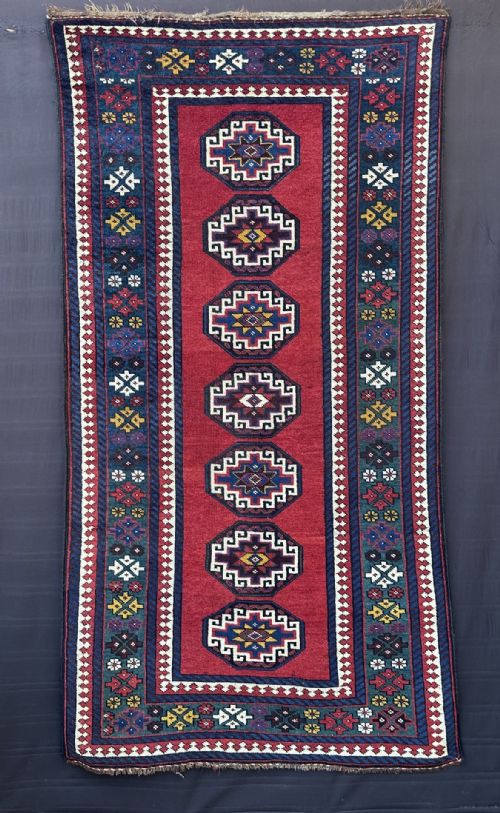
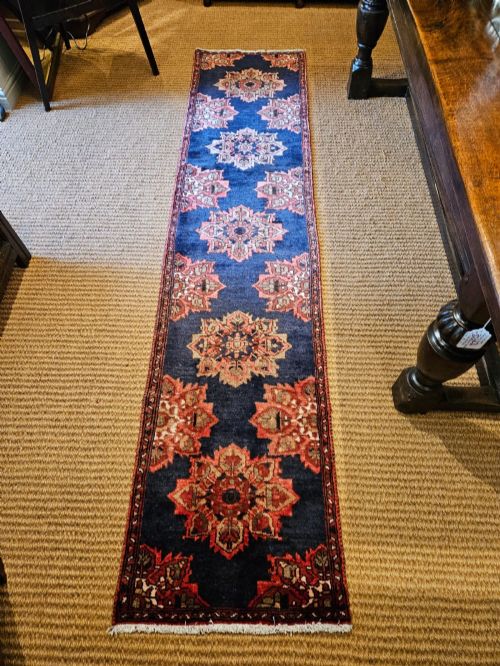
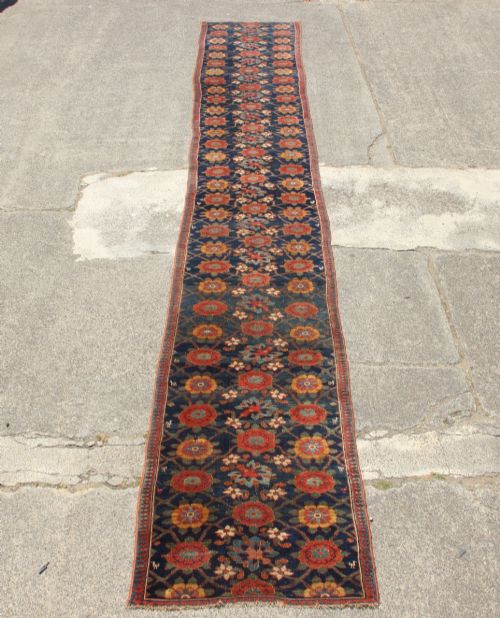
When you search for a vintage persian hallway carpet, you encounter elongated woven floor coverings designed for narrow spaces like corridors, landings and halls. The selection includes long runners and narrower formats originating from village and tribal workshops across the region.
The inventory spans pieces woven during the nineteenth and twentieth centuries, predominantly featuring wool piles on cotton or wool foundations. Common tribal and regional attributions in the titles include Kurdish, Heriz, Hamadan, Sarouk and Afshar.
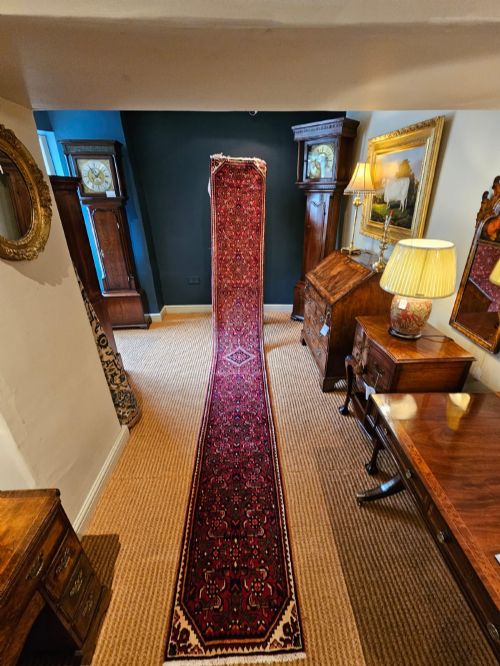
The formats vary from modest lengths of two metres up to expansive long runners exceeding five or even nine metres. These carpets serve the practical purpose of insulating stone or timber floors while introducing traditional geometric and floral motifs to transitional interiors.
How they were made
The construction relies heavily on hand-spun wool for the surface pile, providing a dense, tactile texture capable of withstanding heavy foot traffic. Cotton is frequently utilised for the warp and weft foundations, lending structural stability and straight edges to elongated formats.
Weavers knotted the wool by hand onto the underlying threads, employing traditional techniques passed down through generations in tribal communities and village workshops. Natural dye stuffs produced deep indigos, rich olives and warm terracottas that mellow gracefully over decades of use.
Vintage Persian Hallway Carpet Retail Price Guide 2026
Typical asking prices for vintage persian hallway carpet among the pieces listed under this phrase on Sellingantiques today, from the lower quarter to the upper quarter. They describe what is for sale here now, not the wider market.
One remarkably elongated specimen stretches over thirty-two feet down the hall, testing the limits of traditional domestic weaving.
What varies in quality
The fineness of the knot density and the precision of the geometric or floral layout separate standard village production from superior examples. A tighter weave allows intricate motifs like the Mina Khani pattern to retain sharp definition along long corridors.
The integrity of the foundation and the consistency of the hand-spun wool pile determine how well a runner holds its shape under continuous tension. Uniform width down an extended length and evenly saturated natural dyes indicate superior craftsmanship.
The Vintage Persian Hallway Carpet Glossary
- Runner
- A long, narrow carpet format specifically proportioned for corridors, hallways and staircases. These pieces measure significantly longer than they are wide.
- Warp
- The vertical foundation threads stretched lengthwise on the loom before knotting begins. Cotton or wool warps support the entire weight of the pile.
- Weft
- The horizontal threads passed alternately over and under the warp threads after each row of knots. This locks the pile firmly into place.
- Pile
- The soft, upright surface of the carpet formed by the cut ends of the hand-tied knots. In these pieces, it consists almost entirely of sheep wool.
- Foundation
- The underlying grid of warp and weft threads that carries the knotted pile. Its construction dictates the flexibility and drape of the textile.
Vintage Persian Hallway Carpet: Frequently Asked Questions
How do I choose the right length for a narrow hall?
Measure your corridor carefully while leaving a uniform border of exposed floorboards or stone around the edges. Long runners in the inventory stretch across various dimensions, so select a length that avoids obstructing doors or skirting heating vents.
Account for the visual impact of repeated medallions or continuous lattice patterns in a confined space. A narrow format draws the eye down the hallway, making the entire passage feel proportioned and intentional.
Can these wool carpets handle heavy corridor traffic?
Traditional village and tribal rugs were constructed specifically for heavy domestic use in active households. The dense pile of hand-spun wool provides natural resilience against compression and daily wear.
Pairing the carpet with a quality underlay prevents slipping and cushions the foundation fibres against hard subfloors. Regular sweeping or gentle vacuuming without a rotating brush roll preserves the wool pile for decades.
What is the difference between Heriz and Hamadan runners?
Heriz runners typically display bold, geometric medallion designs with strong architectural frameworks and robust wool piles. They originate from the East Azerbaijan region and are known for their structural durability.
Hamadan pieces encompass a broader group of village and town workshops producing diverse all-over floral or Herati patterns. These runners often feature deep indigo grounds and varied border arrangements characteristic of western Persian weaving.
How should I care for a nineteenth-century runner?
Keep the carpet out of direct, intense sunlight to prevent natural dyes from fading unevenly over time. Rotate the runner occasionally so that foot traffic distributes evenly across the entire wool surface.
Address spills immediately by blotting gently with a clean, dry cloth rather than rubbing the fibres. Professional cleaning by a specialist in antique textiles ensures the foundation remains sound.