
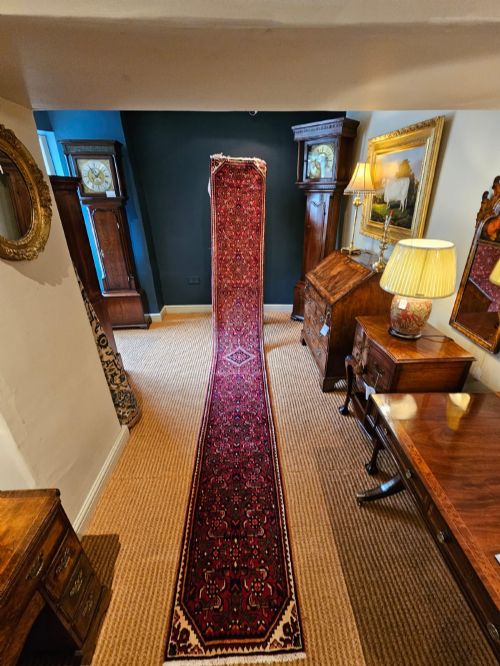
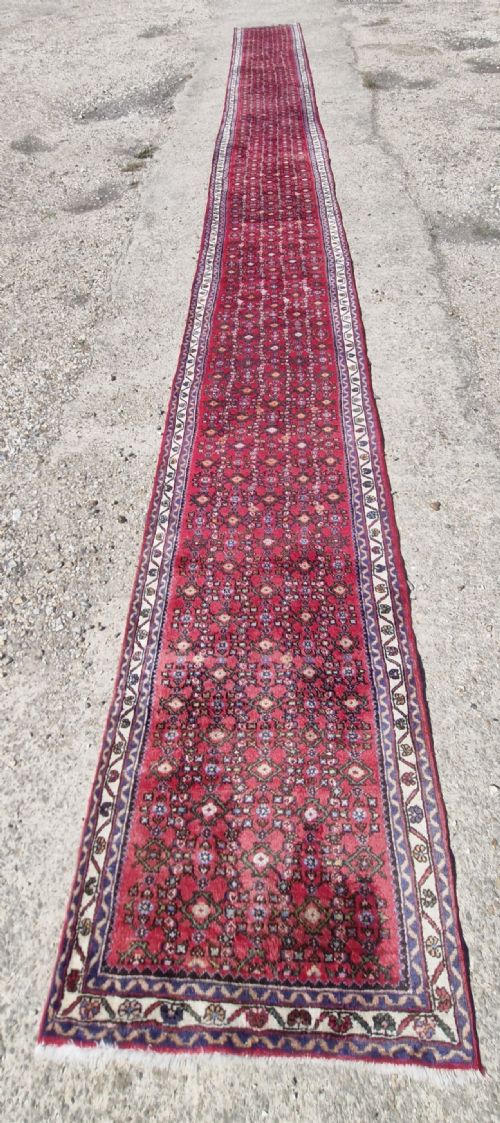
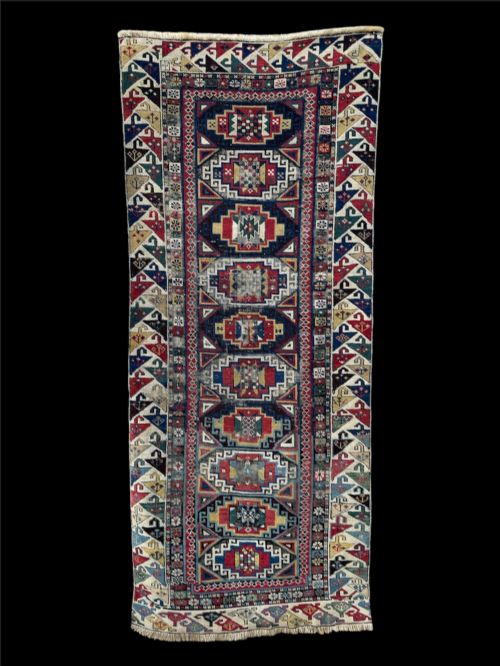
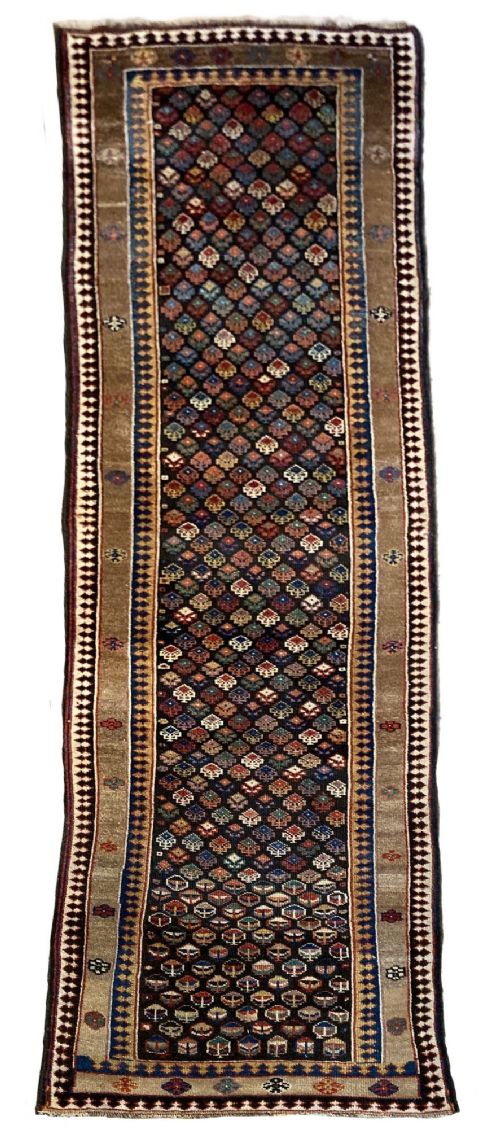
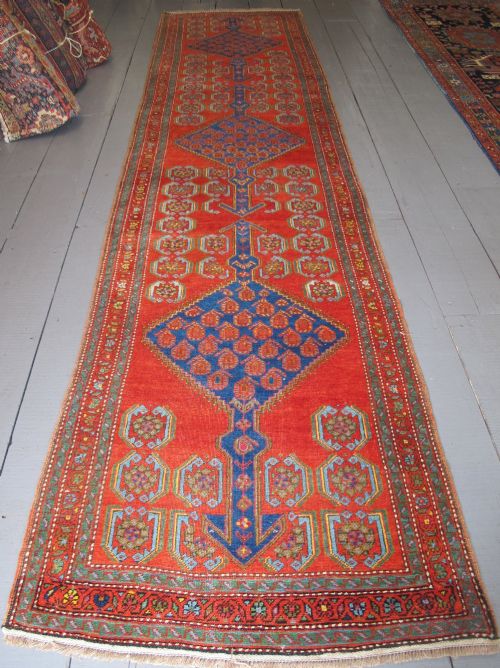


Antique Persian Hall Runner
An antique persian hall runner brings linear geometry and deep indigo or madder wool tones to a corridor.
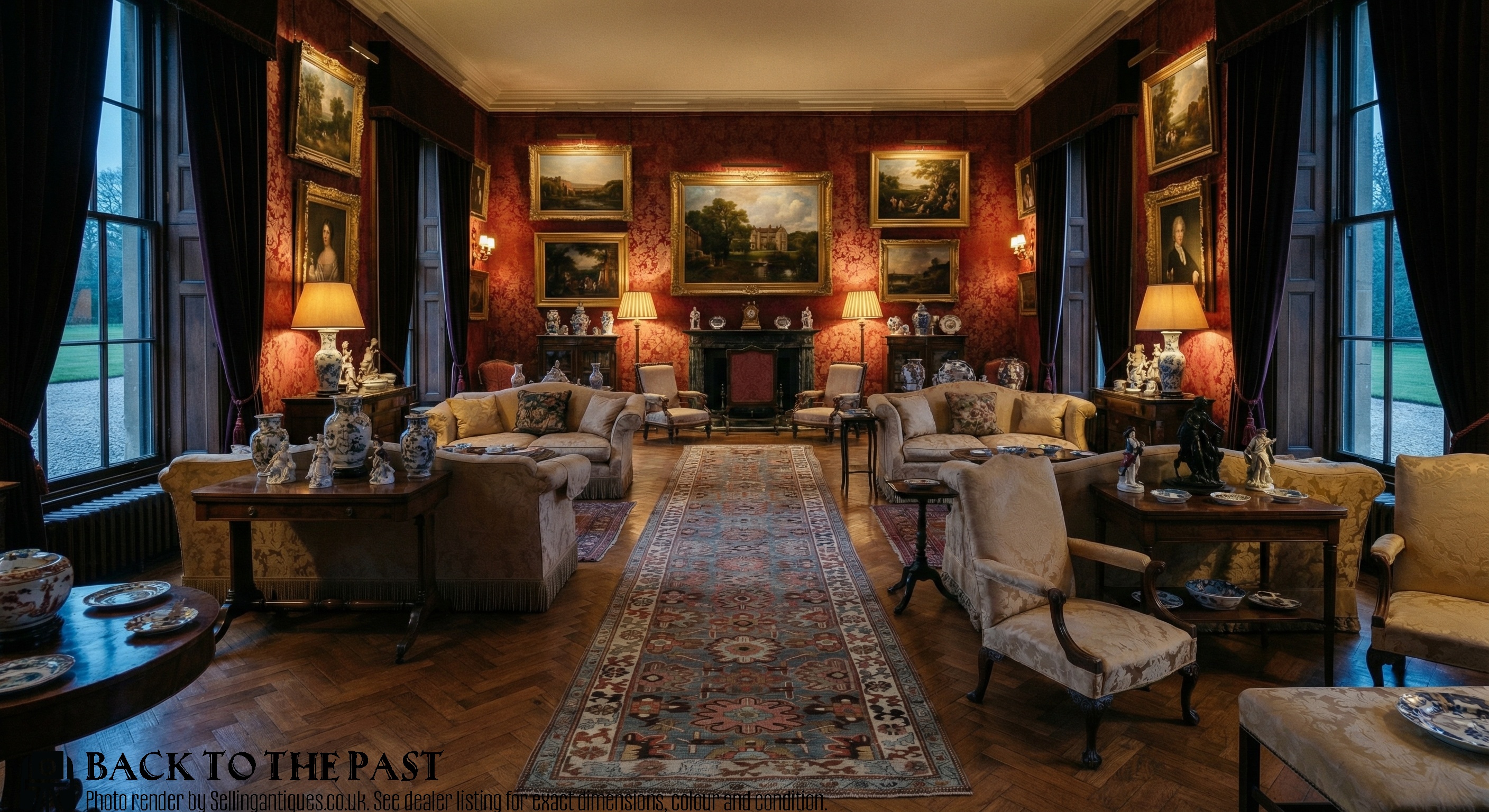
Antique Persian Hall Runner
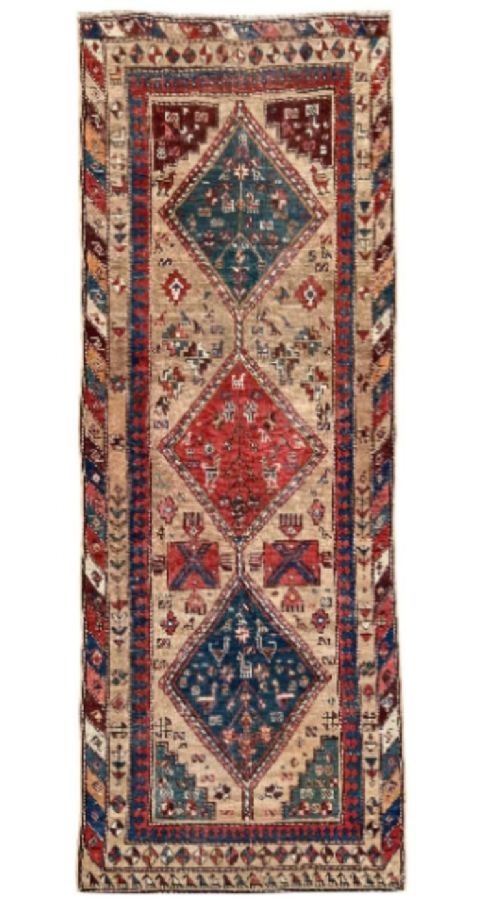
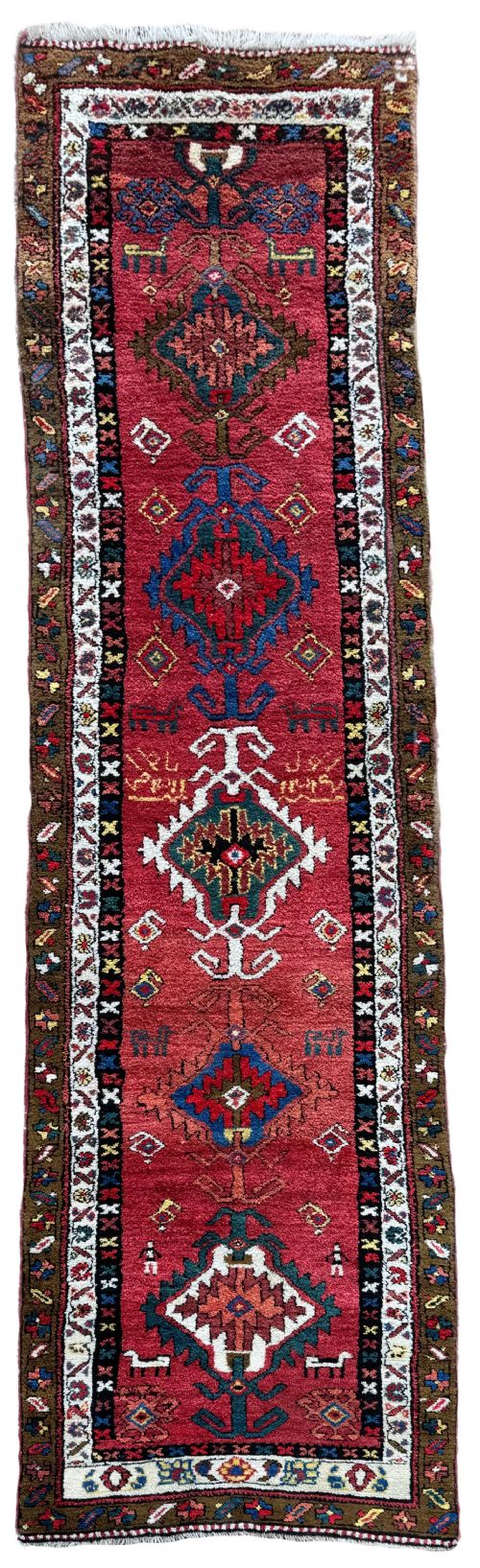
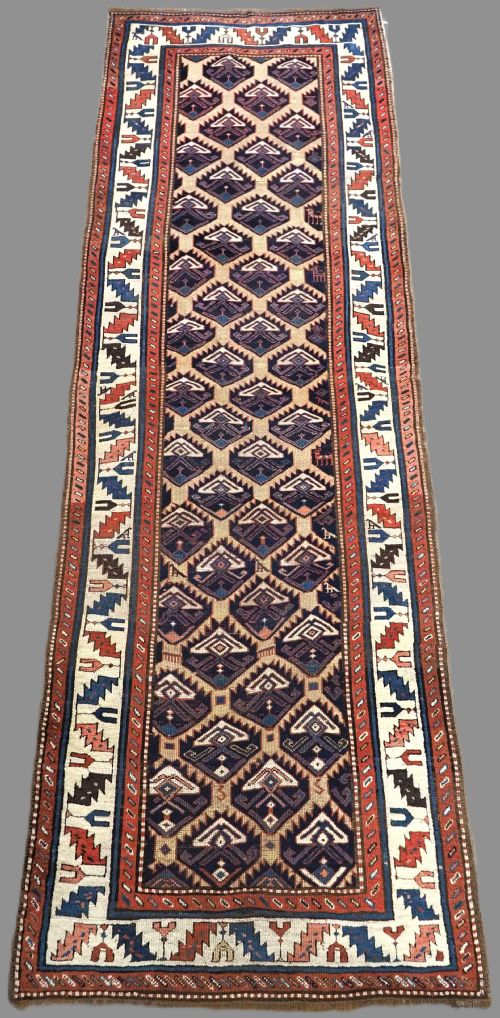
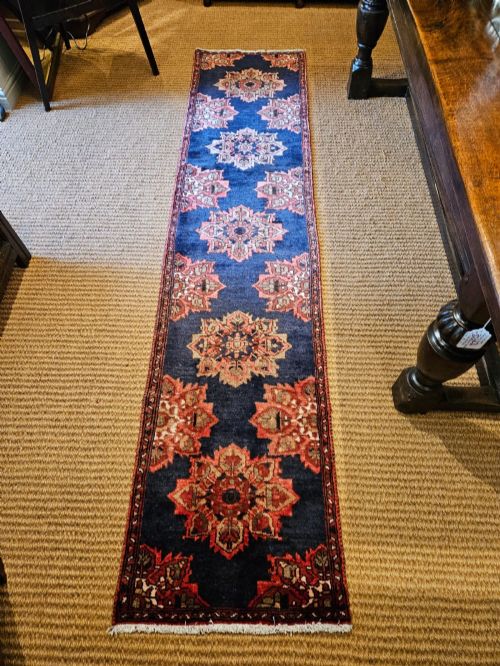
An antique persian hall runner is a narrow, elongated carpet designed specifically for corridors, staircases, and long landings. The pieces found here span the nineteenth and early twentieth centuries, encompassing tribal workshops and village weaves.
The format prioritises length over width, often featuring repeated central medallions or geometric lattice designs that guide the eye down a hallway. Buyers searching for an antique persian hall runner typically encounter Kurdish, Heriz, Hamadan, and Sarouk village productions.
These narrow formats range from modest lengths to exceptional proportions exceeding ten metres. They provide practical floor protection while introducing rich historic character to transitional spaces.
Materials and construction methods
The foundation of these textiles relies primarily on hand-spun wool and cotton, providing the tensile strength necessary for high-traffic corridors. Wool pile is knotted firmly onto cotton or wool warp and weft threads.
Colour derives from natural dyes, yielding saturated shades of navy blue, red, and ivory that mellow gracefully over decades of use. Camel hair appears in select weaves, lending a natural undyed warmth to the palette.
Assessing quality in floor runners
Knot density and structural integrity distinguish finer village and tribal pieces from standard utilitarian examples. A tightly packed foundation ensures the pile resists crushing under daily footfall.
The crispness of the drawing and the complexity of natural dye variations indicate the weaver's skill. Finer specimens display balanced borders and deliberate symmetry within tribal geometric motifs.
The Antique Persian Hall Runner Glossary
- Warp
- The vertical threads stretched lengthwise on the loom that form the structural skeleton of the runner.
- Weft
- The horizontal threads passed alternately over and under warp threads to lock the knots in place.
- Medallion
- A central ornamental motif dominating the field of the runner, common in Heriz and Sarouk designs.
- Natural dye
- Colourants derived from plants, insects, and minerals before the introduction of synthetic aniline alternatives.
- Abrash
- Subtle tonal variations in the wool colour caused by changes in dye batches during production.
Antique Persian Hall Runner: Frequently Asked Questions
Where should I place a runner?
These narrow carpets suit corridors, hallways, and entrance passages where linear flooring requires warmth and acoustic softening. They also anchor galley kitchens and long narrow bedrooms.
Ensure adequate clearance for doors to swing freely over the pile height. A quality underlay prevents slipping on hard wooden or tiled surfaces.
How do I clean an old wool rug?
Regular gentle vacuuming without a rotating brush roll removes embedded grit and dust from the wool pile. Professional specialist cleaning remains essential for deep restoration.
Avoid harsh chemical detergents or excessive moisture, which can destabilise natural dyes and cotton foundations.
Are these rugs durable enough for daily use?
Traditional village and tribal weaves utilise sturdy wool and tight knotting specifically engineered for heavy foot traffic. Hallways experience constant movement, making these resilient textiles well-suited for active homes.
Rotating the piece periodically ensures even wear across high-traffic transit areas.
How do I identify a Kurdish tribal runner?
Kurdish pieces often feature geometric lattices, bold indigo fields, and idiosyncratic tribal motifs woven by village women. The handle tends to be heavy and substantial due to dense wool usage.
Look for distinctive border arrangements and stylised floral or Mina Khana patterns unique to northwestern weaving traditions.