

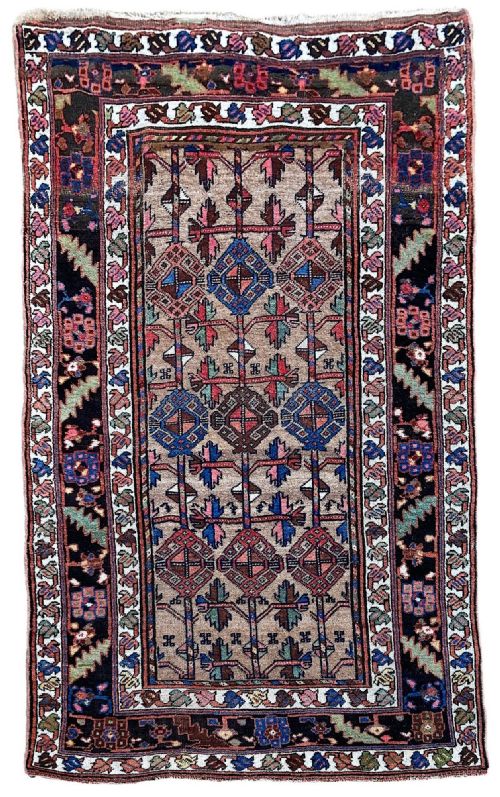
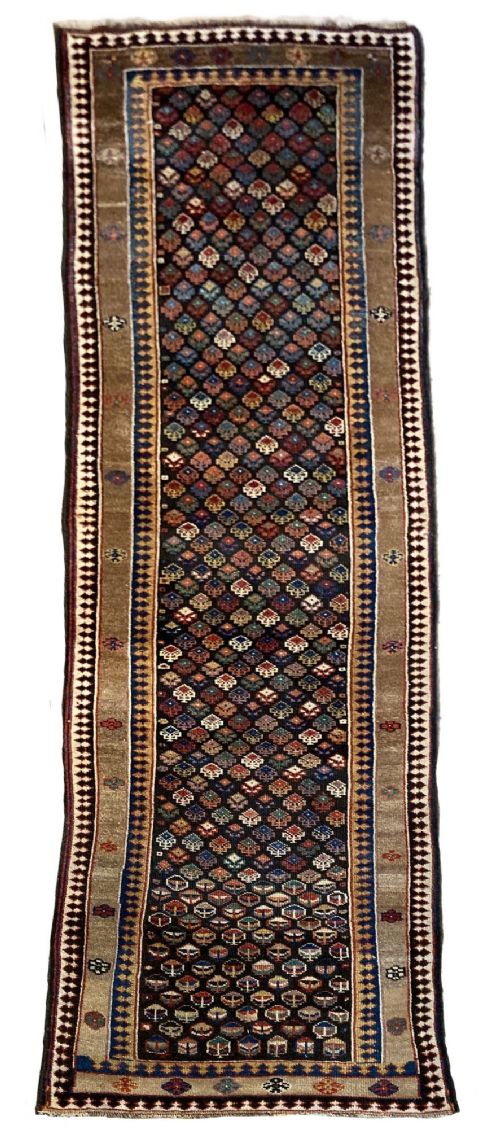
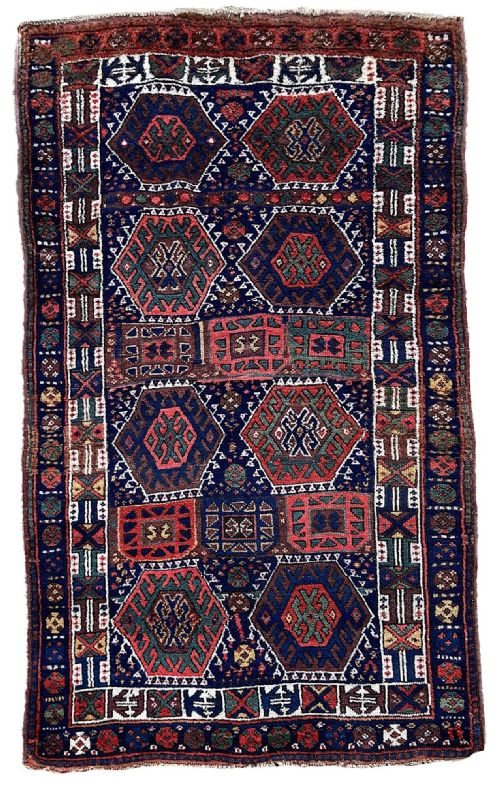


Antique Kurdish Wool Runner
An antique kurdish wool runner brings a heavy weave and deep tribal pattern to a long hallway or narrow floor space.
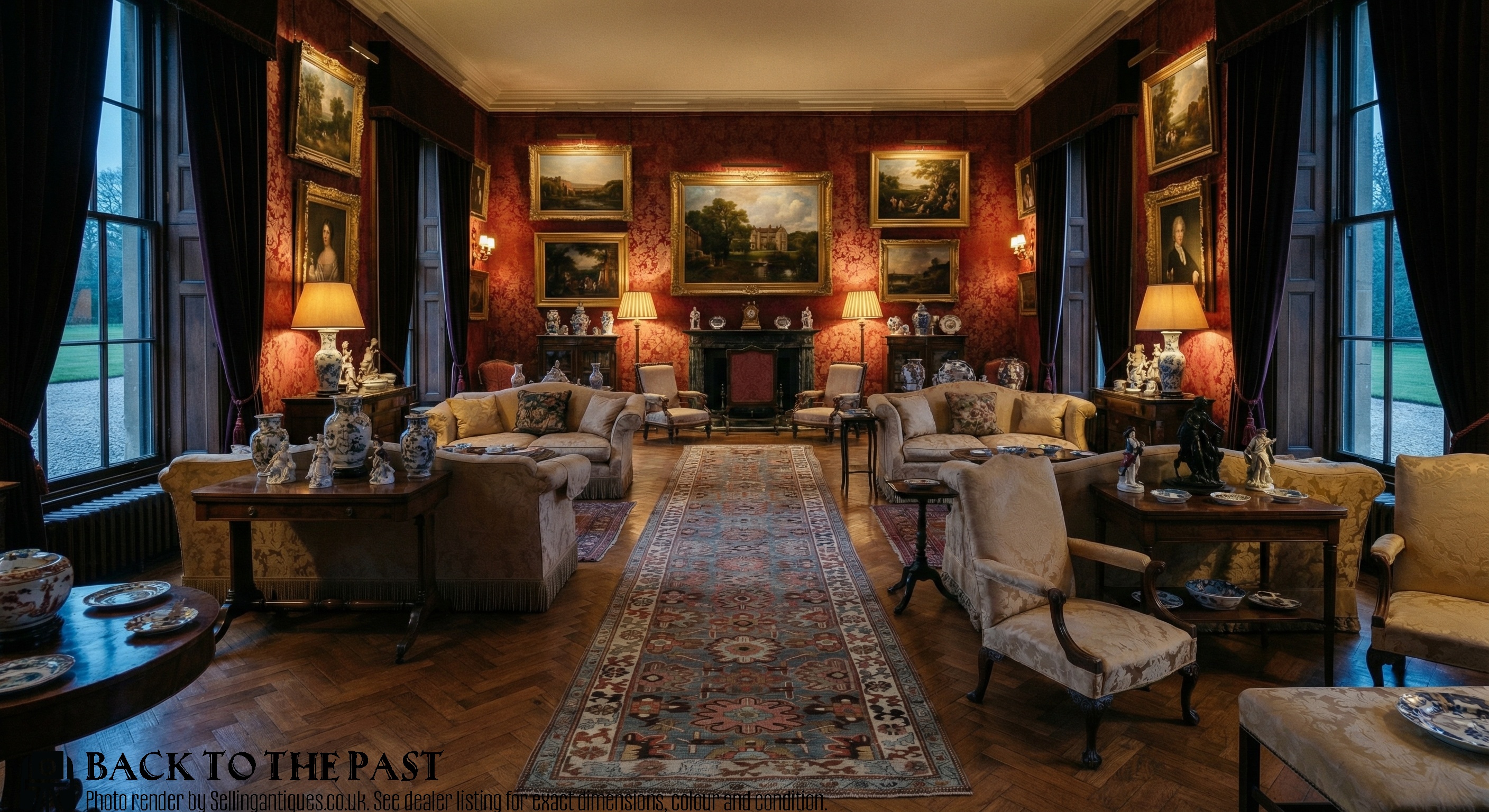
Antique Kurdish Wool Runner
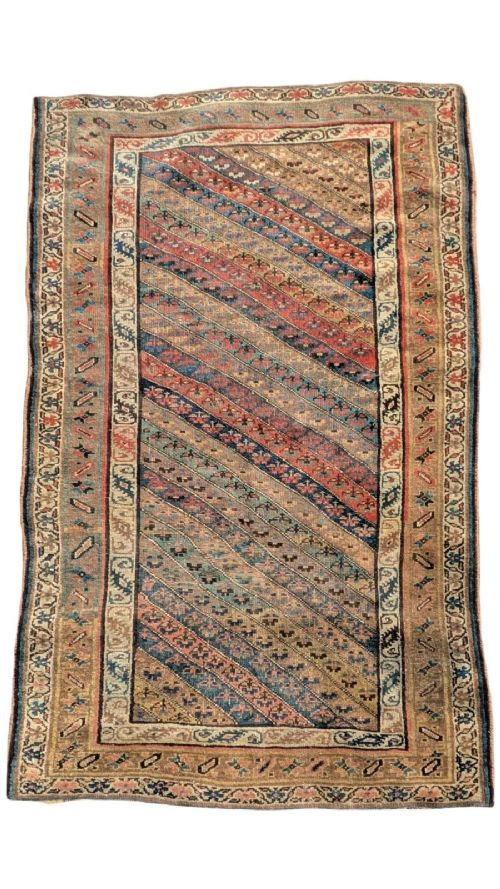
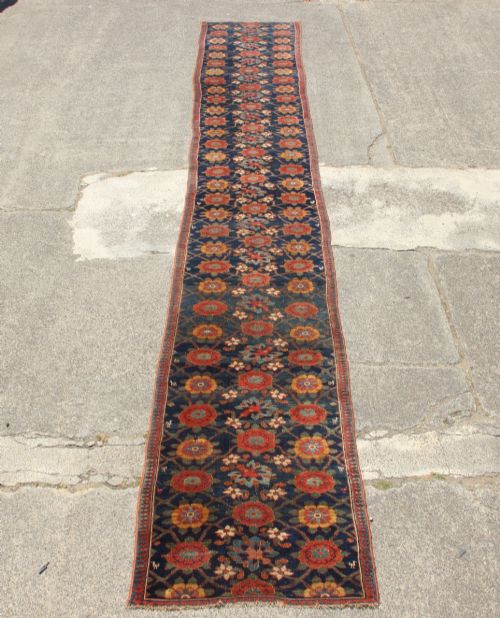
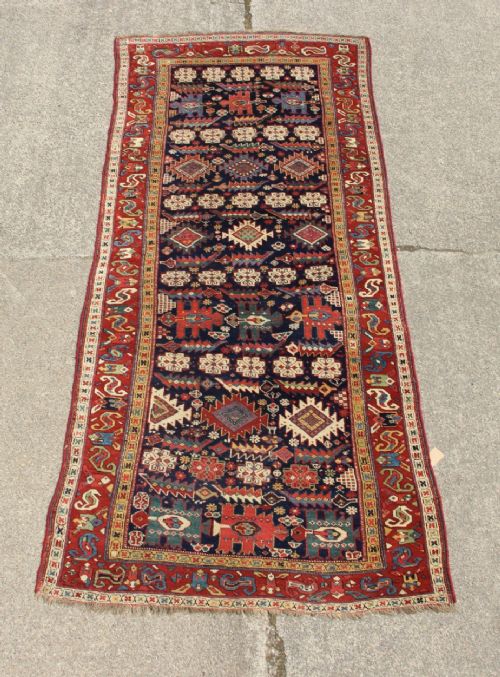
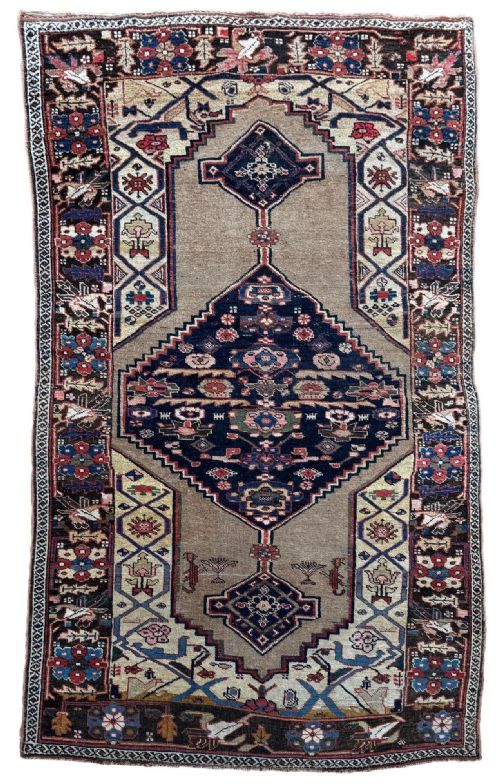
An antique kurdish wool runner is a narrow, elongated floor covering woven by tribal weavers in regions such as Bidjar, Seneh, and Hamadan. These pieces frequently span lengths well over three metres while maintaining the slender proportions required for narrow spaces.
The format is designed specifically for corridors, galleries, and long halls where repetitive geometric motifs or all-over patterns can unfold fully. Examples range from smaller nineteenth-century fragments to expansive tribal kelley formats.
Tribal weaving traditions dominate this group, often incorporating distinct regional layouts like the Mina Khani flower design or Memlinc guls. The aesthetic leans toward robust village structures rather than courtly precision.
How They Were Made
The construction relies heavily on durable hand-spun wool for the pile, which is knotted tightly onto a resilient cotton or wool foundation. This dense packing creates a heavy, enduring fabric capable of withstanding generations of foot traffic.
Weavers utilised natural dyes to achieve rich, saturated hues on yellow grounds, deep indigos, and warm madders. The inclusion of hand-spun materials gives the surface texture an uneven, organic character that absorbs light distinctively.
Materials recorded across the inventory focus entirely on wool, cotton, hand-spun wool, and natural dyes.
What Varies in Quality
The fineness of the knotting and the tightness of the weave set the baseline for structural durability in these long formats. Tighter packing along the foundation prevents warping and keeps the heavy sides straight over long distances.
The integrity and depth of the natural dyes distinguish superior examples, particularly where colour variations show rich tonality across the field. Better pieces maintain precise tribal iconography even within larger, elongated dimensions.
The Antique Kurdish Wool Runner Glossary
- Runner
- A long, narrow carpet format designed primarily for corridors, hallways, and stairs. These pieces stretch significantly in length while keeping a constrained width.
- Kelleh
- A large format rug or short carpet that is substantially longer than it is wide, sitting between a standard rug and a full room-size carpet.
- Gul
- A medallion or repeating octagonal motif often found in tribal and nomadic weaving traditions. It serves as the primary building block for many regional designs.
- Mina Khani
- A repeating pattern featuring interconnected floral heads and rosettes linked by delicate trellis lines. This layout appears frequently in Persian village and town weaving.
- Natural Dyes
- Colourants extracted from plants, insects, and minerals before the advent of synthetic alternatives. They produce complex, ageing shades that mellow gracefully over decades.
Antique Kurdish Wool Runner: Frequently Asked Questions
Where should I place a long runner?
These narrow formats work best in hallways, long corridors, and narrow passageways where their linear designs can stretch out uninterrupted.
They also suit galley kitchens and bedside spaces, providing warmth and texture beneath heavy foot traffic areas.
How do I clean an old wool carpet?
Regular gentle vacuuming without a rotating brush helps remove loose grit from the heavy wool pile without pulling the knots.
Professional specialist cleaning is recommended for deep maintenance to protect the natural dyes and hand-spun foundation.
What is a Kelleh format?
A Kelleh is a substantial rectangular carpet that is longer than a standard area rug but not as expansive as a full room-sized carpet.
This specific proportion accommodates wide hallways and large open spaces requiring a commanding tribal presence.
How can I tell village work apart?
Village and tribal pieces display geometric freedom, robust wool textures, and spontaneous design variations executed by independent weavers.
Town productions like Bidjar or Seneh often feature tighter, more formal structures with denser foundation packing and refined floral arrangements.