


Extra Long Hallway Carpet
An extra long hallway carpet bridges generous spaces with thick wool underfoot, bringing pattern and length to narrow corridors.
Extra Long Hallway Carpet
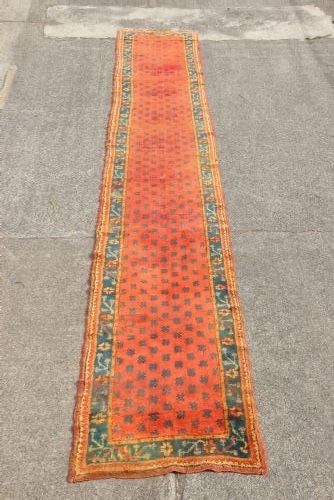
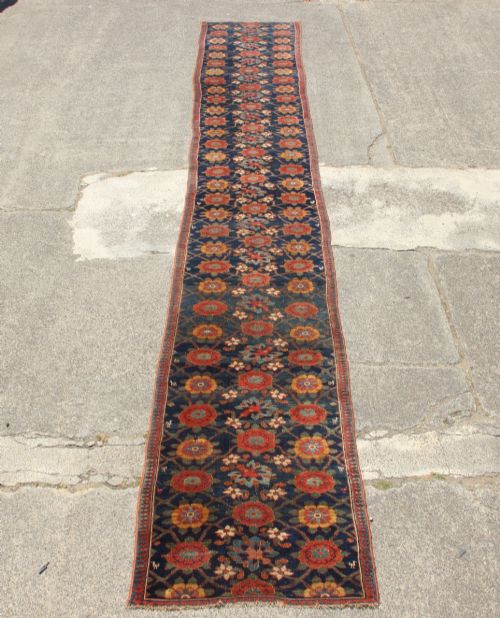
An extra long hallway carpet spans narrow domestic spans, typically taking the form of runner rugs and carpet runners that measure several metres in length. These pieces originate from traditional Persian, Kurdish tribal, Moroccan Berber, and Ottoman workshops, reflecting periods from the mid-nineteenth century through to the mid-twentieth century.
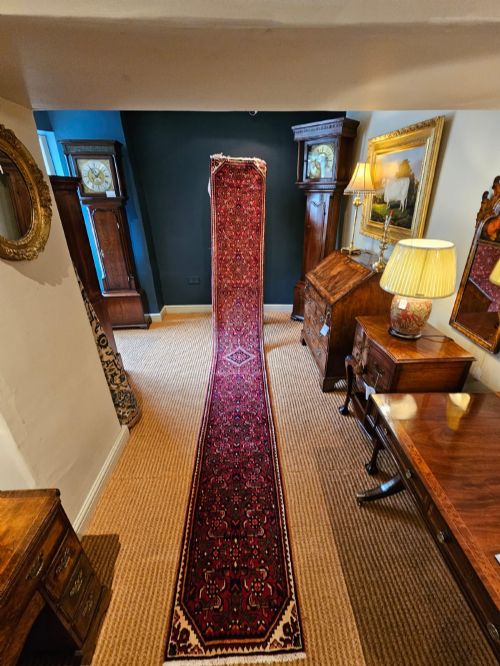
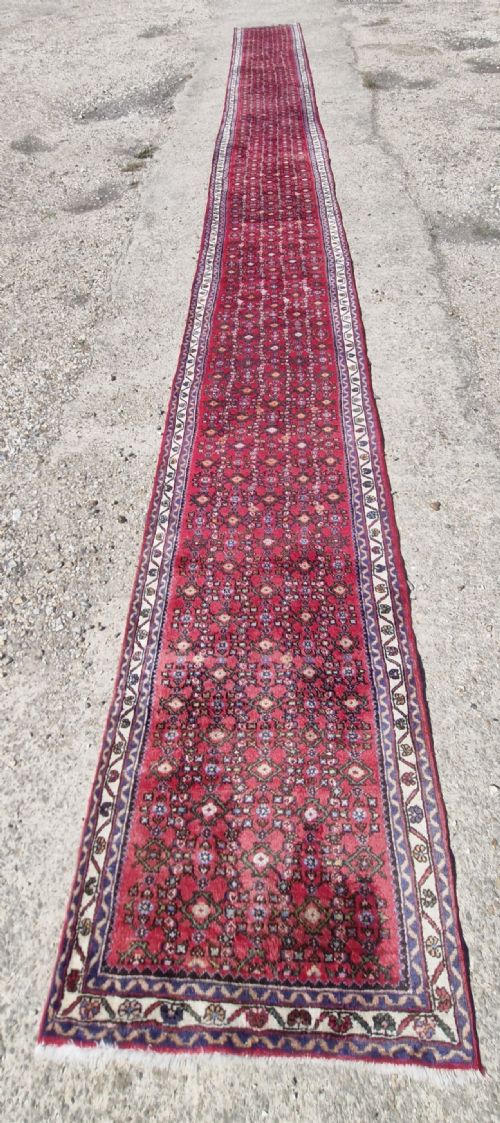
Buyers seeking an extra long hallway carpet will find formats stretching past four metres, alongside exceptional lengths reaching up to thirty-two feet. The dominant proportion remains exceptionally narrow, designed specifically to line corridors, landings, and large staircases without overwhelming the surrounding architecture.
Materials and construction
These floor coverings utilise natural wool and cotton fibres spun and woven by hand, creating resilient surfaces capable of withstanding heavy foot traffic in busy thoroughfares. The structural foundation relies upon tightly packed woolen piles knotted or flatwoven over sturdy cotton warps and wefts.
Weavers employed traditional dyeing methods using natural colourants, yielding deep shades that settle into the wool over decades of use. The resulting textile balances flexibility with structural rigidity, allowing long formats to lie flat along extended hallway floors.
Extra Long Hallway Carpet Retail Price Guide 2026
Typical asking prices for extra long hallway carpet among the pieces listed under this phrase on Sellingantiques today, from the lower quarter to the upper quarter. They describe what is for sale here now, not the wider market.
Some hallways clearly demanded epic proportions, recorded in lengths reaching thirty-two feet of continuous woven wool.
Markers of quality
Quality rests in the precision of the weave and the integrity of the natural materials, where tightly knotted wool provides superior density underfoot. Greater knot density allows intricate tribal and traditional Persian motifs to remain crisp and legible across vast lengths.
The harmony of natural dyes and the preservation of the original borders and fringe ends distinguish finer examples from standard production. Uniformity in width across extreme lengths also marks superior craftsmanship in pieces spanning several metres.
The Extra Long Hallway Carpet Glossary
- Runner
- A long, narrow carpet designed specifically for corridors, hallways, and staircases. These pieces provide floor covering for restricted widths while spanning significant lengths.
- Kilim
- A flatwoven carpet produced without a pile by tightly interweaving warp and weft strands. This technique creates a lightweight, reversible textile with sharp geometric patterns.
- Pile
- The upright yarn loops or cut ends that form the soft surface of a carpet. Density of pile influences both the weight and the durability of the textile.
- Warp
- The vertical foundation threads stretched tightly on a loom before weaving begins. Cotton is frequently utilised for this structural backbone.
- Weft
- The horizontal threads passed alternately over and under the warp yarns to bind the structure. This element secures the knots in pile-woven carpets.
Extra Long Hallway Carpet: Frequently Asked Questions
How do I measure for a long hallway carpet?
Measure the clear floor space of your corridor, leaving a consistent border of exposed timber or stone around the edges. Account for door swings and radiator clearances to ensure the runner lies flat without obstruction.
Verify the maximum length possible without blocking doorways at either end of the hall. Long formats require careful verification of straight lines in older properties where walls may not run parallel.
Are these carpets suitable for heavy foot traffic?
Natural wool construction provides exceptional resilience against daily wear in busy hallways and landings. The dense pile and robust cotton foundations absorb friction while maintaining structural integrity over decades.
Utilising a quality underlay beneath the runner prevents slipping and cushions the fibres against hard subfloors. Regular rotation distributes foot traffic evenly across the length of the carpet.
How do I identify a tribal runner style?
Tribal designs feature geometric motifs, repeating medallions, and abstract symbols passed down through regional weaving traditions. These patterns often display spontaneous colour shifts and charming irregularities in symmetry.
Nomadic and village workshops created these pieces without rigid architectural blueprints, resulting in organic compositions distinct from court manufacture. The use of camel hair, rich madder reds, and indigo blues frequently accompanies tribal pieces.
How should I clean an antique runner?
Gentle surface brushing and careful vacuuming without a rotating power head removes embedded grit from the wool pile. Professional specialist cleaning remains essential for addressing deep soil and preserving natural dye stability.
Avoid exposing antique textiles to excessive moisture or harsh chemical detergents that weaken historic fibres. Prompt attention to accidental spills prevents staining without damaging the fragile cotton foundations.