
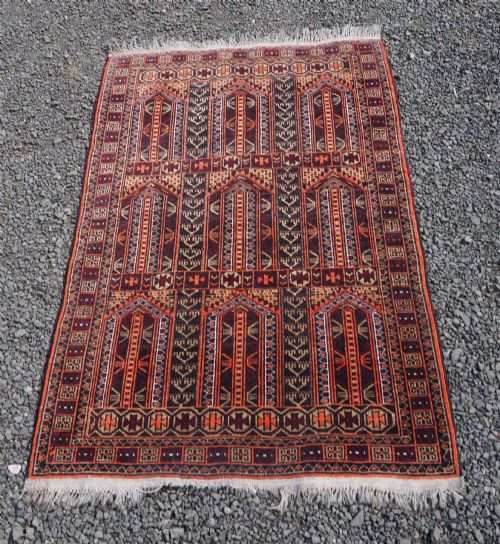
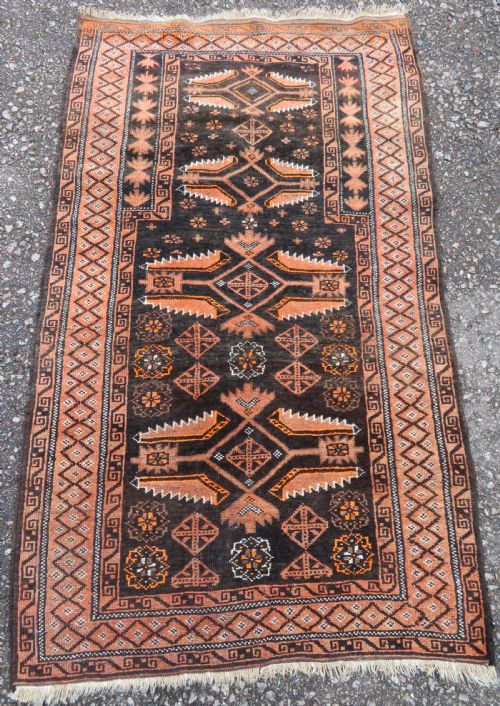


Terracotta Baluch Rug
When buying a terracotta baluch rug, you choose a piece of tribal textile history woven by nomadic makers across western Afghanistan, Khorasan, and surrounding regions.
Terracotta Baluch Rug
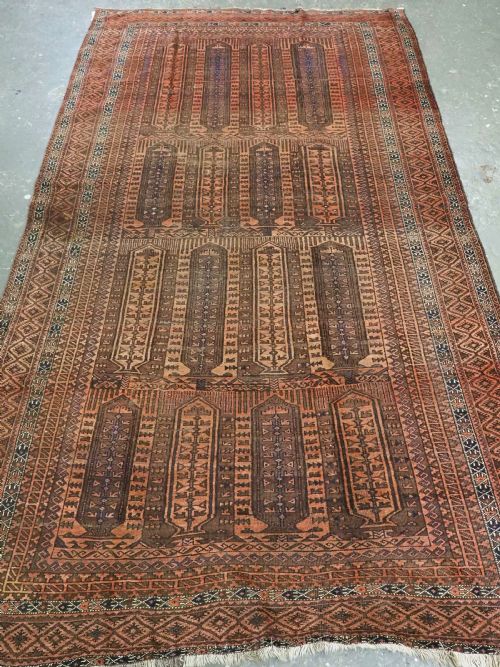
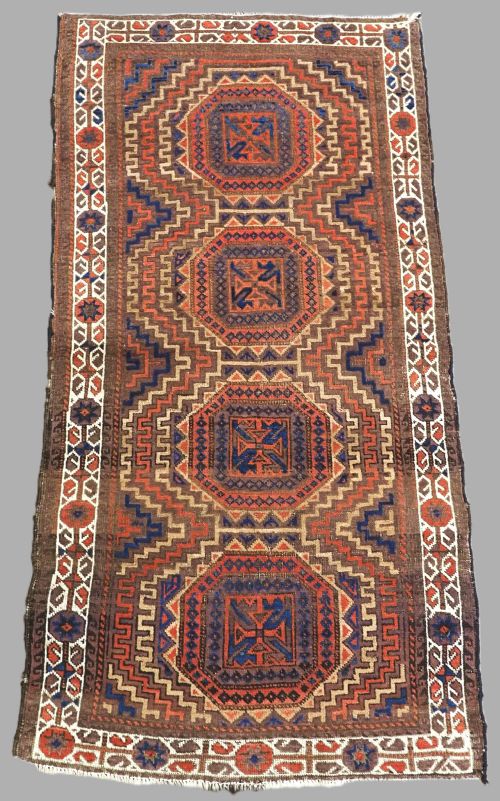
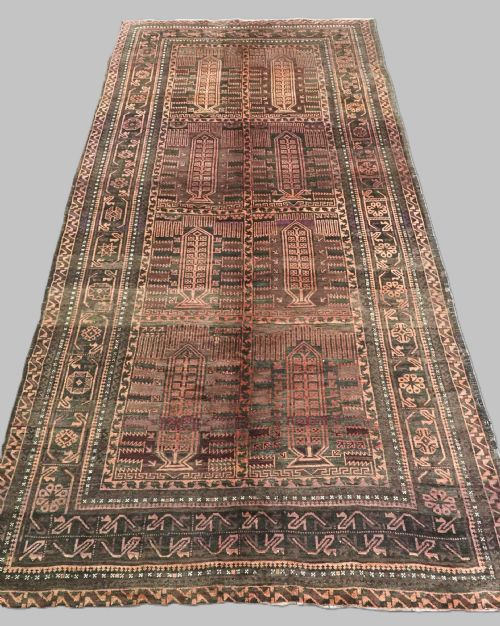
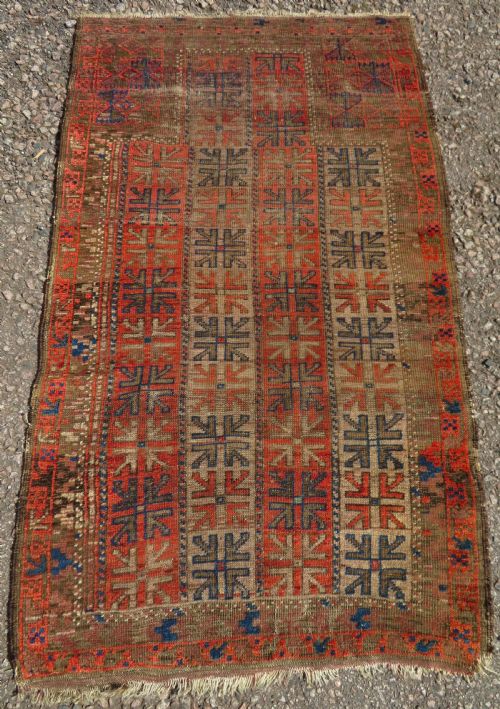
A terracotta baluch rug is a nomadic or tribal textile typically produced by Baluch weavers and related groups such as the Timuri, Mushwani, and Taimani. These floor coverings and utility pieces span from the late nineteenth century into the early twentieth century, encompassing main carpets, area rugs, prayer rugs with mihrab designs, and utilitarian bags.
The visual vocabulary relies on traditional motifs including guls, pencil box patterns, kalam donneh designs, and lattice arrangements. Pieces frequently emerge from specific sub-groups and regions like the Khorasan province, Ferdows, and Chakhansur, carrying distinct regional identities within the broader tribal style.
Materials and construction
Weavers utilised hand-spun wool for the pile, often pairing it with structural foundations of cotton, goat hair, or camel hair. These natural fibres were dyed using natural colour sources to achieve the characteristic terracotta, brown, and dark grounds typical of the tradition.
Construction involves traditional hand-weaving techniques, resulting in dense, durable structures. Specialised formats such as storage bags and kilims incorporate banded weft work and original backs.
Listings feature pieces attributed to specific tribal groups including the Timuri, Mahdad Khani, Bahluli, and Salar Khani.
Assessing quality in weaving
Quality separates through the fineness of the knotting and the handling of the wool. Finer examples display precise lattice work and sharp motif definition, whereas simpler pieces show broader tribal execution.
The integrity of the pile, the retention of original side cords and ends, and the depth of the natural dyes distinguish superior survivals. Condition ranges from robust, well-preserved examples to distressed pieces showing heavy tribal use.
The Terracotta Baluch Rug Glossary
- Gul
- A repeating medallion or floral motif central to many tribal rug designs. These geometric symbols often identify the specific group or region of the weaver.
- Mihrab
- A niche design symbolising the direction of prayer, found specifically on prayer rugs. It provides a focal point for the arrangement of the field.
- Pencil box
- A descriptive term for a narrow, stacked compartment design seen in main carpets. It organises the field into orderly rows of geometric patterns.
- Kilim
- A flat-woven textile produced without a pile. These pieces utilise weft-faced techniques to create bands of geometric decoration.
- Pushti
- A small mat or rug format intended for kneeling or sitting. These compact textiles share the iconography of larger carpets.
Terracotta Baluch Rug: Frequently Asked Questions
What is a baluch rug?
A baluch rug is a hand-woven tribal textile made by nomadic and village weavers originating from regions spanning Afghanistan, eastern Iran, and Baluchistan. They are characterised by rich, dark wools and distinctive geometric motifs.
These pieces were traditionally utilised for domestic flooring, tent furnishings, and storage by nomadic households.
How old are these rugs?
The pieces available typically date from the late nineteenth century through to the early twentieth century, spanning periods from the 1880s to the 1920s.
Age is determined by stylistic indicators, structural materials, and the types of natural dyes employed during production.
How do I identify a prayer rug?
Prayer rugs feature a distinctive mihrab or niche design at one end, which represents the prayer arch. Variations include single niches and multiple mihrab layouts.
These formats were specifically woven for personal devotion and daily prayer rituals within the nomadic community.
What are storage bag faces?
Storage bag faces are the decorative front panels salvaged from larger utilitarian bags used by nomads for transporting belongings and provisions. They exhibit the same knotting and design standards as full-sized rugs.
Collectors often mount or display these compact fragments as independent textile art.