




Dark Red Afghan Carpet
A dark red afghan carpet brings rich, tribal character into a room through deeply saturated dyes and geometric motifs.
Dark Red Afghan Carpet
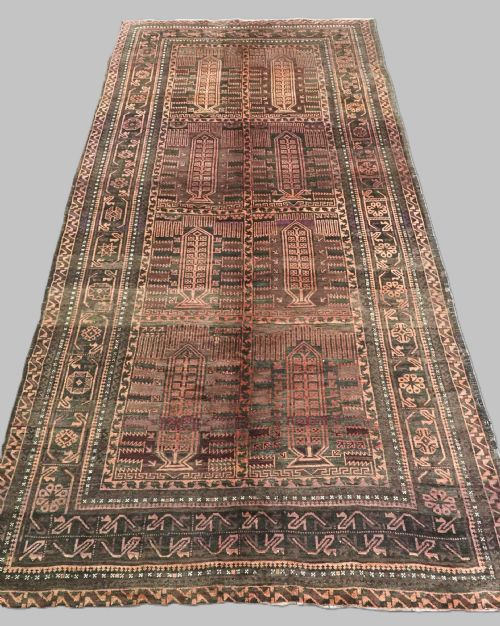
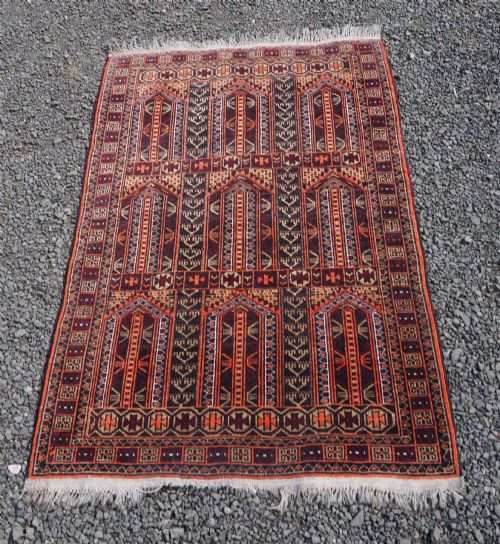
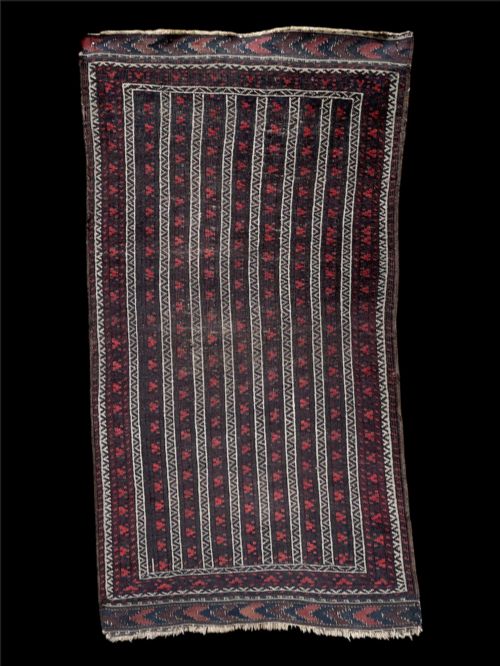
A dark red afghan carpet encompasses tribal and village woven textiles originating from Afghanistan and its western border regions, dating from the late nineteenth century into the early twentieth century. Buyers encounter smaller formats such as prayer rugs and area rugs alongside larger main carpets and runners.
The aesthetic is defined by tribal motifs including mihrabs, octagons, and repeating lattice patterns rooted in Afghan and Baluch weaving traditions. These pieces reflect the heritage of nomadic and village weavers who utilised distinctive local designs.
Examples often display deep madder red grounds paired with dark blue, brown, or ivory secondary tones. The selection spans standard village production through to specialised prayer formats with single, double, or triple mihrabs.
Assessing Quality and Execution
Quality rests upon the handled handle of the wool, the precision of the tribal drawing, and the clarity of the natural dyes. Tighter knotting and supple wool foundations distinguish finer weaving from more utilitarian village output.
Design crispness and the complexity of repeat motifs also separate standard examples from superior carpets. Well-drawn details in formats like the pencil box or Dokhtar-e-Qazi patterns indicate skilled regional weaving.
Nomadic weavers occasionally inserted deliberate minor errors into symmetrical repeating patterns to ward off the evil eye.
The Dark Red Afghan Carpet Glossary
- Mihrab
- A niche design symbolising the direction of prayer, frequently found repeated in prayer rugs. Single, double, and triple variations dictate the architectural layout of the field.
- Madder
- A natural dye sourced from plant roots, responsible for the durable red tones seen across these carpets. It yields varied hues depending on the mordants applied.
- Warp
- The vertical foundation threads stretched tightly on the loom before knotting begins. Cotton and wool are typical warp materials for these tribal rugs.
- Weft
- The horizontal threads passed through the warps after each row of knots to lock the structure in place. Goat hair or wool is common in nomadic weaving.
Dark Red Afghan Carpet: Frequently Asked Questions
How do I care for an old rug?
Vacuum gently without a rotating brush to protect the hand-spun wool pile from unnecessary friction and wear.
Keep the textile out of direct sunlight to preserve the natural red and blue dye saturation over decades of use.
Where were these woven?
Production centred on villages and nomadic camps across Afghanistan and western border territories inhabited by Baluch, Timuri, Mushwani, and Ersari groups.
Local tribes passed specific geometric motifs and dyeing techniques down through generations of weavers.
How do I date a carpet?
Dating relies on assessing the dye palette, wool quality, structural materials, and stylistic consistency with known nineteenth and early twentieth-century examples.
Natural dyes and hand-spun foundations typically indicate manufacture from the Victorian era up to the 1930s.