

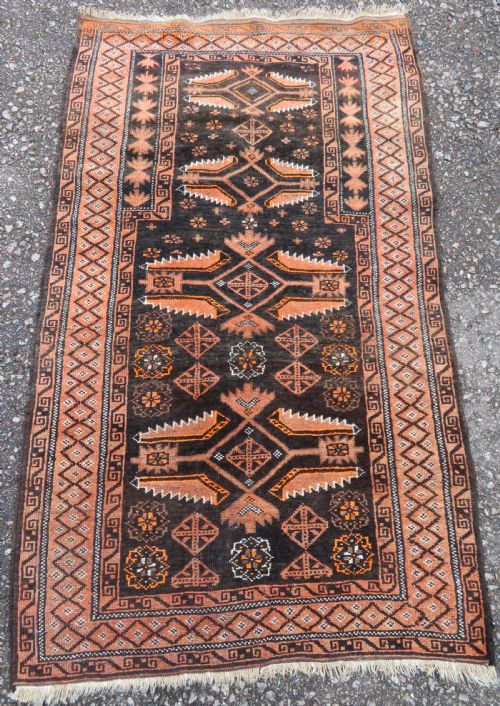
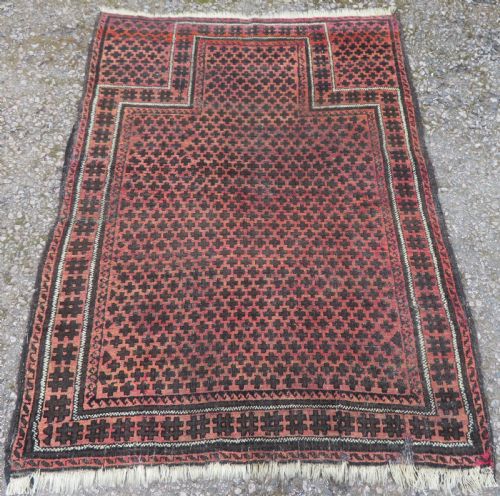


Baluch Mihrab Rug
When you examine a baluch mihrab rug, you hold a nomadic textile shaped by tribal tradition and prayer.
Baluch Mihrab Rug
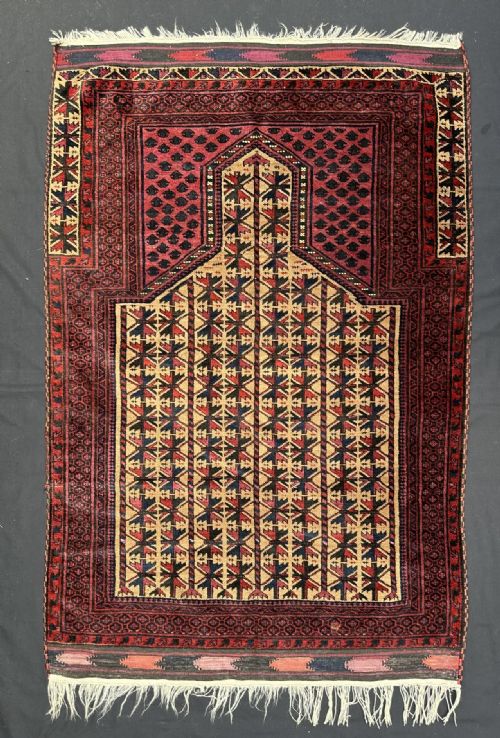
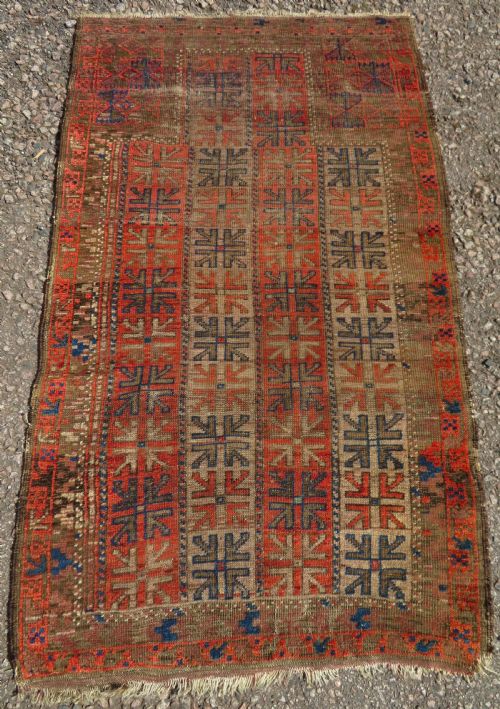
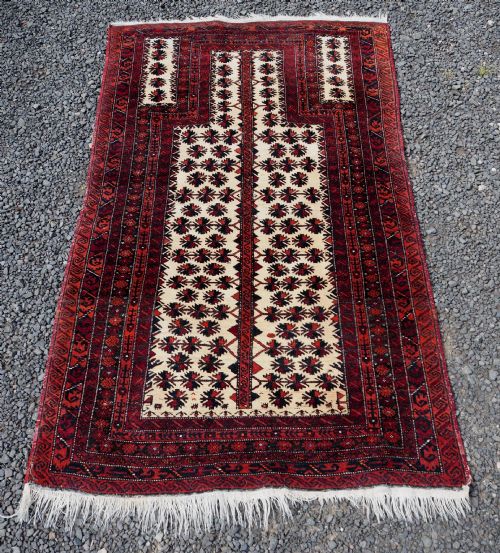
A baluch mihrab rug is a nomadic textile produced by tribal weavers across the borderlands of Persia and Afghanistan. These pieces serve primarily as prayer rugs, featuring distinctive architectural arches known as mihrabs designed to direct the placement of the worshipper. Most examples encountered here originate from the late nineteenth century through to the early decades of the twentieth century.
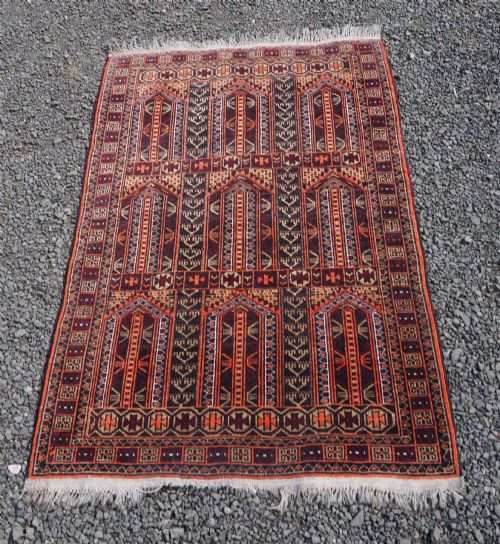
The aesthetic is rooted in tribal traditions associated with groups such as the Baluch, Timuri, and Taimani tribes. Collectors regularly meet formats displaying single arches, double mihrabs, and the multi-arched seh mihrab layout. Field patterns often incorporate motifs like lotus leaves, rams horns, trees of life, and symbolic stars.
Geographical origins span regions including Khorassan, Herat, and Sistan. Weavers utilised traditional village and nomadic formats to produce portable floor coverings and prayer mats. Each region contributes specific design idioms, from the Dokhtar-e-Qazi pattern to distinct blue and camel grounds.
How They Were Made
Construction relies primarily on wool foundations and piles, frequently supplemented with cotton elements and natural dyes. Weavers also incorporated camel hair, camel wool, and goat hair to introduce varied textures and natural tonal shifts across the field. Mixed techniques appear in specific tribal regions to enhance durability and flexibility.
Natural colour palettes dominate these textiles, derived from traditional dyestuffs that create rich blue, camel, and deep earth grounds. Handweaving traditions dictate the structure, binding the wool and hair fibres tightly across the warp and weft. The resulting fabric reflects the practical demands of nomadic life combined with meticulous tribal craftsmanship.
The inventory records distinct regional designs, including the Dokhtar-e-Qazi pattern and multiple mihrab formats.
What Varies in Quality
Quality in a baluch mihrab rug rests on the integrity of the natural dyes and the handled handling of materials like camel wool and goat hair. The depth and saturation of the colour ground determine the visual impact of the piece. Superior examples exhibit tightly packed piles and clear, crisp rendering of intricate motifs such as the seh mihrab or lotus leaf.
Structural resilience and wool quality separate standard village pieces from exceptional tribal examples. Finer weaving displays precise symmetry in the arch design and careful execution of secondary borders and symbolic elements. The condition of the foundation remains critical, distinguishing intact wool structures from heavily distressed or compromised surfaces.
The Baluch Mihrab Rug Glossary
- Mihrab
- The arched niche in a prayer rug that mimics the prayer halls of mosques, orienting the worshipper. It forms the central focal point of the design.
- Seh Mihrab
- A multi-arched design format showing three distinct prayer niches grouped across the rug field. This layout is particularly associated with Afghan and Taimani tribal weaving.
- Dokhtar-e-Qazi
- A specific traditional tribal design attribution linked to specific weaving groups in the borderlands of northeast Persia and northwest Afghanistan. It denotes a recognised pattern family within the wider tribal corpus.
- Camel Ground
- A field colouration produced using undyed camel hair or camel wool, yielding warm, natural brown and golden tones. It provides a durable and characteristic background for tribal motifs.
- Tree of Life
- A symbolic motif depicting a stylized tree rising through the field, representing eternity and the connection between earth and heaven. It frequently appears beneath the mihrab arch.
Baluch Mihrab Rug: Frequently Asked Questions
How were baluch mihrab rugs used?
These textiles were utilised as portable prayer mats by nomadic and village weavers across the borderlands. The arched mihrab design indicated the direction of prayer during daily devotions.
Beyond religious use, they functioned as practical floor coverings within tents and village homes. Their compact size made them easily rolled and transported during seasonal migrations.
How do I live with an antique rug?
Place the textile in low-traffic areas or mount it securely on a wall to protect the wool pile and natural dyes from excessive wear. Use a quality underlay to prevent slipping and reduce friction against hard floors.
Keep the rug away from direct sunlight to preserve the natural dye colours over time. Gentle vacuuming without a rotating brush bar helps maintain the wool and hair fibres.
How do I identify a seh mihrab design?
Look for a field containing three distinct architectural arches rather than a single niche. This multi-arched layout is a hallmark of specific regional weaving traditions.
The repeating arches are often flanked by geometric motifs, stars, or floral elements unique to the producing tribe.
What is camel hair used for?
Camel hair and camel wool provide an un-dyed, durable brown ground that forms the base of many tribal rugs. The fibre offers natural resilience and distinct tonal warmth.
Weavers utilised these materials both for pile construction and structural elements to add variation and strength.
How are Timuri and Baluch rugs related?
Timuri and Baluch tribes share overlapping territories in the borderlands of Persia and Afghanistan, resulting in shared design vocabulary and techniques. Both groups produced tribal prayer rugs utilising similar wool and natural dye palettes.
Attributions often overlap due to the nomadic movement and trade between these neighbouring cultural groups.