


Tekke Turkmen Textile
A tekke turkmen textile brings the rich geometric artistry of Central Asian nomadic weaving directly into modern interiors as wall hangings and rugs.
Tekke Turkmen Textile
When searching for a tekke turkmen textile, buyers encounter tribal weavings originating from Central Asia across the nineteenth and early twentieth centuries. These pieces encompass various functional nomadic forms, including storage bags, tent bands, and ceremonial coats.
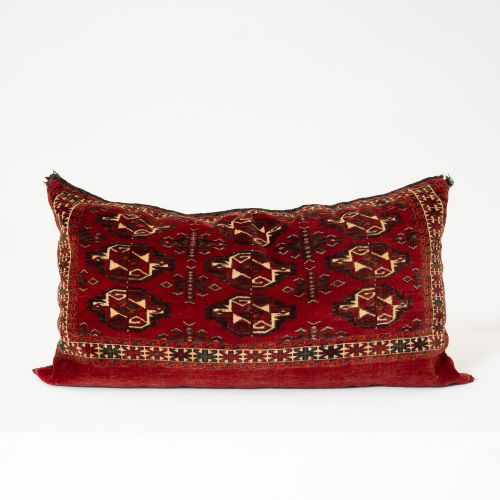
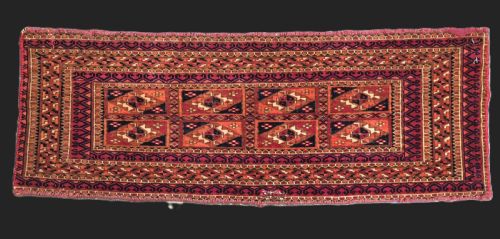
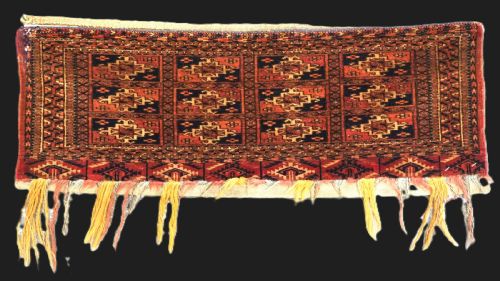
The selection on this page consists predominantly of chuval faces, torbas, and mafrash fragments produced by Tekke weavers. Such items served practical purposes within nomadic dwellings before finding appreciation as decorative works of art.
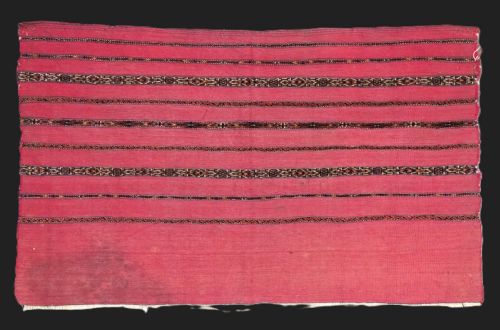
Makers utilised traditional formats like the gul motif pattern, arranging octagonal medallions across wool and silk grounds. Pieces range from complete examples retaining plain weave backs to fragments displaying intricate structural details.
How They Were Made
Weavers constructed these textiles primarily from wool and cotton, often employing natural dyes to achieve deep red grounds and contrasting ivory or dark tones. Silk appears predominantly in ceremonial garments such as embroidered coats.
The production involved dense knotting techniques that created extremely fine weaves on flat-woven or pile surfaces. Artisans incorporated structural elements like hanging loops and protective plain weave backs for domestic utility inside tents and yurts.
Listings feature items dated from the eighteenth century through to the early twentieth century, utilising wool, cotton, silk, and natural dyes.
What Varies in Quality
Quality rests upon the density of the weave and the precision of the drawing within the gul medallions. Finer knot counts and complex multi-gül arrangements indicate superior technical skill by the nomadic weaver.
The vibrancy and preservation of the natural dyes significantly influence the visual impact of each piece. Intact structures featuring original plain weave backs or complete panels command greater interest than worn fragments.
The Tekke Turkmen Textile Glossary
- Chuval
- A large tent bag used by nomadic tribes for household storage. These rectangular pieces frequently survive as cut faces displaying repeating guls.
- Torba
- A smaller storage bag utilised within the yurt for personal possessions. Collectors prize these for their compact proportions and varied tribal designs.
- Gul
- The primary octagonal medallion motif repeated across Turkmen weaving. Variations in these primary stamp designs help identify specific tribal groups.
- Engsi
- A rug traditionally hung over the doorway inside a nomad tent. These feature distinct quartered field layouts with specific cross-panels.
- Mafrash
- A general term for bedding or storage containers used during nomadic migrations. Fragments and complete faces often retain structural side panels.
Tekke Turkmen Textile: Frequently Asked Questions
What is a chuval face?
A chuval face is the decorative front portion of a large nomadic storage bag preserved after the plain back deteriorated. These panels display the primary knotting and gul patterns intended for display inside a yurt.
Collectors often mount these textile fragments as wall hangings to showcase the intricate geometric work without the bulk of the original storage container.
How were these textiles used?
Nomadic families utilised these woven pieces for practical storage, tent partitioning, and domestic decoration across Central Asia. Bags held blankets, clothing, and possessions during seasonal migrations.
Tent bands secured the wooden lattice framework of large dwellings while adding symbolic protection through traditional tribal motifs woven into the structure.
How do I care for a textile?
Protect antique wool and silk pieces from direct sunlight to prevent natural dye fading and fibre degradation. Gentle vacuuming through a mesh screen removes surface dust without damaging the pile.
Mount wall hangings using professional support systems that distribute weight evenly across the entire upper edge rather than pinning isolated corners.
What does gul design mean?
The gul is an octagonal medallion motif that acts as the signature emblem for specific Turkmen tribes. Different variations indicate whether a piece originated from Tekke, Salor, or Saryk weavers.
Arranging these motifs in structured rows created a balanced field that defined the visual identity of the nomadic group.