


Tekke Turkmen Gul
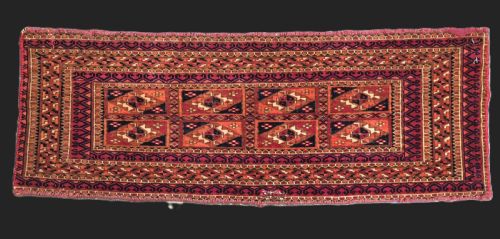
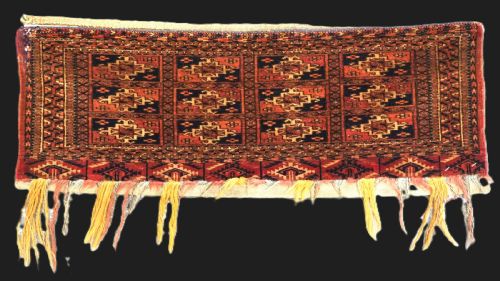
A tekke turkmen gul is a woven tribal medallion emblem sought by collectors for its precise geometry and deep cultural heritage.
Tekke Turkmen Gul
When searching for a tekke turkmen gul, buyers examine tribal textiles originating from Central Asia, spanning the nineteenth and early twentieth centuries. These pieces predominantly take the form of torba faces, chuval storage bags, mafrash panels, and full-sized carpets.
The most common examples met on this page are torba and chuval faces dating from the 1870s to 1900, often featuring repeating octagonal gul motifs such as the aina or salor variant. Many survive complete with their original plain weave backs or hanging loops.
Makers produced these works within nomadic and tribal traditions, creating rugs and dowry textiles that served both practical storage functions and decorative domestic roles. Pieces range from smaller fragments and small-scale bags to large main carpets.
Materials and Techniques
Weavers constructed these textiles primarily using wool foundations and pile, occasionally incorporating silk highlights for specific design elements. Natural dyes provided the deep red, brown, and dark palettes characteristic of these Central Asian tribal works.
The technical execution relies on dense knotting and fine weaves, particularly visible in nineteenth-century torba and chuval faces. Plain weave techniques were utilised for the backs of bags and utility panels, securing the structure alongside applied hanging loops.
Nomadic weavers thoughtfully attached sturdy hanging loops to their storage bags, ensuring tents stayed tidy across the steppes.
Defining Quality
Quality in these textiles depends heavily on the fineness of the weave and the clarity of the drawing within each gul motif. Pieces exhibiting higher knot densities and sharper, more precise geometric lines occupy the upper tier of the range.
The depth and vibrancy of the natural dyes, alongside the overall preservation of the pile and the presence of original backs or hanging loops, further distinguish finer examples from standard utility pieces.
The Tekke Turkmen Gul Glossary
- Gul
- A repeating octagonal medallion motif central to Turkmen tribal design. Different tribal groups utilised distinct gul variations to signal identity.
- Chuval
- A large tent-storage bag used by nomads for bedding and clothing. These pieces often display multiple rows of guls.
- Mafrash
- A rectangular storage container or face panel used in nomadic households. Examples are commonly encountered alongside torbas from the nineteenth century.
- Dowry rug
- A textile woven specifically for a bride's trousseau. These often incorporated finer materials like silk highlights.
Tekke Turkmen Gul: Frequently Asked Questions
What is a gul?
A gul is the primary octagonal medallion motif repeated across Turkmen carpets and bags. Each tribal group adapted the geometry to denote specific heritage.
These motifs form the visual backbone of antique Central Asian weaving traditions.
How were torbas used?
Torbas functioned as practical storage bags inside nomad tents for smaller belongings and utensils. They hung against walls or tent poles using integrated loops.
Over time, many faces were separated from their plain weave backs and preserved independently as decorative art.
What is a chuval face?
A chuval face is the decorative front of a large nomadic storage sack used for bedding and heavy textiles. They typically measure larger than torbas and display multiple rows of guls.
Collectors prize surviving complete examples that retain their original backs.
How do I date these textiles?
Dating relies on assessing the wool quality, natural dye palette, and structural fineness of the weave. Pieces from the first half of the nineteenth century differ noticeably from later twentieth-century productions.
Design variations likeaina or salor guls also provide clues regarding the period of manufacture.