



Crimson Turkmen Bag
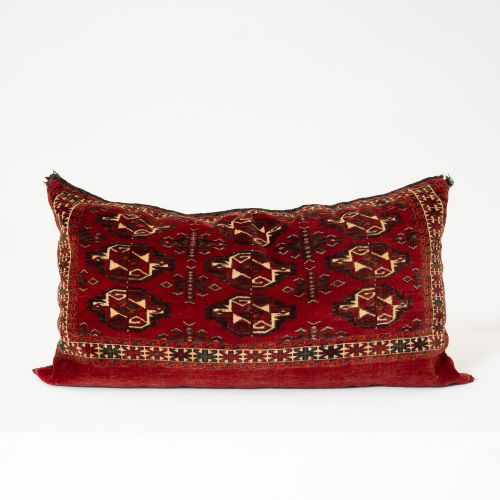
When you search for a crimson turkmen bag, you encounter nomadic storage bags woven by Central Asian tribes using rich red wool and natural dyes.
Crimson Turkmen Bag
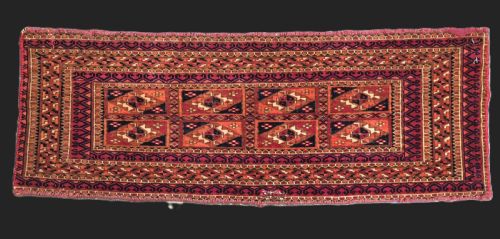
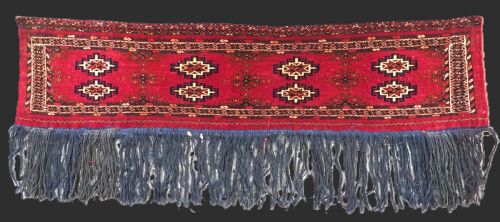
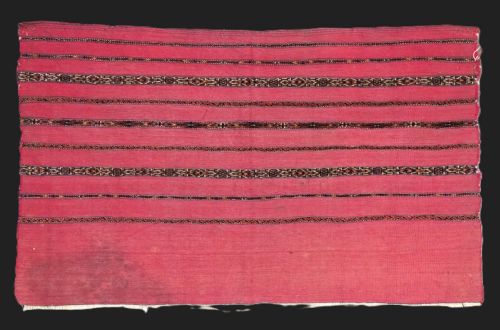
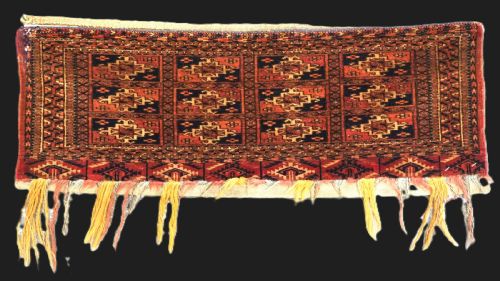
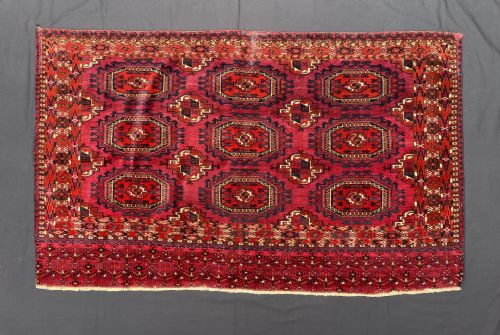
A crimson turkmen bag encompasses tribal weaving forms such as chuvals, torbas, and mafrash faces originating from the Trans-Caspian steppes and oases. These utilitarian objects served nomadic households as camel or tent bags for household storage and dowry weaving.
Most examples found on this page date from the nineteenth century, created by tribes including the Tekke, Saryk, Yomut, and Ersari. Buyers encounter complete pieces with original plain weave backs alongside fragments and single bag faces.
The dominant visual characteristic is the deep madder red ground paired with repeating primary guls, such as the Salor or 'aina gul designs. These textiles reflect specific tribal identities through their distinct border motifs and structural layouts.
How They Were Made
Weavers constructed these textiles using hand-spun wool for the pile, dyed with natural colorants to achieve various shades of crimson and madder red. Foundation structures frequently incorporate cotton, linen, or additional wool yarns.
The craftsmanship relies on dense knotting techniques executed on vertical looms set up in nomadic camps or oasis settlements. Finer examples display high knot counts per square inch, particularly seen in Tekke and Saryk dowry pieces.
Listings span the eighteenth through the early twentieth centuries, featuring wool, cotton, linen, and silk materials.
What Varies in Quality
Quality depends upon the fineness of the weave, the precision of the tribal drawing, and the depth of the natural dyes used in the pile. Superior examples exhibit tightly packed knots, crisp symmetry in the primary guls, and vibrant, unblended colour palettes.
The Crimson Turkmen Bag Glossary
- Chuval
- A large tent storage bag used by nomadic tribes for bedding and household goods. These rectangular pieces feature prominent primary guls arranged in rows.
- Torba
- A smaller storage bag utilised within the yurt for personal possessions or utensils. They often display intricate border patterns and medallion designs.
- Gul
- The primary repeating medallion or motif characteristic of Turkoman carpet weaving. Different tribal groups employ distinct gul variations to signify their lineage.
- Mafrash
- A long, rectangular storage bag or compartment used in nomadic transit. Surviving pieces usually appear as flatwoven or piled faces detached from their original box structures.
- Madder
- A natural red dye derived from the roots of the Rubia plant. This dye forms the chemical foundation for the crimson and brick red tones seen across these textiles.
Crimson Turkmen Bag: Frequently Asked Questions
What is a turkmen chuval?
A chuval is a large storage bag woven by nomadic tribes in Central Asia to hold bedding and heavy household goods inside the yurt.
These pieces were traditionally created as part of a bride's dowry and featured characteristic rows of primary guls on a red wool ground.
How do I identify a torba?
A torba is structurally smaller than a chuval and served as a utility bag for smaller possessions or food items within the tent.
They display similar tribal iconography but appear in more compact horizontal proportions.
What is a primary gul?
A primary gul is the principal repeating octagonal or geometric medallion that anchors the design field of a tribal weaving.
Tribes such as the Tekke, Saryk, and Salor utilised specific drawing styles within these guls to denote their clan affiliation.
How should I care for an antique textile?
Antique wool and cotton textiles require gentle handling, protection from direct sunlight, and regular light vacuuming through a mesh screen.
Keeping the environment stable prevents natural fibres from drying out or degrading over time.