


Tekke Tribal Textile
When you handle a tekke tribal textile, you touch the nomadic heritage of Central Asia through dense wool knots and natural dyes.
Tekke Tribal Textile
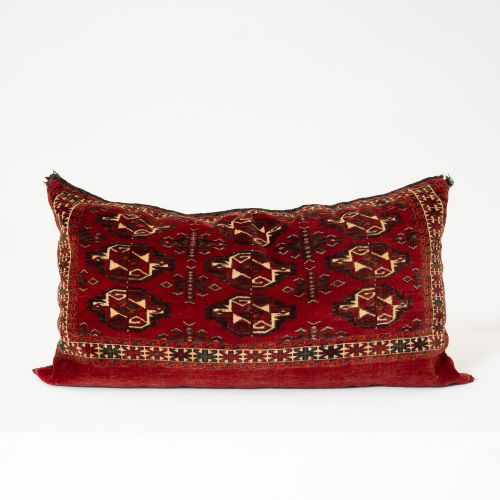
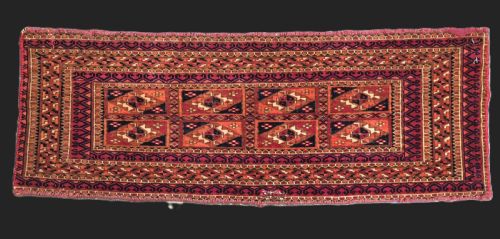
A tekke tribal textile represents the weaving traditions of the Turkmen people from Central Asia, encompassing functional items made for nomadic life. Buyers encountering this selection will primarily find domestic furnishings and dowry items produced across the nineteenth and early twentieth centuries.
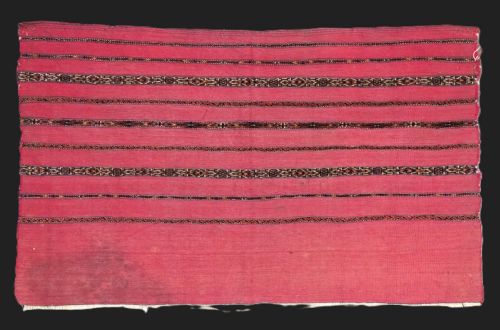
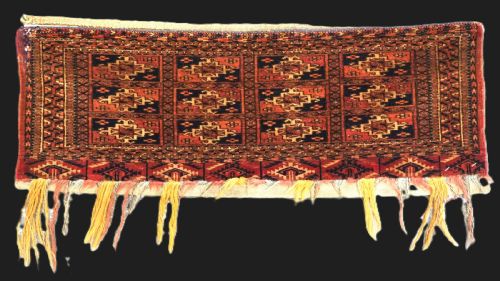
The material record includes storage bags such as chuvals and torbas, alongside tent bands, wall hangings, and ceremonial garments like silk-embroidered coats. Many examples survive as single faces or complete pieces retaining their plain weave wool and cotton backs.
Designs centre on tribal motifs, notably the repeating gul octagons, turreted Salor patterns, and curled leaf arrangements. These objects reflect the utilitarian and decorative output of weavers working within traditional tribal boundaries.
How they were made
Makers utilised locally sourced wool for the pile and foundation, often incorporating cotton and linen for structural strength and contrast. Natural dyes provided the deep red grounds and secondary tones characteristic of the region.
Weavers knotted the pile tightly onto wool or cotton warps, finishing the edges with plain weave techniques and sometimes attaching hanging loops for domestic use. Ceremonial coats involved fine silk embroidery worked directly onto a textile ground.
Some tent bands stretch up to fifty feet in length, engineered to wrap entirely around the perimeter of a nomadic yurt.
What varies in quality
Knot density and structural fineness separate standard utility pieces from exceptional dowry or ceremonial examples. A very fine weave allows intricate rendering of guls and secondary motifs.
The crispness of the drawing and the saturation of the natural dyes determine the visual impact of the surface. Surviving backs, intact formats, and balanced proportions elevate the status of individual items.
The Tekke Tribal Textile Glossary
- Chuval
- A large storage bag used inside a yurt for bedding and household goods. These are frequently encountered as standalone decorative faces.
- Torba
- A smaller storage bag utilised for domestic items within the tent. They often display structured rows of guls or tree designs.
- Gul
- The primary repeating medallion motif found across Turkmen weaving. Different tribal groups developed distinct versions.
- Mafrash
- A rectangular storage container or bag face. These pieces share construction methods with chuvals and torbas.
Tekke Tribal Textile: Frequently Asked Questions
What is a chuval used for?
A chuval served as a large storage bag within the nomadic yurt, holding blankets, clothing, and domestic possessions.
Over time, many of these bags were separated into individual faces for easier transport or display as wall hangings.
How do I identify a torba?
A torba is smaller than a chuval and was traditionally hung on the lattice walls of the tent to store smaller personal items.
They usually display three to nine guls or specialised designs like the curled leaf pattern.
What are natural dyes?
Natural dyes are colourants derived from plants, roots, and insects used by weavers before the introduction of synthetic aniline dyes.
They produce the rich, varied tones seen in nineteenth-century nomadic textiles.
Where were these textiles made?
These pieces were produced by Turkmen tribes across Central Asia, including regions near the Merv Oasis.
Nomadic and semi-nomadic weavers carried these traditions across the steppes and desert edges.