
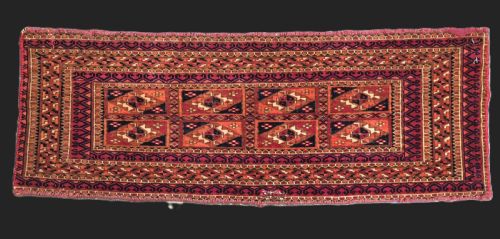
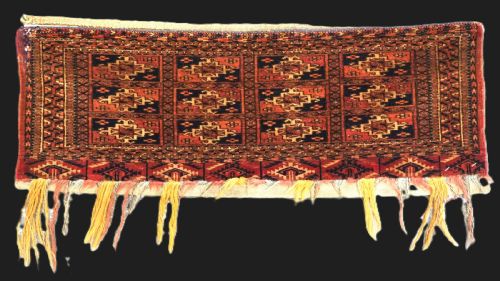


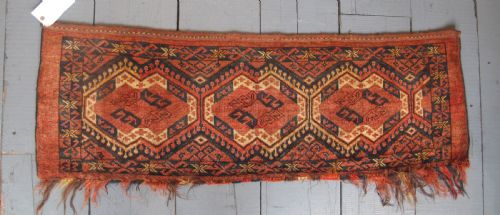
Antique Tekke Torba Carpet
An antique tekke torba carpet is a tribal textile from Central Asia, prized for its intricate guls and rich wool.
Antique Tekke Torba Carpet
An antique tekke torba carpet represents nomadic weaving traditions from Central Asia, specifically created by Turkmen tribes. These pieces typically function as storage bags or bag faces, often associated with the Tekke or Saryk groups. Buyers encounter various formats on this page, ranging from complete examples with plain weave backs to individual faces and fragments.
The designs encountered span several distinct motifs, including the principal gul, Salor gul, aina gul, and the curled leaf pattern. Pieces date from the nineteenth century, including specific decades such as eighteen eighty and eighteen fifty, reflecting traditional tribal craftsmanship.
Factors of distinction
Quality in these textiles depends on the density of the weave and the precision of the drawing. Finer knotting allows for sharper delineation of tribal guls and complex border arrangements.
The depth and saturation of the natural dyes significantly influence visual appeal. Examples featuring unusual design variants, such as scarce gul arrangements or ivory grounds, stand apart within the tradition.
The listings span the nineteenth century, featuring dates from eighteen fifty to eighteen ninety alongside wool and natural dye construction.
The Antique Tekke Torba Carpet Glossary
- Torba
- A small Turkmen storage bag, typically wider than it is tall, used inside a nomadic tent. These pieces often feature prominent primary guls arranged in rows.
- Gul
- A primary medallion or octagonal motif repeated across Turkmen carpets and torbas. Each tribal group utilises distinct gul forms for identification.
- Mafrash
- A rectangular storage container or bag face associated with nomadic furnishings. They share structural similarities with torbas.
- Kedjebe
- A camel-tent-band design or wedding procession motif occasionally found on Turkmen tribal weavings. It adds intricate geometric complexity to the field.
Antique Tekke Torba Carpet: Frequently Asked Questions
What is a torba used for?
A torba served as a practical storage bag within a nomadic household, often used to store small possessions or bedding.
Over time, these pieces became valued for their symbolic tribal designs and precise wool work rather than daily utility.
How do I identify a Tekke piece?
Tekke carpets and torbas typically feature characteristic octagonal guls arranged in strict rows across a deep red or madder ground.
Subordinate motifs and specific border patterns help differentiate them from other Turkmen tribal groups.
Are these pieces complete bags?
Many listings comprise individual bag faces rather than complete containers, as the front panels received the most elaborate weaving.
Some examples retain their original plain weave backs or complete construction with storage compartments intact.
How should I display a textile?
These pieces function effectively as wall hangings or decorative flat surfaces within a room.
Protecting the wool from direct sunlight preserves the natural dyes used by nineteenth century weavers.