


Traditional Tekke Gul Rug
Traditional tekke gul rug examples are Central Asian tribal textiles characterised by geometric octagonal motifs, offering collectors rich reds and dense wool work.
Traditional Tekke Gul Rug
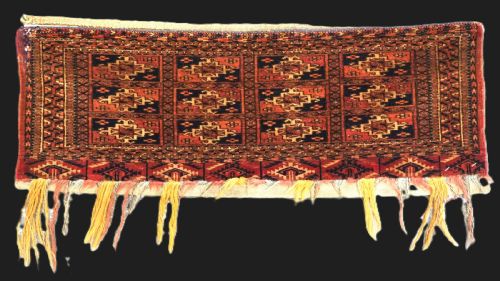
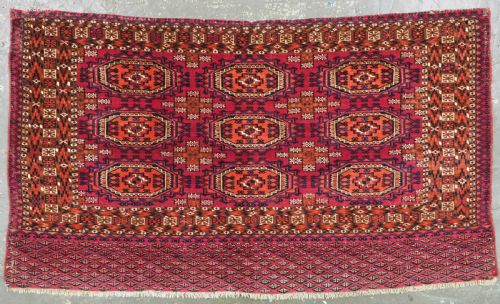
When someone searches for a traditional tekke gul rug, they encounter knotted wool floor coverings and smaller tribal weavings originating from Central Asia. These items span from the mid nineteenth century into the early twentieth century, taking the form of main carpets, dowry rugs, and functional bags.
The most common formats on this page include room sized carpets and smaller torba or chuval bag faces. Turkmen and nomadic tribal weavers produced these pieces using wool foundation and pile, frequently incorporating specific gul motifs across the field.
How they were made
Weavers constructed these textiles predominantly with wool pile knotted onto wool foundations, sometimes integrating silk highlights for specific visual details. Natural dyes provided the characteristic red colour palettes, while cochineal supplied additional pink or crimson tones.
Production techniques involved intricate knotting alongside flat woven details on reverse sides or borders of bag faces. The resulting fabric required durable handling, yielding heavy duty structures suited to nomadic or domestic use.
Listings span from eighteen fifty to nineteen thirty, constructed from wool, natural dyes, and occasional silk highlights.
What varies in quality
The fineness of the weave distinguishes the standard of execution, with tightly knotted surfaces showing greater clarity in geometric gul patterns. Finer examples display precise execution across the field and borders, whereas simpler pieces utilise coarser pile structures.
Colour depth and material selection also govern the standing of an individual piece. The presence of natural dyes in good condition, alongside thoughtful placement of silk highlights or uncommon gul variations, elevates the textile above standard production.
The Traditional Tekke Gul Rug Glossary
- Gul
- An octagonal medallion motif repeated across Turkmen carpets. Each tribal group utilised distinct gul designs to signify lineage.
- Torba
- A small storage bag produced by tribal weavers. These items often feature detailed face designs and complete plain weave backs.
- Chuval
- A large tent bag used for household storage. They typically display multiple guls arranged in rows across the face.
- Cochineal
- A natural red dye derived from insects. It provides bright crimson or pink highlights within the wool pile.
- Dip Khali
- A term used to describe specific regional carpet formats. They appear in nineteenth century Turkmen weaving traditions.
Traditional Tekke Gul Rug: Frequently Asked Questions
How do I identify a traditional tekke gul rug?
Look for the characteristic octagonal gul motifs repeated in orderly rows across a deep red wool field. These pieces originate from Turkmen tribal traditions in Central Asia during the nineteenth and early twentieth centuries.
Examine the weave density and secondary border details to confirm the regional attribution. Many authentic examples also include natural dye variations and occasional silk highlights.
How should I care for a nineteenth century wool rug?
Keep the textile out of direct sunlight to protect the natural wool dyes from fading over time. Vacuum gently with a suction only attachment without rotating brushes to avoid damaging the pile.
Rotate the carpet periodically to ensure even wear across high traffic areas. Professional cleaning should be undertaken sparingly by specialists experienced in antique tribal textiles.
Where were these tribal carpets made?
These textiles were produced by nomadic and settled Turkmen tribes across Central Asia, including regions associated with the Emirate of Bukhara. Weavers utilised locally sourced wool and natural dye materials.
The tribal groups passed down specific gul designs through generations, anchoring each weaving to a distinct cultural heritage.