


Tekke Gul Rug
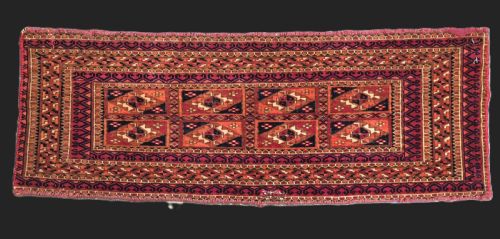
These tekke gul rug pieces carry centuries of nomadic heritage through dense, repeating octagonal motifs woven in rich madder tones.

Tekke Gul Rug
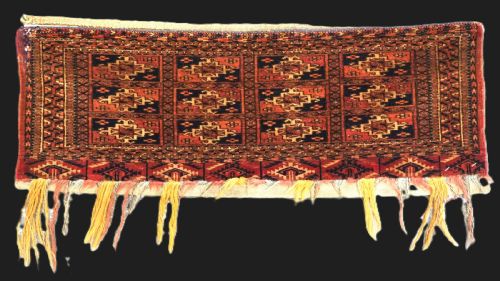
A buyer examining a tekke gul rug encounters tribal weavings originating from Central Asia, created by Turkmen nomadic and settled groups. These pieces typically manifest as utilitarian storage bags, dowry rugs, or large floor carpets decorated with distinct primary medallions known as guls.
The selections available include functional torba and chuval fragments complete with original plain weave backs, alongside full main carpets and delicate dowry pieces. Most examples span the nineteenth century up to the early decades of the twentieth century, reflecting traditional tribal patterns passed down through generations.
Materials and construction methods
Weavers constructed these textiles predominantly from hand-spun wool, utilising natural dyes to achieve deep saturated reds, browns, and dark shades. Occasional surviving pieces incorporate delicate silk highlights or cochineal dye to accentuate specific geometric details within the pattern.
The structural integrity relies on fine knotting techniques that produce a dense, durable pile. Many bag faces and small rugs retain original hanging loops, plain weave wool backs, or side corduroy finishes integral to nomadic life.
Tekke Gul Rug Retail Price Guide 2026
Typical asking prices for tekke gul rug among the pieces listed under this phrase on Sellingantiques today, from the lower quarter to the upper quarter. They describe what is for sale here now, not the wider market.
Assessing quality and craftsmanship
Quality rests upon the fineness of the weave and the precision of the drawing within the gul medallions. Pieces possessing an extremely tight, velvet-like pile and exceptional clarity of colour represent the upper tier of production.
The presence of complete original structures, such as full backs and hanging loops on torbas and chuvals, elevates an example. Furthermore, scarce medallion variants and cochineal colouring distinguish finer collector pieces from standard utilitarian work.
The Tekke Gul Rug Glossary
- Gul
- The primary octagonal medallion motif repeated across Turkmen carpets. Each tribal group utilised distinct gul variants to signal identity and lineage.
- Chuval
- A large tent bag traditionally used for storing bedding and household goods. They frequently appear on the market as cut faces complete with repeating gul rows.
- Mafrash
- A rectangular storage sack or bedding bag produced in pairs by tribal weavers. Surviving front panels display the same intricate patterning seen on larger carpets.
- Dowry rug
- A special weaving prepared for a wedding ceremony by tribal women. These examples often incorporate finer wool, silk highlights, or unusual design elements.
Tekke Gul Rug: Frequently Asked Questions
What is a gul?
A gul is the repeating octagonal medallion motif that forms the visual foundation of Turkmen tribal weaving.
These tribal emblems distinguish different groups, such as the Tekke or Salor, through specific geometric variations and internal detailing.
How were torbas used?
Torbas served as functional storage bags hung inside nomadic tents to hold small household possessions and personal items.
Over time, many surviving examples have been separated from their original backs or utilised simply as decorative wall hangings.
How do I date these rugs?
Dating relies on assessing the natural dye palette, the fineness of the wool knotting, and the structural format of the piece.
Nineteenth-century examples generally display softer wool handles and richer madder dyes compared to later twentieth-century production.
Are these rugs durable?
Traditional tribal weavings utilise tightly packed wool knots designed to withstand heavy daily use in nomadic environments.
Main carpets and runners tolerate moderate foot traffic when protected by appropriate underlays, though delicate dowry fragments require gentler placement.