


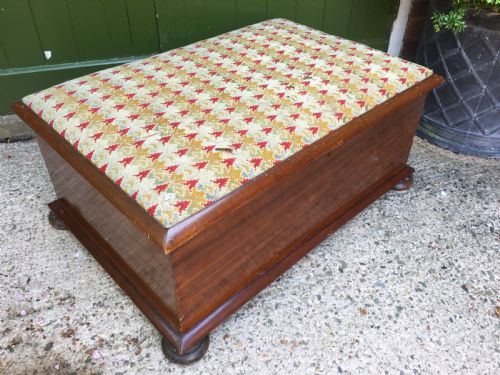
Tapestry Top Ottoman
A tapestry top ottoman brings texture and period character into a room, offering both a seat and a place to rest tired feet.
Tapestry Top Ottoman
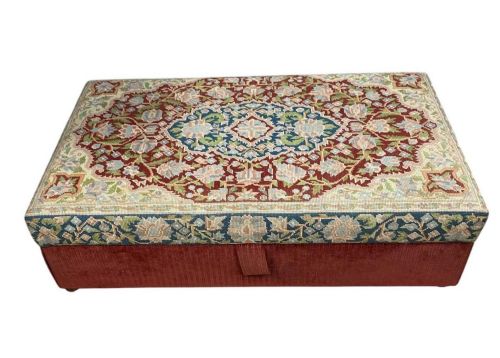
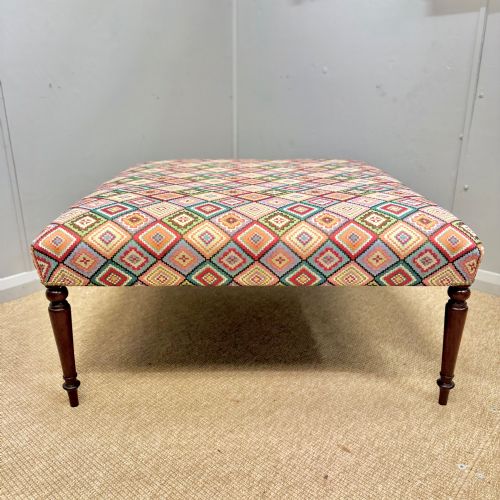
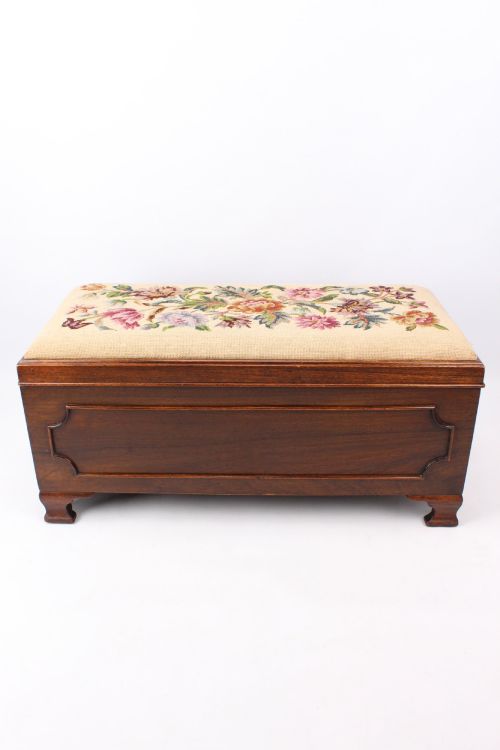
A tapestry top ottoman is a practical and decorative household furnishing designed for seating or resting the feet, typically combining a wooden base with a textile seat. When you search for a tapestry top ottoman, you encounter pieces that range from compact footstools to larger upholstered furnishings intended for drawing rooms and bedrooms.
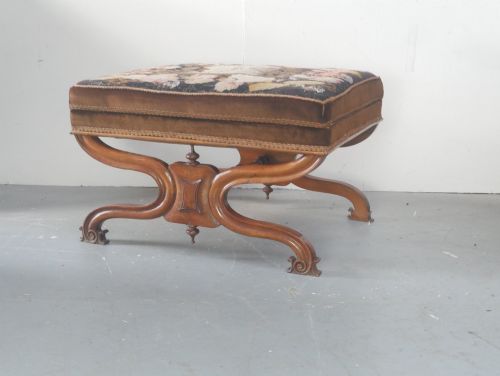
The selections on this page span several distinct periods including the Regency, Victorian, and Edwardian eras, with nineteenth-century examples appearing frequently. Forms include large Scottish Baronial stools, ebonised frames, and low dressing stools suited to period interiors.
Origins vary across English country house styles, French chateau influences, and Scottish baronial designs, reflecting the diverse taste of nineteenth-century makers. Buyers often find that these items function well as footstools or low occasional seating in contemporary living spaces.
Materials and construction methods
Makers constructed the frames of these pieces using dense timbers such as mahogany, rosewood, walnut, and ebonised wood, sometimes applying paint or gilding to the surfaces. Carved details and turned supports appear frequently across nineteenth-century examples.
The top surfaces utilise heavy textiles including wool, velvet, fabric, and traditional gros-point or needlepoint tapestries. These stitched panels often survive from the period, secured over firm padding to wooden framing.
Markers of quality and craftsmanship
Quality in these furnishings rests upon the crispness of timber carving, the choice of dense hardwoods like rosewood and mahogany, and the structural integrity of the frame joints. Superior examples exhibit refined proportions and carefully executed decorative turnings or gilding.
The textile component plays a major role in the distinction between pieces, particularly where original needlework or gros-point tapestry survives in a dense and stable state. Finer needlepoint tops display intricate colour blending and tight stitching that withstands the passage of time.
The Tapestry Top Ottoman Glossary
- Gros-point
- A type of needlepoint embroidery worked on a coarse canvas using wool yarn, creating a durable and textured surface ideal for upholstery. This technique appears on many nineteenth-century footstool covers.
- Ebonised
- Wood finished with a dark stain or black lacquer to imitate expensive ebony. Victorian makers frequently utilised this treatment on decorative seating frames.
- Regency
- An architectural and decorative style spanning the early nineteenth century, characterised by classical restraint and elegance. Pieces from this era often employ rosewood and fine turned elements.
- Scottish Baronial
- A revival style drawing on medieval Scottish architecture and furnishings, known for robust proportions and substantial forms. Stools in this style often feature large dimensions.
- Needlework
- General term for decorative stitching executed by hand on a fabric ground. It forms the primary decorative element on the upper surface of these traditional stools.
Tapestry Top Ottoman: Frequently Asked Questions
What is a tapestry top ottoman?
A tapestry top ottoman is a low seat or footstool featuring an upper panel of embroidered wool or textile mounted on a wooden frame.
These pieces combine functional support with decorative needlework, often reflecting nineteenth-century design aesthetics.
How were these stools used historically?
Historically, these items served as footstools before larger chairs, or functioned as dressing stools in bedrooms and drawing rooms.
Their substantial padded tops provided comfortable seating or a place to rest tired feet during long evenings.
How do I care for antique needlework?
Protect antique needlework tops from direct sunlight to prevent the wool yarns from fading and weakening over time.
Gentle surface cleaning with a soft brush helps remove dust without disturbing the historic textile fibres.
Are these pieces suitable for daily use?
Most sturdy frames accommodate occasional sitting or foot-resting when placed in a quiet area of the home.
Careful placement away from heavy traffic preserves the fragile historic textiles and polished timber surfaces.
How do I identify a Victorian piece?
Victorian examples often employ dense timbers such as mahogany and walnut alongside hand-stitched gros-point tapestry tops.
Turned wooden legs and heavier proportions typically point towards nineteenth-century manufacturing traditions.