



Vintage Needlepoint Footstool
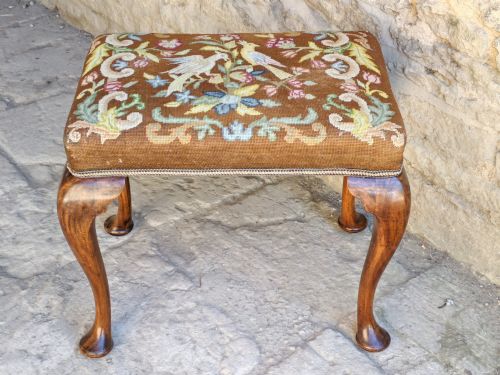
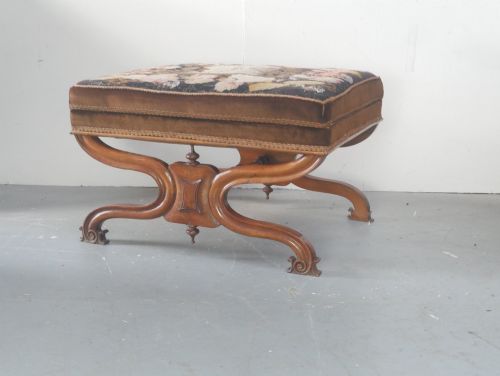
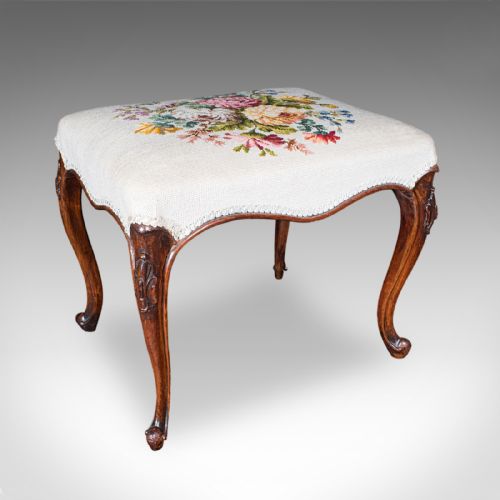
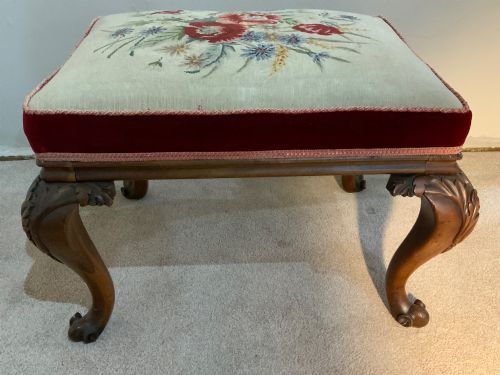
These vintage needlepoint footstool examples bring warmth and patterned charm to a fireside or dressing room through tactile upholstery.
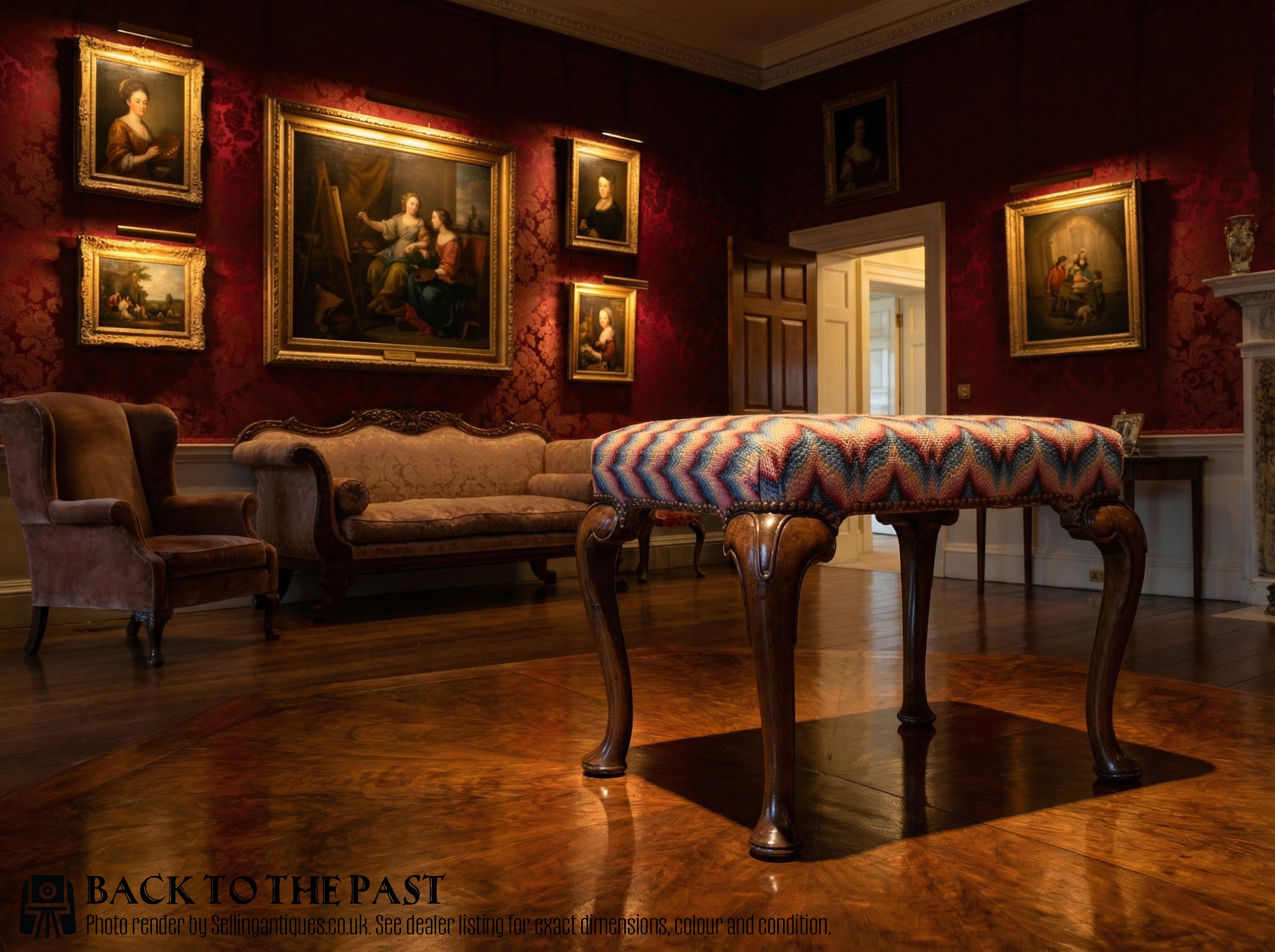
Vintage Needlepoint Footstool
A vintage needlepoint footstool combines practical low seating with decorative textile work, appearing across various historical periods from the Victorian era into the twentieth century. These pieces function as fireside rests, dressing table seats, and small ottomans within traditional interiors.
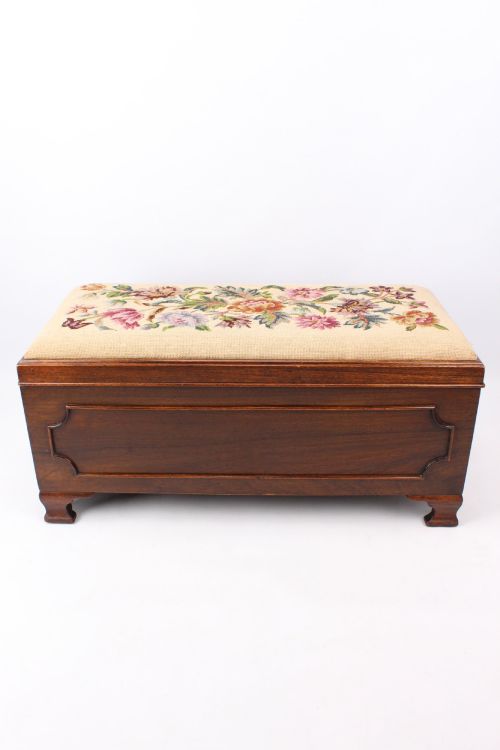
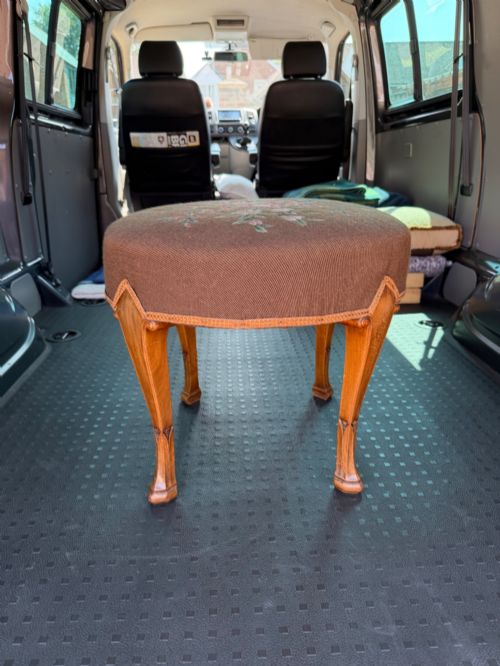
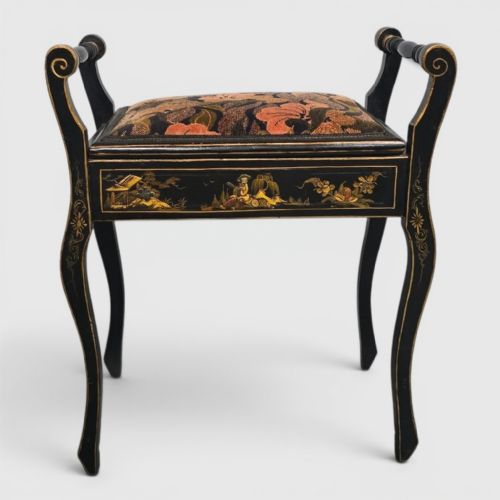
The selections available here span from mid-nineteenth century walnut and mahogany frames to later revival styles including Queen Anne, Chippendale, and Chinoiserie. Buyers encounter long stools, compact round poufs, and piano benches finished with dedicated tapestry tops.
The fundamental appeal lies in the contrast between robust timber frames and intricate hand-worked wool upholstery. Each stool reflects the domestic crafts and prevailing revival tastes of its specific decade.
Materials and construction
Makers constructed the structural frames of these stools primarily from hardwoods such as walnut and mahogany, alongside occasional uses of oak, rosewood, and ebony. These timbers provided the strength required for turned legs, cabriole supports, and carved rails.
The defining textile element relies on wool tapestry and needlepoint, stitched by hand to create floral, pictorial, or geometric motifs. Upholsterers secured these panels over padded seats, sometimes integrating brass details or painted finishes on the wooden frameworks.
Piano stools by Jas Shoolbred provide a melodious resting place for tired feet after a long evening of Chopin.
Assessing quality in needlepoint stools
Quality rests significantly in the execution of the timber carving and the tightness of the frame joinery. Superior pieces display crisp hand-carved details on walnut or mahogany, whereas lesser examples rely on simpler turned legs without ornamentation.
The density and fineness of the needlepoint woolwork dictate the upper tier of craftsmanship. Closely stitched tapestry panels retain their integrity and visual depth far better than loose or coarse modern replacements.
Jas Shoolbred
The Vintage Needlepoint Footstool Glossary
- Needlepoint
- A form of counted thread embroidery stitched onto an open weave canvas. It forms the durable decorative top seen on traditional footstools.
- Cabriole leg
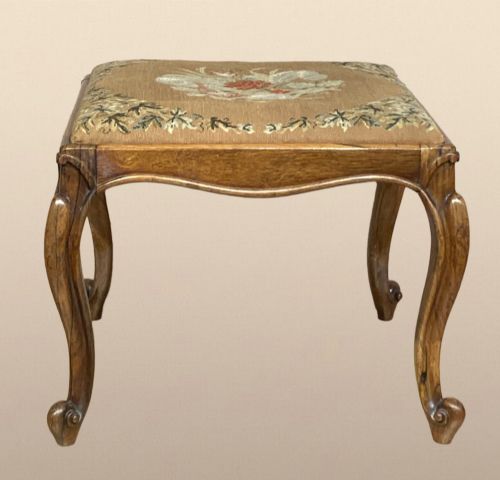
- A furniture leg featuring a double curve, typically swelling outward at the knee and tapering inward toward the foot. This shape appears frequently on Victorian and revival walnut stools.
- Ottoman
- A low, upholstered seat or bench without a back or arms. These larger versions often accompany dressing tables or long firesides.
- Cross stretcher
- Wooden rails connecting the lower legs of a stool in an X-shape for added stability. They are common on formal dressing and centre stools.
- Tapestry
- Heavy hand-woven or needle-worked fabric featuring pictorial or floral designs. It provides the primary upholstered surface for antique footstools.
Vintage Needlepoint Footstool: Frequently Asked Questions
How do I date a needlepoint footstool?
Dating relies on examining the timber species, leg profiles, and structural joinery methods used beneath the upholstery. Victorian pieces often utilise solid walnut or mahogany with hand-carved cabriole supports.
Later twentieth-century examples display simplified turnings or revival styling that matches the domestic fashions of the nineteen-twenties and thirties.
Were these stools used only by the fireside?
While many served as fireside footrests to keep feet away from cold draughty floors, numerous variants fulfilled other domestic roles. Makers designed specific pieces as dressing table stools, piano benches, or small centre ottomans.
Their compact dimensions allowed them to move easily between rooms depending on household seating needs.
Can I use an antique footstool daily?
Most hardwood frames possess robust structural integrity suitable for everyday placement in a modern living space or bedroom. The underlying wood and joinery remain remarkably durable after a century or more of domestic service.
Care should be taken primarily with the vintage wool needlepoint surface to avoid excessive friction or direct staining.
What is the difference between an ottoman and a footstool?
Traditional footstools generally offer compact dimensions designed specifically to support the feet while sitting in a larger armchair. Ottomans often provide a wider surface area and greater height, functioning independently as low benches or dressing seats.
Both forms utilise upholstered needlework tops across the nineteenth and twentieth centuries.