


Needlepoint Vanity Stool
A needlepoint vanity stool brings a textural warmth to a dressing room through a worked textile seat and a timber frame.
Needlepoint Vanity Stool
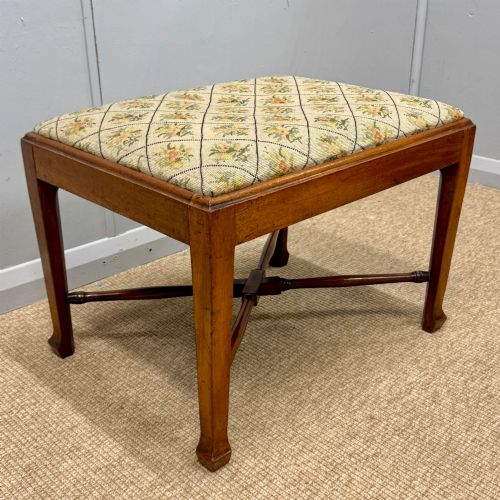
A needlepoint vanity stool is a low seating piece designed for a dressing table or piano, combining a sturdy wooden frame with a decorative worked textile or tapestry seat. These forms appear across the nineteenth century and into the early twentieth century, spanning periods from the Victorian era through to the nineteen-thirties.
The frames take various timber forms including walnut, mahogany, rosewood, and birch, often reflecting historic revivals such as Chippendale style, Queen Anne style, and Victorian Rococo revival. Such pieces serve practical domestic seating needs while introducing period character into a bedroom or dressing space.
How they were made
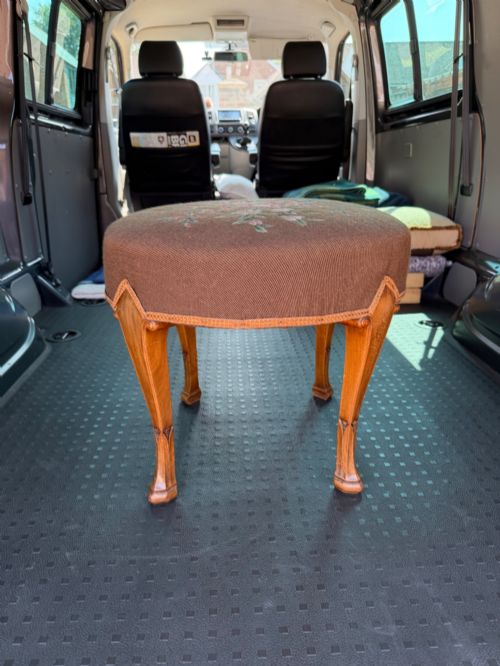
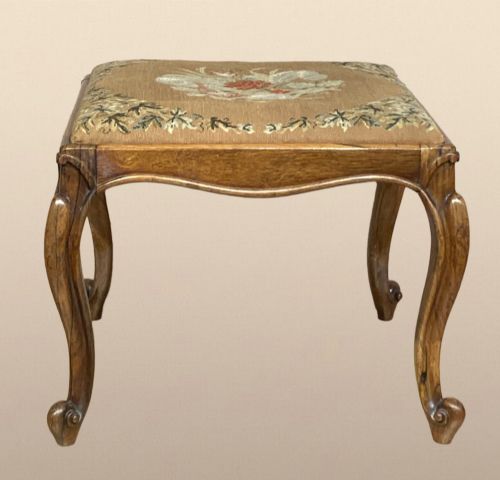
Makers constructed these frames using timbers like mahogany, walnut, and rosewood, employing traditional joinery and carved details such as cabriole legs and cross stretchers. Certain examples incorporate revolving mechanisms or tripod bases suited to piano use.
The seats feature wool tapestry and needlepoint textile work fixed over upholstery, occasionally complemented by brass fittings or painted finishes on the wooden frames.
Several Victorian examples include revolving tops, letting musicians and dressers spin in place while tending to their tasks.
What varies in quality
The distinction in quality rests on the crispness of the timber carving, the choice of dense hardwoods such as walnut and mahogany, and the structural integrity of the frame joints. Finely turned legs and robust stretcher arrangements indicate superior craftsmanship.
The execution of the textile seat further separates examples, where densely worked wool needlepoint and tapestry demonstrate greater time and skill in the needlework than simpler fabric coverings.
Jas Shoolbred
The Needlepoint Vanity Stool Glossary
- Cabriole leg
- A furniture leg that curves outward and then tapers inward, mimicking an animal's limb. This form appears frequently on Georgian and Victorian revival seating.
- Needlepoint
- A type of counted canvas work embroidery executed with wool yarn. It forms the durable decorative top seen on many antique stool seats.
- Cross stretcher
- Wooden bracing rods connecting the legs beneath a stool for added stability. They often feature central turnings or carved details.
- Tapestry
- A heavy hand-woven or needle-worked textile used for upholstery. These panels display pictorial or geometric designs on stool tops.
Needlepoint Vanity Stool: Frequently Asked Questions
Where do you place a vanity stool?
A vanity stool sits naturally in front of a dressing table or low desk in a bedroom. Its compact footprint also allows it to function as a moveable seat in a corner or beside a fireplace.
Because many examples feature upholstered needlepoint or tapestry tops, they introduce colour and pattern without overwhelming the room.
How do I care for the needlepoint seat?
Protect the wool needlework from direct sunlight to prevent the coloured yarns from fading over time. Gentle surface brushing removes dust trapped within the canvas stitches.
Avoid heavy liquid cleaners on vintage textiles to preserve the original fibres and the wooden frame beneath.
Are piano stools the same as vanity stools?
Piano stools share a similar low height and upholstered top with vanity stools, and the two terms often overlap in historic listings. Some piano stools include specialised revolving mechanisms or tripod wooden bases.
Both types function well as dressing table seats depending on the specific height and presence of a backless frame.
What wood types should I expect?
The frames employ a range of hardwoods typical of nineteenth and early twentieth-century cabinet making. Walnut and mahogany appear frequently, alongside rosewood, birch, and oak.
Some later pieces feature painted wood finishes rather than polished timber surfaces.