
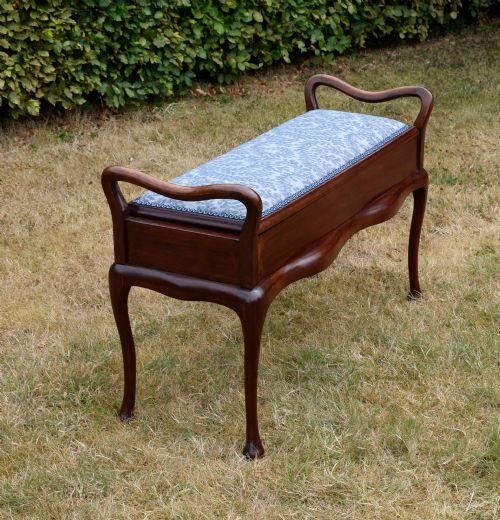
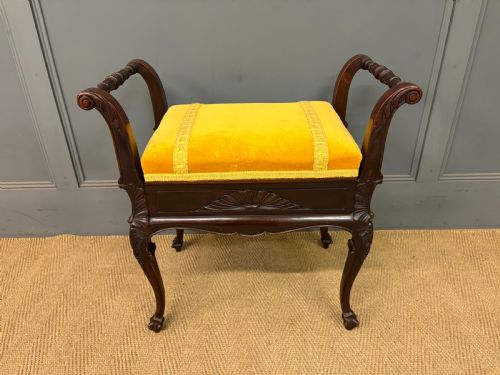
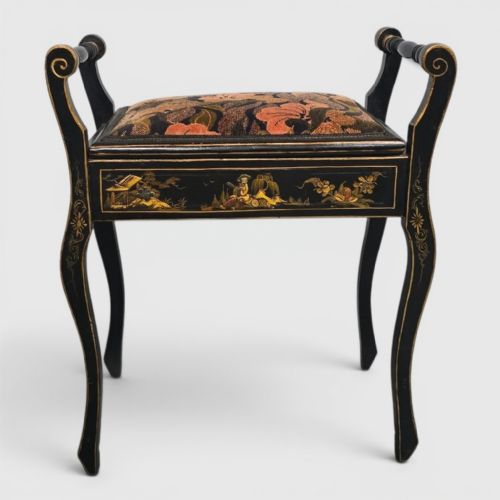
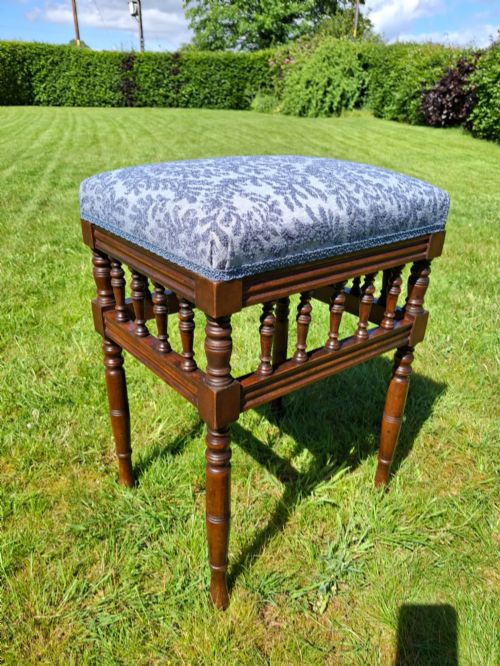


Padded Music Bench
A padded music bench provides the essential seat for any piano, offering both comfort and a steady perch while you play.
What a padded music bench is
A padded music bench is designed primarily for use at the piano, functioning as a sturdy and supportive seat during practice or performance. The search phrase covers piano stools from the late nineteenth century and the opening years of the twentieth century.
The most common form you will encounter on this page is the piano stool, constructed in wood and fitted with a cushioned top. These pieces date from the 1890 period and the 1900 period.
Makers of these piano stools worked within traditional cabinet-making conventions, incorporating upholstered tops in various textiles to ensure comfort at the keyboard. The examples available here reflect Edwardian taste alongside distinct decorative treatments such as Chinoiserie.
Materials and construction
These piano stools utilise solid timbers including mahogany and general hardwood, providing a robust frame capable of withstanding regular use at the instrument. Lacquer finishes appear on specific decorative variants.
Upholstery forms a central element of the construction, employing materials such as fabric, velvet, needlepoint, and tapestry to create the padded seat. Artisans combined traditional woodwork with detailed textile coverings.
The periods represented in these listings span from the 1890 period through to the 1900 period.
Variations in quality
Quality in a padded music bench rests on the selection of timber and the execution of the frame, where fine mahogany construction surpasses standard hardwood. Finer examples display meticulous attention to detail in their structural joinery.
The decorative treatment of the seat and frame separates standard items from finer pieces, particularly where specialised styles like Chinoiserie or intricate needlepoint and tapestry work are applied. The choice of velvet or fine fabric also elevates the visual and tactile appeal of the upper section.
The Padded Music Bench Glossary
- Mahogany
- A dense, durable hardwood prized for its rich colour and stable grain, frequently utilised in fine nineteenth-century seating. It takes a high polish and resists warping over decades of use.
- Chinoiserie
- European decorative art style reflecting Chinese motifs and techniques, often executed in lacquer on furniture. This aesthetic became particularly popular during the Edwardian era.
- Edwardian
- The period spanning the reign of King Edward VII, characterised by lighter furniture designs that often drew inspiration from earlier eighteenth-century forms. Pieces from this era frequently combine traditional woods with refined decorative finishes.
- Needlepoint
- A form of counted thread embroidery stitched onto a stiff open-weave canvas, commonly used for durable upholstery on piano stool seats. It permits intricate pictorial or geometric patterns.
- Tapestry
- A heavy textile woven with a pictorial design, traditionally employed for upholstery to provide both warmth and texture. It adds a layer of formal decoration to music room seating.
Frequently Asked Questions
What is a padded music bench?
A padded music bench is a dedicated seat designed for musicians to use while playing the piano. It combines a supportive wooden frame with an upholstered top for comfort during long practice sessions.
These pieces typically date from the late nineteenth and early twentieth centuries, reflecting the domestic musical habits of that era.
How do I identify an Edwardian piano stool?
An Edwardian piano stool generally dates from around 1900 and exhibits the lighter, more refined proportions typical of that period. These pieces often feature mahogany frames and sophisticated upholstery.
Compare the timber finish and stylistic details against known pieces from the same decade to confirm the period.
What materials were used for these seats?
Maker workshops constructed these benches using sturdy woods such as mahogany and general hardwood, occasionally applying lacquer finishes. The seats themselves feature padding covered in velvet, fabric, needlepoint, or tapestry.
These materials provided both structural durability and decorative variety for the Victorian and Edwardian music room.
How do I care for antique upholstery?
Protect the fabric, velvet, needlepoint, or tapestry seat from direct sunlight to prevent fading of the textile fibres. Regular gentle dusting helps maintain the condition of the delicate needlework and pile.
Avoid placing the stool in areas with fluctuating humidity to protect both the wooden frame and the internal padding.