


Edwardian Needlepoint Ottoman
These edwardian needlepoint ottoman pieces combine practical seating with hand-worked textile panels, offering traditional comfort and period character for any interior.
Edwardian Needlepoint Ottoman
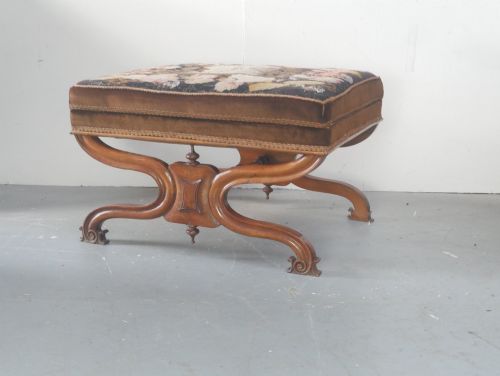
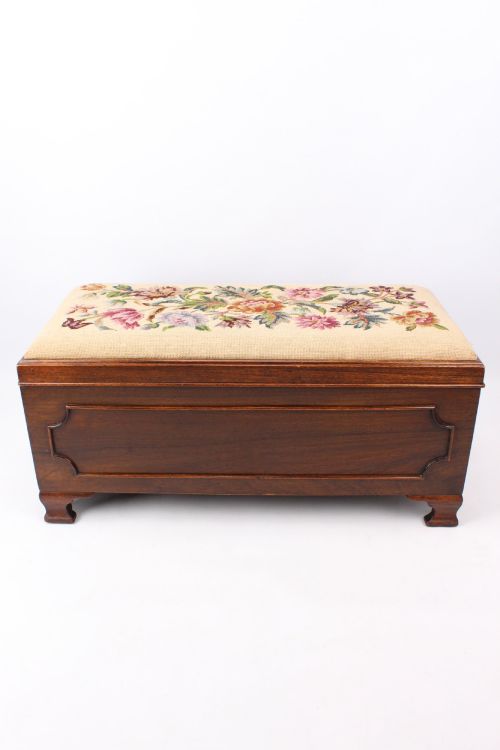
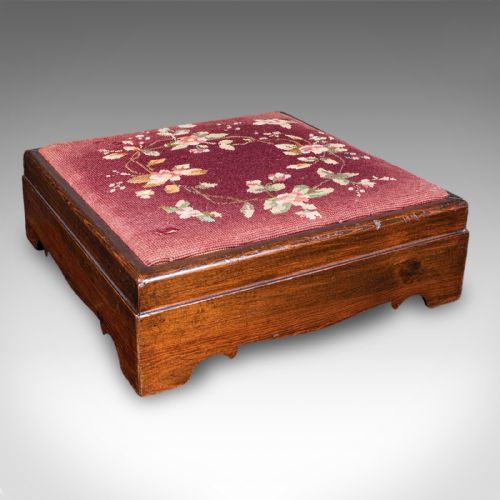
When you search for an edwardian needlepoint ottoman, you are looking at low upholstered seats designed for resting the feet or additional seating, often featuring decorative needlework tops. The examples you encounter on this page span the Victorian and Edwardian eras, alongside pieces dated across the nineteenth and early twentieth centuries.
Forms range from small round footstools to large dressing table stools and substantial ottomans. Many rely on timber frames made from mahogany, walnut, pitch pine, or painted woods, paired with wool tapestry, velvet, or woven fabric.
Stylistic influences vary widely across the selection, drawing on Victorian Rococo revival, Scottish Baronial, Georgian styles, and Louis XV revival details. Each piece reflects the domestic seating habits and decorative tastes of its period of origin.
How they were made
Makers constructed the structural frames of these stools using solid hardwoods such as mahogany and walnut, alongside pitch pine and painted timber. Tunbridge ware techniques and inlaid details appear on specific items, adding decorative precision to the wooden bases.
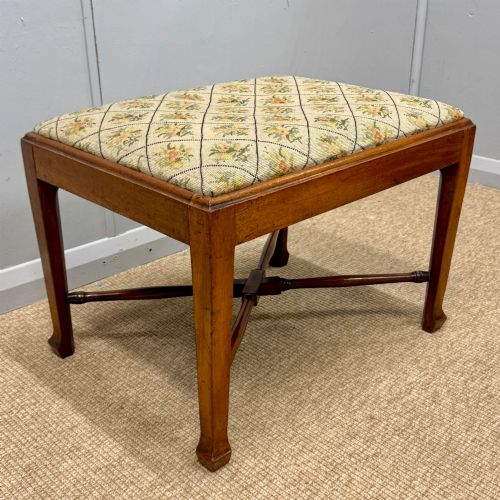
The upper surfaces feature needlepoint, tapestry, and wool textile work stretched over padding. Cross stretchers and carved wooden supports provide structural stability beneath the upholstered sections.
One small round footstool manages to pack in Victorian walnut, Tunbridge ware, geometric work, and a kilim tapestry all at once.
What varies in quality
Quality in these pieces rests upon the crispness of the timber framing and the execution of the needlework seat. Finer examples show careful joinery, such as cross stretchers, and tight, detailed tapestry or geometric kilim patterns.
The choice of primary wood also influences the piece, with dense timbers like walnut and mahogany sitting alongside simpler pitch pine or painted constructions. The integrity of the upholstery foundation and the preservation of the textile top determine the overall standard.
The Edwardian Needlepoint Ottoman Glossary
- Needlepoint
- A type of counted thread embroidery stitched onto an open-weave canvas foundation. It forms the durable and decorative patterned surfaces seen on many period footstool seats.
- Tunbridge ware
- Woodworking craftsmanship involving small mosaic tiles formed from naturally coloured woods to create geometric or pictorial scenes. It appears on Victorian examples within this selection.
- Cross stretcher
- Wooden bracing members connecting the legs of a stool near the base to improve stability. They frequently feature in the construction of dressing table stools and larger footstools.
- Scottish Baronial
- A nineteenth-century revival style drawing on medieval Scottish castle architecture. Pieces in this style often incorporate heavier proportions and robust timber framing.
- Pitch pine
- A durable softwood utilised for furniture frames during the nineteenth and early twentieth centuries. It provides a strong structural base with a prominent grain.
Edwardian Needlepoint Ottoman: Frequently Asked Questions
What is an edwardian needlepoint ottoman used for?
These pieces function primarily as footstools or low occasional seating placed beside firesides or in dressing rooms. Their compact size allows them to be moved easily around sitting spaces.
Historically, they provided comfortable support for the feet while seated on higher armchairs or sofas. Today, they serve both decorative and practical roles in period and modern interiors alike.
How do I care for the needlepoint seat?
Protect the wool textile top from direct sunlight to prevent the colours from fading over time. Gentle surface cleaning with a soft brush helps remove dust from the woven fibres.
Avoid using harsh liquid cleaners on the antique wool or tapestry panels. Professional textile cleaning is recommended for deeper maintenance of older needlework.
How can I tell a Victorian stool from an Edwardian one?
Victorian pieces often display heavier proportions, darker woods like walnut, and ornate revival styles such as Rococo or Scottish Baronial. Inlay work and Tunbridge ware details are also more commonly associated with nineteenth-century pieces.
Edwardian items frequently present lighter framing timbers and simpler decorative schemes. Reviewing the materials and listed period helps clarify the manufacturing era.