




Upholstered Storage Stool
An upholstered storage stool provides a practical seat and a hidden compartment, bringing nineteenth-century utility into modern spaces.
Upholstered Storage Stool
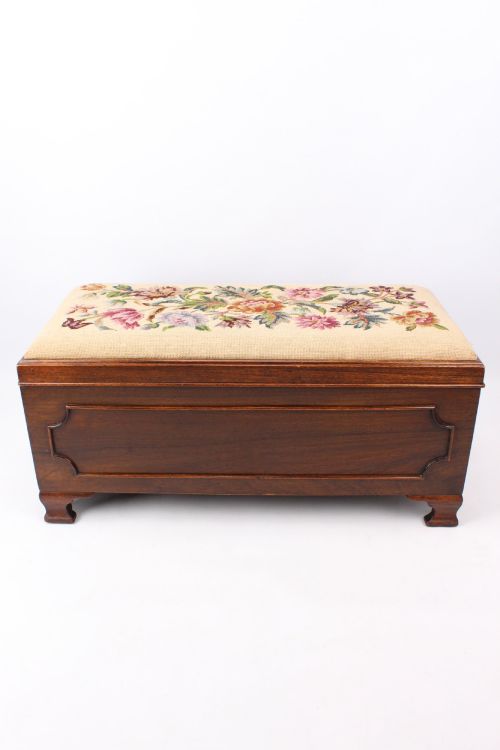
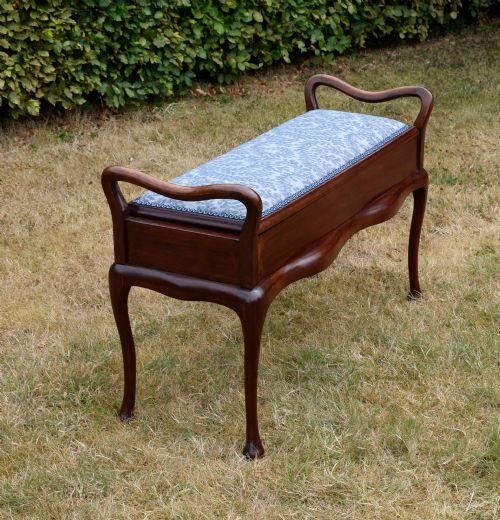
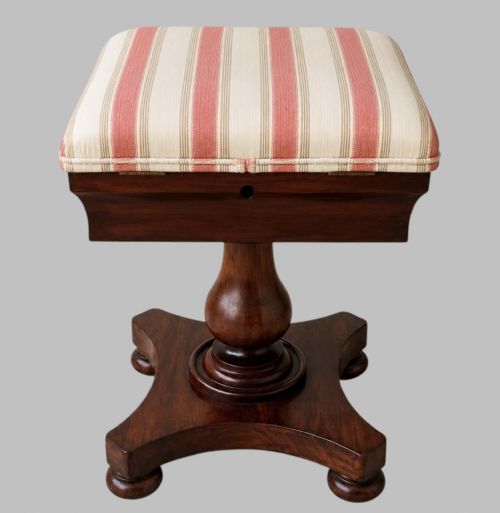
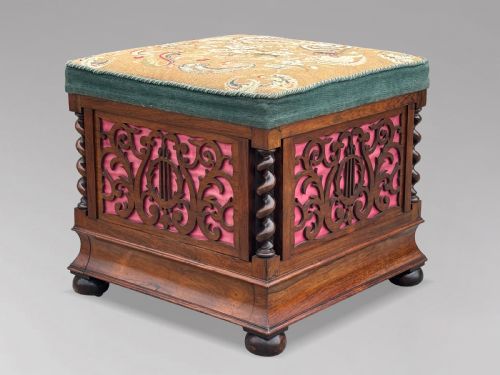
When you search for an upholstered storage stool, you find a variety of seating forms designed to hold belongings beneath a hinged or lift-up lid. The selections span periods from the Regency era through the Victorian years and into the Edwardian and Art Deco decades.
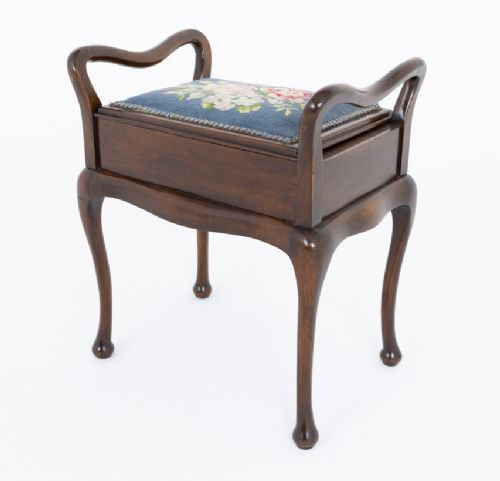
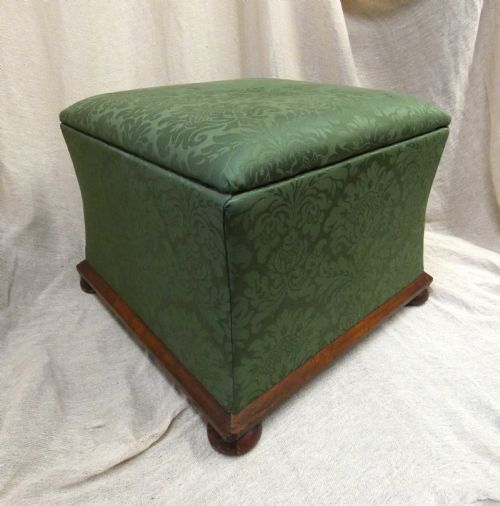
Piano stools, ottomans, footstools, dressing stools, and bedsteps appear across the listings, constructed in forms such as drum shapes, waisted profiles, and box seats. Mahogany, rosewood, and walnut form the primary wooden frames supporting these compartments.
Victorian and Edwardian iterations dominate the selection, frequently paired with needlework, tapestry, leather, or fabric upholstery. These pieces combine the function of a work table, sewing box, or blanket box with everyday seating.
Construction and materials
Cabinet makers built the frames using dense timbers like mahogany, rosewood, walnut, oak, satinwood, beech, and standard wood. Brass accents frequently reinforced feet, hinges, and decorative elements on Regency and Victorian examples.
Upholstery methods utilised traditional fabrics, velvet, leather, and stitched needlework, including gros-point tapestry. Lift-up seats, fall fronts, and hinged lids concealed internal compartments intended for sheet music, sewing supplies, or household linens.
Listings feature mahogany, rosewood, walnut, and oak frames paired with needlework, leather, velvet, and fabric upholstery across Victorian and Regency periods.
Evaluating the standard of workmanship
The sophistication of the timber frame and the refinement of the carved details establish the upper tier of these seats. Finely figured mahogany and rosewood veneers, combined with crisp lions paw feet or subtle inlay, separate standard items from superior examples.
The integrity of the internal storage box and the execution of the original needlework or leather upholstery dictate the distinction in grade. Pieces retaining functional hinged mechanisms and dense hardwood carcases represent the more accomplished workshops.
Hallett & Sons
The Upholstered Storage Stool Glossary
- Ottoman
- A low upholstered seat or stool without a back or arms, often featuring a hinged lid for interior storage. These versatile forms served as blanket boxes or dressing seats.
- Bedsteps
- A set of small steps used for climbing into high period beds, frequently equipped with hinged treads that open to reveal a hidden storage compartment.
- Canterbury stool
- A low seat combining a compartment for books or music with an upholstered top. The design incorporates vertical wooden partitions beneath or beside the seating area.
- Needlework
- Hand-stitched textile work, including gros-point and tapestry, utilised as decorative seat covers. These surfaces reflect the domestic craft traditions of the nineteenth century.
- Duet piano stool
- An elongated seating form designed for two musicians, typically housing a spacious internal compartment for sheet music beneath a lift-up seat.
Upholstered Storage Stool: Frequently Asked Questions
What was a storage stool originally used for?
These pieces served multiple domestic functions, primarily holding sheet music near pianos, needlework supplies in sitting rooms, or linens inside bedrooms.
The hidden compartments kept small items organised while providing an accessible seat near dressing tables or musical instruments.
How do I distinguish a Victorian stool from a Regency one?
Regency models often feature classical motifs like lions paw feet, rosewood veneers, and clean architectural lines. Victorian examples tend toward heavier walnut or mahogany frames with elaborate carvings and deep buttoned or needlework upholstery.
Examining the timber choice and structural silhouette usually clarifies the period of manufacture.
Are piano stools different from standard ottomans?
Piano stools are specifically proportioned for keyboard practice, often built longer to accommodate two players or fitted with specialised sheet music storage. Ottomans generally offer larger box cavities intended for blankets, dressing items, or general household storage.
Both types utilise hinged or lift-up mechanisms to access the interior.
How do I fit an antique stool into a modern room?
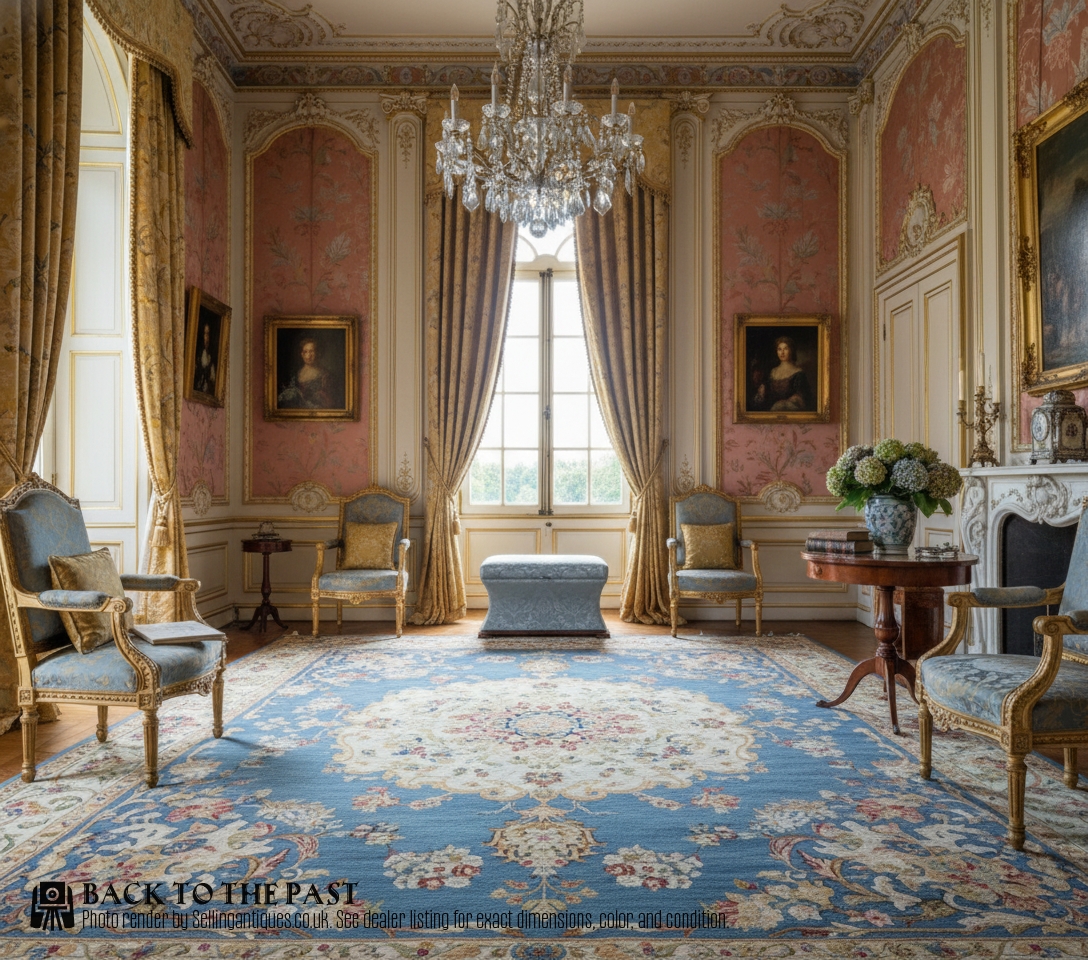
These compact seats function effectively as vanity chairs, piano benches, or casual living room footrests that double as hidden storage. The internal compartment provides a discreet place to tidy away clutter while introducing period wood tones and textiles to the interior.
Placing an ottoman beside a sofa or bed offers both a practical surface and supplementary storage space.