


Blue Upholstered Ottoman
A blue upholstered ottoman brings low seating and soft textiles together, drawing on nineteenth-century forms and varied period frames.
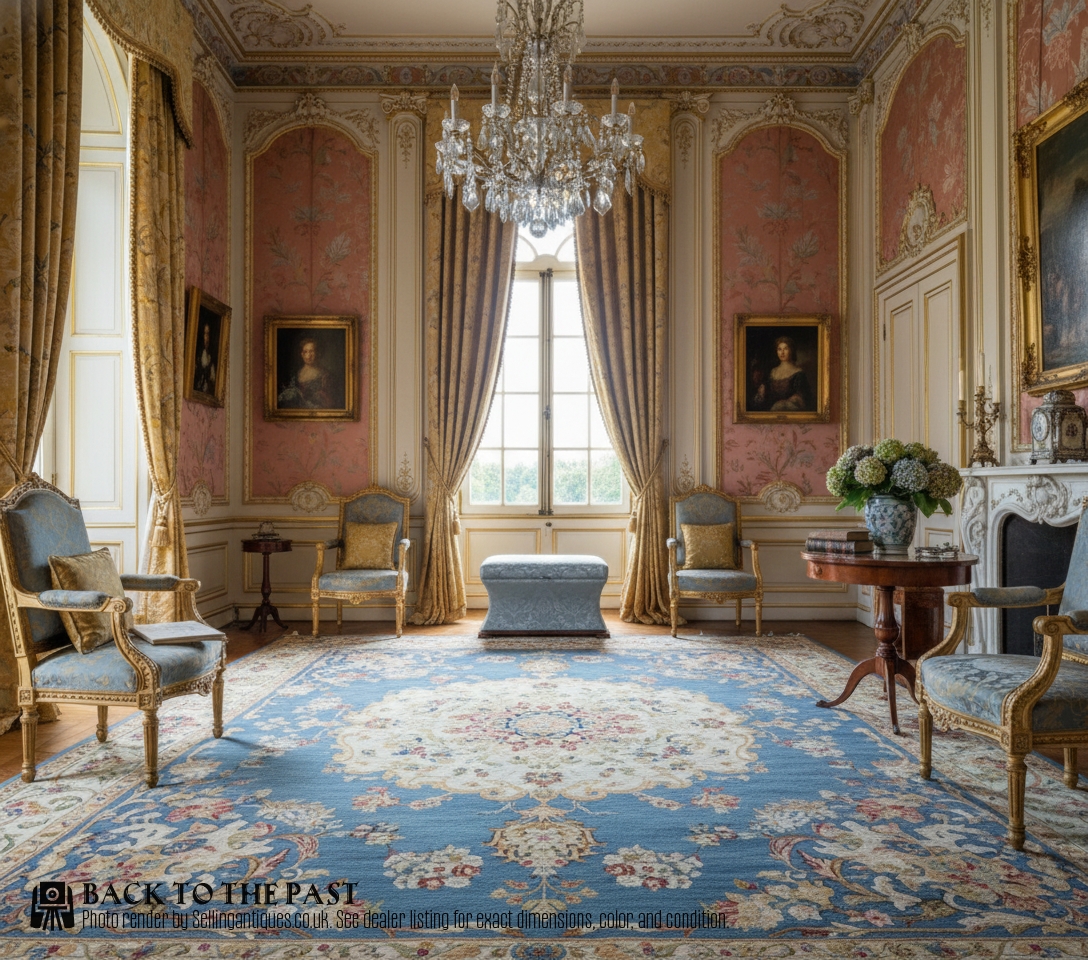
Blue Upholstered Ottoman
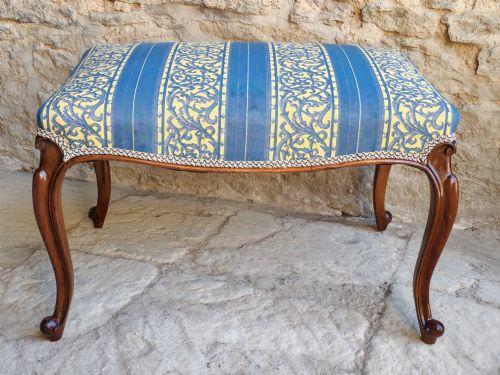
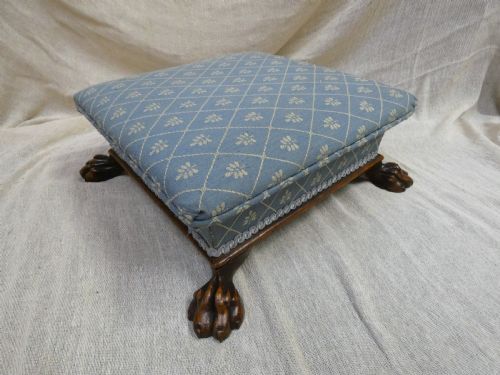
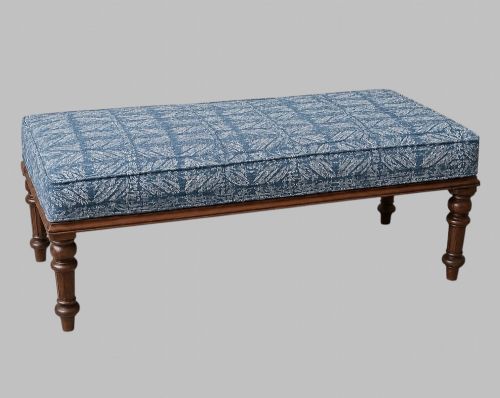
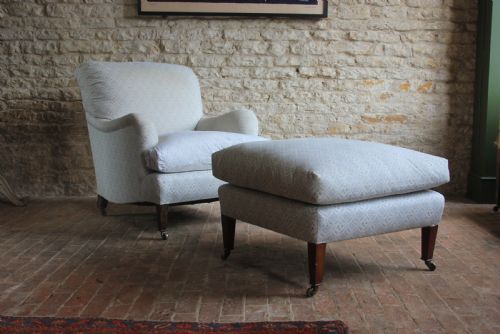
A blue upholstered ottoman unites seating and foot support, taking forms such as window seats, blanket boxes, and low stools across this selection. Buyers find pieces shaped by nineteenth-century tastes, ranging from compact footstools to larger walnut and rosewood frames.
The materials span mahogany, walnut, rosewood, and hardwood structures paired with velvet, leather, tapestry, and patterned cotton fabrics. Victorian and Regency examples dominate the listings, offering carved wooden legs alongside softer cushioned tops.
Makers and workshops of the nineteenth and early twentieth centuries produced these items for domestic comfort, utilising X-framed supports, concave shapes, and sabre legs. The inventory balances standard footstools with deeper ottoman boxes suited for storage.
Materials and construction
Frames rely on dense hardwoods like mahogany, walnut, and rosewood, often carved with Victorian Rococo revival details or kept to simpler Regency lines. Woodturners and cabinetmakers shaped these supports to bear the weight of daily seating.
Upholstery techniques involve securing fabric over interior padding, using velvet, leather, or printed cottons such as Toile de Jouy. Buttoning and professional recovering methods finish the padded surfaces above the wooden bases.
Listings feature nineteenth-century furniture in walnut, rosewood, and mahogany, spanning Victorian, Regency, and Edwardian periods with various upholstered finishes.
Assessing craftsmanship
Quality rests in the crispness of the timber carving and the structural integrity of the frame joints, whether mahogany or rosewood. Superior pieces display substantial proportions and refined secondary woods.
The finish of the upholstery and the choice of textile, from historic tapestry to specialist designer fabrics, distinguish finer examples. Original or sympathetic restoration preserves the integrity of the period frame.
Howard and Sons
The Blue Upholstered Ottoman Glossary
- Ottoman
- A low, upholstered seat or bench without a back or arms, often featuring a hinged lid for storage. These pieces function as footrests or auxiliary seating in period interiors.
- Regency
- An English design style dating from the early nineteenth century, characterised by classical influences and elegant curved legs. Pieces from this era often utilise rosewood or mahogany.
- X-framed
- A structural design where intersecting wooden members form an X shape beneath the seat. This form provides stable support for nineteenth-century stools and benches.
- Gout stool
- A specialised low footstool designed with an adjustable sloping top to elevate a foot. Mid-nineteenth-century versions typically employ walnut or mahogany frames.
- Window seat
- A long, narrow upholstered bench designed to fit within a window recess. These forms often feature side arms and decorative woodwork appropriate for public rooms.
Blue Upholstered Ottoman: Frequently Asked Questions
How are blue upholstered ottomans used?
These pieces serve primarily as footrests, low seats, or blanket boxes within living spaces and bedrooms. Their upholstered tops provide soft support while the wooden frames anchor period room schemes.
Larger versions with hinged lids also offer concealed storage for textiles or small items. They sit easily at the foot of a bed or beneath a window.
What defines a Regency ottoman?
Regency items date from the early nineteenth century and typically feature dark woods like rosewood or mahogany. Their lines draw on classical Greco-Roman motifs, often incorporating sabre legs or curved supports.
The woodwork is restrained yet refined, focusing on the natural grain of the timber rather than heavy carving. These pieces reflect the neoclassical taste of the period.
How do I spot Victorian pieces?
Victorian examples frequently display heavier walnut frames with carved details, button-tufted upholstery, or rococo revival curves. The scale tends to be generous, with sturdy construction suited to formal nineteenth-century parlours.
Makers of this era also produced rosewood footstools in matched pairs. The fabrics range from period tapestries to rich velvets.
Are these ottomans comfortable for daily use?
Period frames provide sturdy foundations, though interior padding varies depending on whether the piece retains historic stuffing or has been professionally reupholstered. Many listings feature recent textile updates using traditional or contemporary designer fabrics.
Buyers should consider the firmness of the cushion and the height of the frame relative to existing seating. Most function well as casual footrests or seats.