


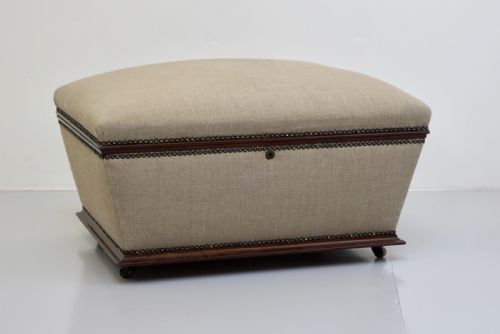
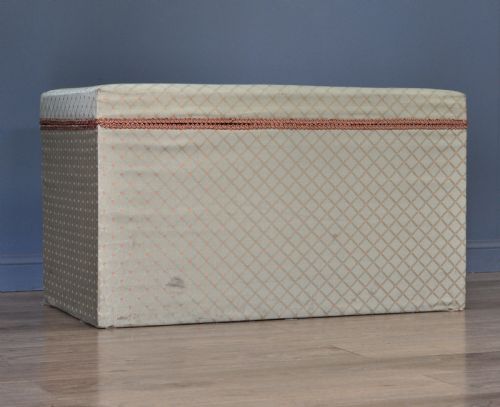
Victorian Upholstered Trunk
A victorian upholstered trunk brings practical seat and storage space together with period textiles, offering a room a warm and functional focal point.
Victorian Upholstered Trunk
When you search for a victorian upholstered trunk, you encounter sturdy timber boxes that double as blanket boxes, ottomans, and storage chests. These pieces span the nineteenth century, including specific dates such as eighteen eighty and eighteen seventy.
The versions you are most likely to meet on this page include large pine storage chests, mahogany ottomans, and walnut hall benches recovered in linen. Makers such as Hallett and Sons also appear among country house examples.
Form and function unite in these objects, functioning equally as blanket boxes, ottomans, and storage chests. They provide deep internal storage beneath padded lids designed for seating.
How they were made
Construction relies upon solid timber carcases built from pine, mahogany, birch, and walnut. These foundational boxes provide the robust structural framework necessary to support daily use as seating.
Upholstery techniques involve covering the lids and bodies in fabrics including linen, leather, baize, and crewel work. Metal elements such as brass and iron provide structural reinforcement and decorative detail.
Listings feature pine, mahogany, birch, and walnut timbers alongside fabric, leather, brass, and iron materials across the nineteenth century.
What varies in quality
Quality rests upon the selection of timber and the sophistication of the silhouette, such as concave shaped upholstered ottoman blanket boxes. Finer pieces employ dense hardwoods like mahogany and walnut alongside detailed joinery.
The choice of covering material and textile execution distinguishes standard examples from finer items. Items featuring crewel work or high-grade leather display a greater degree of original craftsmanship.
Hallett and Sons
The Victorian Upholstered Trunk Glossary
- Ottoman
- A low upholstered seat or bench without a back or arms, often featuring a hinged lid that opens to reveal storage space inside. These versatile items functioned across Victorian drawing rooms and bedrooms.
- Pine
- A soft timber widely utilised for the structural carcases of nineteenth-century blanket boxes and storage chests. It offers reliable strength while remaining lighter than denser hardwoods.
- Mahogany
- A durable dark hardwood favoured by cabinet makers for superior Victorian furniture and storage trunks. Its dense grain accepts polished finishes and withstands heavy domestic use.
- Baize
- A coarse woolen material resembling felt, frequently used to line the interiors of nineteenth-century boxes and chests. It protects stored garments and textiles from friction against the timber.
- Crewel work
- Traditional surface embroidery executed in wool yarn upon a sturdy linen or cotton ground. This tactile needlework appears on the upholstered lids of select nineteenth-century ottomans.
Victorian Upholstered Trunk: Frequently Asked Questions
What is a victorian upholstered trunk?
A victorian upholstered trunk is a nineteenth-century wooden storage box fitted with a padded, fabric-covered lid for seating. They served primarily as blanket boxes, ottomans, and hall benches.
These pieces combine utilitarian timber construction with decorative textiles, functioning simultaneously as furniture and storage containers within period interiors.
How were these trunks used originally?
Households utilised these versatile chests in bedrooms for storing linens, blankets, and garments while providing a place to sit. In hallways and reception rooms, they served as benches for putting on boots.
The dual purpose made them essential furnishings in Victorian country houses, keeping living spaces tidy while offering accessible auxiliary seating.
Where should I place an ottoman trunk?
An upholstered chest works effectively at the foot of a bed for spare blankets and cushions. They also suit entrance hallways where footwear storage and seating are both required.
Positioning them away from direct sunlight protects the historic fabric and leather coverings from fading and drying out over time.
How do I care for the fabric?
Gentle surface cleaning with a soft brush removes dust from linen, leather, and crewel work coverings. Avoid harsh chemical cleaners that can damage nineteenth-century textiles and finishes.
Maintaining stable room humidity prevents the underlying pine, mahogany, or walnut timbers from warping while preserving the integrity of the original upholstery.