


Padded Coffee Table Ottoman
A padded coffee table ottoman serves dual purposes as seating and surface, bringing tactile comfort and traditional presence to a room.
Padded Coffee Table Ottoman
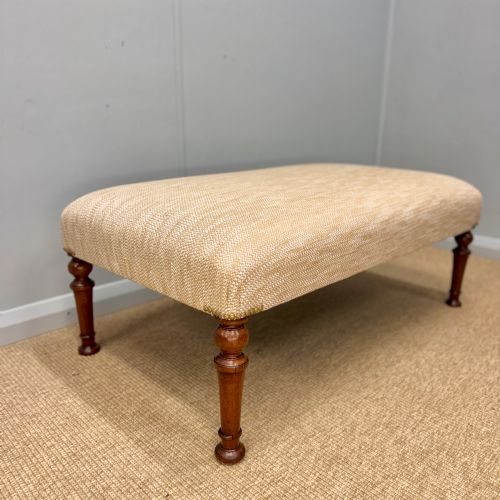
When you search for a padded coffee table ottoman, you encounter large scale seating and central surfaces originating from periods such as the nineteenth century, Georgian era, and Victorian times. These pieces function equally well as low tables or footrests within traditional English and country house interiors.
Makers and makers' marks are absent from the evidence, meaning these furnishings rely on their proportion, materials, and stylistic cues from periods like the nineteenth century to establish their character.
How they were made
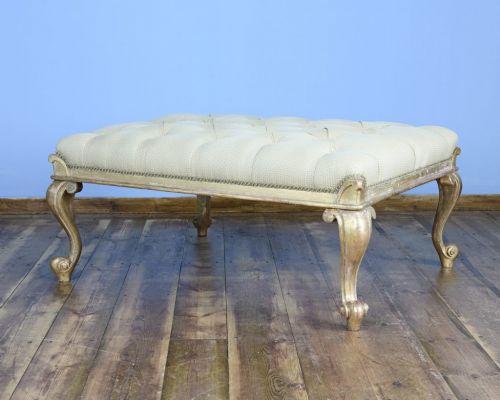
The construction of these pieces relies on sturdy wooden frames shaped in mahogany, walnut, or parcel gilt wood, providing structural support for daily use as seats or tables. Carved and gilded details often define the more formal nineteenth century and Georgian revival iterations.
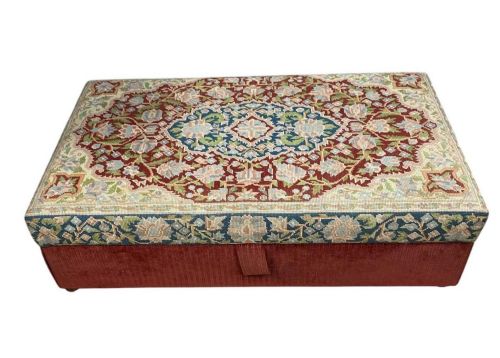
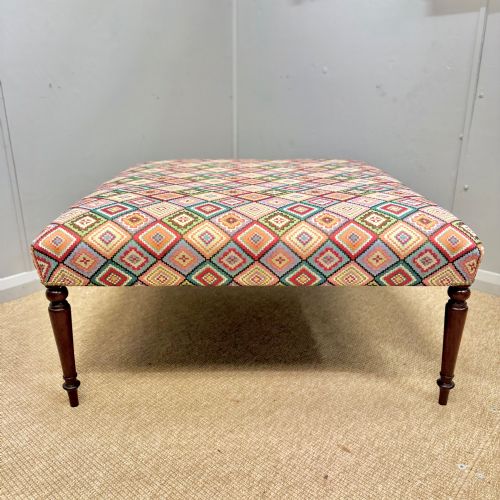
Upholstery defines the upper surface, utilising hand dyed leather, velvet, woven fabric, and wool tapestry. Buttoning appears across several leather examples, securing the padding and creating a firm surface suitable for resting trays or feet.
The listings on this site encompass periods from the Georgian era through to nineteen-twenty, utilising mahogany, walnut, and brass.
What varies in quality
Quality in a padded coffee table ottoman rests upon the substance of the timber frame and the execution of the upholstery. Pieces featuring solid mahogany or walnut foundations with traditional hand dyed leather or intricate wool tapestry sit comfortably above simpler variations.
Proportion and scale distinguish the finer examples, particularly grander William IV and country house pieces where carving, parcel gilding, and buttoning are handled with architectural surety.
The Padded Coffee Table Ottoman Glossary
- Centre stool
- A large freestanding stool designed to sit in the middle of a room, functioning as a seat or an informal table.
- Parcel gilt
- A decorative technique where specific carved details on a wooden frame are partially covered in gold leaf.
- Buttoned leather
- Upholstery secured with deep-set buttons that create a padded, diamond-patterned surface.
- Tapestry top
- An upper surface covered in woven wool fabric depicting pictorial or geometric designs.
Padded Coffee Table Ottoman: Frequently Asked Questions
How do I use a padded coffee table ottoman?
These pieces serve a dual purpose as both low tables and comfortable footrests. Placing a tray on the upholstered surface allows them to hold drinks or books securely.
Their substantial scale makes them ideal centrepieces for large living spaces, offering additional seating when hosting guests.
What periods do these ottomans come from?
The pieces available span the nineteenth century, including specific styles from the Georgian, Victorian, and William IV eras. Later additions from around nineteen-twenty also appear in leather.
Distinguishing between these eras involves examining the timber used, the style of the frame, and the upholstery techniques employed.
Are these ottomans upholstered in leather?
Several examples feature hand dyed leather upholstery, often finished with buttoning across a large surface. Other versions utilise woven fabric, velvet, or wool tapestry.
The choice of covering significantly alters the visual weight and texture of the piece within an interior scheme.
How do I care for antique leather upholstery?
Leather surfaces benefit from regular dusting and occasional conditioning to maintain their suppleness over time. Keeping them away from direct heat sources prevents the material from drying out.
Natural ageing adds character to hand dyed leather, so gentle maintenance preserves the patina rather than erasing its history.