
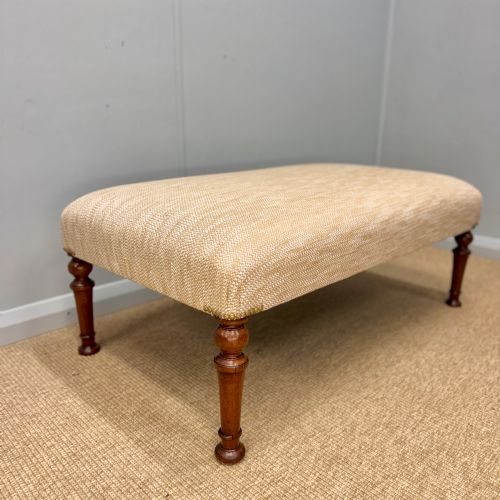
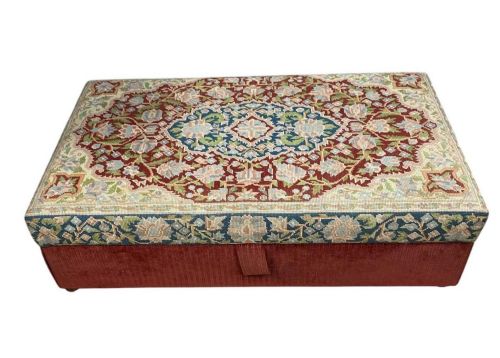
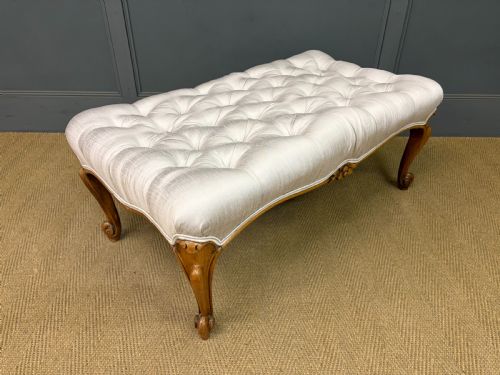
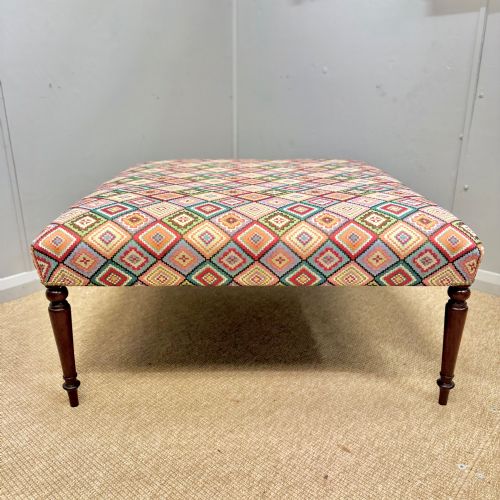


Rectangular Padded Ottoman
A rectangular padded ottoman offers practical comfort and versatile seating, bringing period character and tactile warmth into a room.
Rectangular Padded Ottoman
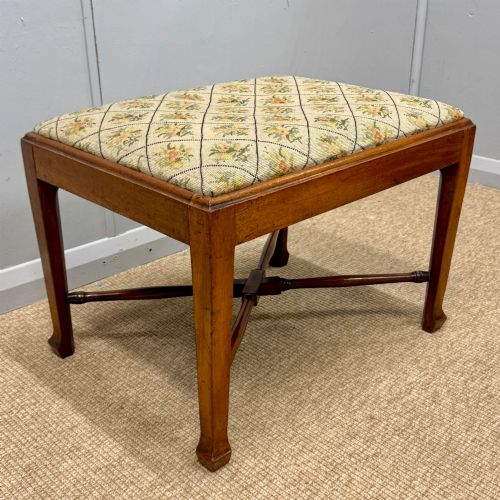
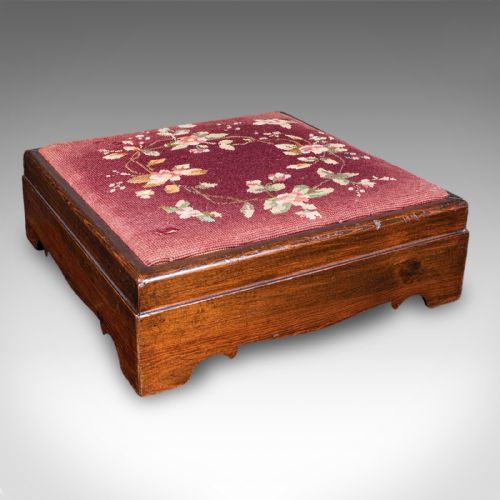
A rectangular padded ottoman provides a low profile for resting feet or serving as a casual seat, appearing frequently in forms such as footstools and dressing table stools.
The selections span the nineteenth century, the Edwardian era, and the nineteen thirties, drawing on traditional English, Victorian, and George II styles.
Makers and workshops across these periods constructed them to function by the fireside, in the drawing room, or as low coffee tables.
How they were made
Carpenters shaped the foundational frames from timber such as mahogany, rosewood, pitch pine, teak, and general wood, often adding decorative carvings or cross stretchers.
Upholsters padded the surfaces using woven materials, wool tapestry, and velvet, sometimes finishing the design with brass castors on the feet.
The listings span the nineteenth century, the Edwardian era, and nineteen thirty, utilising timbers such as mahogany, rosewood, teak, and pitch pine.
What varies in quality
The calibre of a piece rests upon the crispness of the timber carving and the structural integrity of the frame joints under the padding.
Textiles dictate much of the character, where hand-worked wool tapestry or rich velvet elevates the upholstery far above standard fabric.
Howard and Sons
The Rectangular Padded Ottoman Glossary
- Ottoman
- A low, upholstered seat or footstool without arms or a back. It frequently serves multiple purposes in a sitting room.
- Cross stretcher
- An intersecting wooden support placed between the legs of a stool for stability. This architectural detail adds strength and visual interest.
- Castor
- A small wheel attached to the base of a leg to aid movement. Brass fittings appear commonly on nineteenth-century examples.
- Tapestry
- A form of heavy textile art woven with pictorial or geometric designs. Wool variants provide a durable and tactile surface for footstools.
Rectangular Padded Ottoman: Frequently Asked Questions
How do I use a rectangular padded ottoman?
These pieces function primarily as footstools by a fireside or seating at a dressing table. They also adapt well as low coffee tables when topped with a stable tray.
Position them centrally in a room or beside larger armchairs to anchor the seating arrangement. Their low height keeps sightlines open across the space.
What periods do these ottomans come from?
The inventory spans the Victorian and Edwardian eras, alongside pieces dated around nineteen thirty and the late nineteenth century. Styles range from traditional English and George II revivals to Anglo-Indian designs.
Construction details and timber choices usually reflect the prevailing tastes of those specific decades. Examining the frame construction helps clarify the likely period of manufacture.
Which woods appear in these frames?
Mahogany and rosewood feature prominently in the more formal nineteenth-century examples. Pitch pine, teak, and general hardwoods appear across various country house and fireside stools.
Carpenters selected these timbers for their durability and grain, polishing or carving them to suit the formal or rustic nature of the interior.
What upholstery materials should I expect?
Many examples feature wool tapestry, velvet, or contemporary fabric coverings over traditional padding. Some pieces retain hand-worked textile surfaces that highlight period needlework skills.
The choice of textile dictates the visual weight of the stool within a room, contrasting polished mahogany frames or complementing simpler pine structures.