

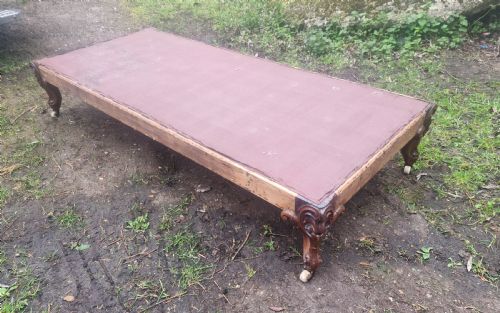


Large Rectangular Footstool
A large rectangular footstool anchors a room with generous proportions, offering a grounded resting place for tired feet or extra seating when needed.
Large Rectangular Footstool
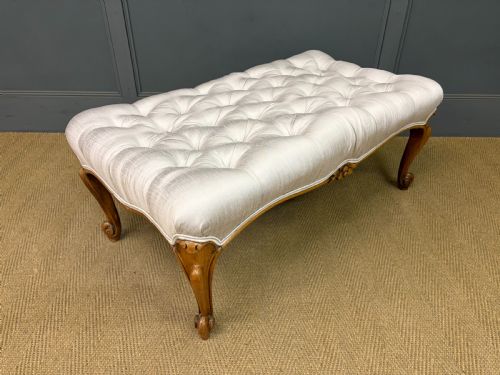
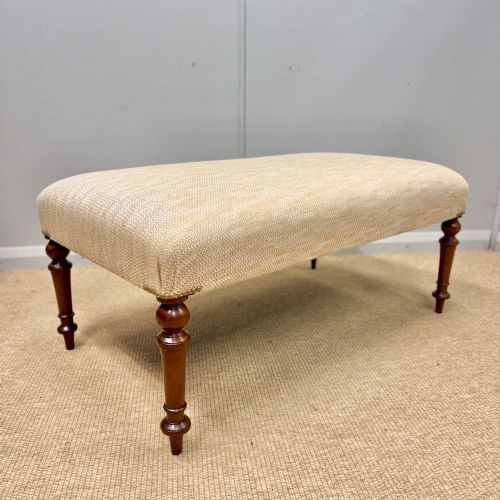
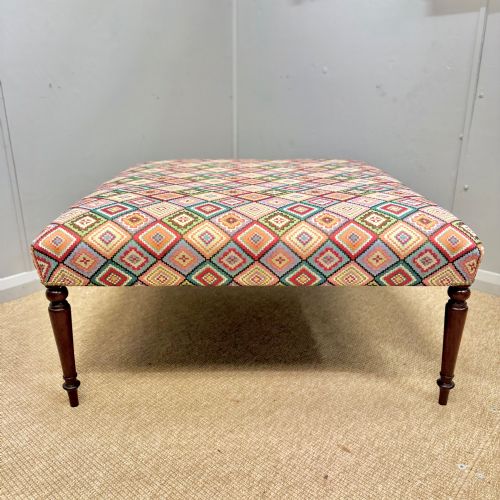
A large rectangular footstool appears across several nineteenth-century periods, alongside occasional revival pieces from nineteen-thirty. These forms encompass Victorian centre stools, dressing table stools, and substantial country house ottomans.
Makers fashioned these substantial items from sturdy timbers including mahogany, rosewood, and oak, often supporting them on low frames with brass castors. Buyers will encounter both buttoned leather upholstery and various woven fabric coverings across the current selection.
Materials and construction
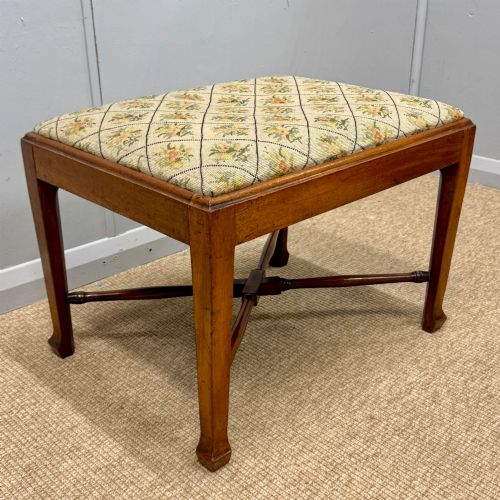
Craftsmen built the underlying frames using dense hardwoods like mahogany, oak, and rosewood, ensuring structural longevity under daily use. Joinery techniques varied from simple cross stretchers to carved frames and cane seating.
Upholstery involved traditional fabric coverings or buttoned leather, whilst some examples incorporated brass castors to ease movement across heavy carpets. Many pieces survive with fabric ready for reupholstering to match modern interiors.
Listings feature items from the Victorian period, nineteen-thirty, and materials including mahogany, rosewood, oak, brass, and woven fabric.
Judging the range
Quality rests upon the integrity of the timber frame, the depth of the carving, and the sophistication of any added details like brass castors. Rosewood and mahogany centre stools generally display finer joinery than simpler country house variants.
The choice between original cane seating, buttoned leather, or bare frames awaiting fabric changes how the piece integrates into a room. Substantial proportions and well-executed cross stretchers separate standard seating from exceptional examples.
The Large Rectangular Footstool Glossary
- Centre stool
- A freestanding stool designed to sit in the middle of a room rather than against a wall. These items often feature decorative rosewood or mahogany frames.
- Cross stretcher
- An intersecting wooden brace between the legs of a stool that adds structural support. This feature appears on dressing table variants from nineteen-thirty.
- Brass castor
- A small swivelling wheel made of brass attached to the base of a footstool leg. This addition allows heavy timber frames to move smoothly across floor coverings.
- Ottoman
- A padded upholstered seat without a back or arms, often built on a large rectangular scale. These pieces function as both footrests and supplementary seating in country houses.
Large Rectangular Footstool: Frequently Asked Questions
Where should I place a large rectangular footstool?
These substantial pieces sit comfortably before a main sofa or in the middle of a spacious drawing room. Their generous proportions provide a commanding presence without blocking pathways.
Positioning them beneath a window or at the foot of a bed also utilises their length effectively. They double as informal seating when hosting guests.
How do I care for nineteenth century timber frames?
Maintain the polished mahogany, oak, or rosewood by dusting regularly with a soft, dry cloth. Avoid placing timber furniture in direct sunlight or near heat sources to prevent the wood from drying out.
Applying a traditional beeswax occasionally helps nourish the grain and preserves the historic finish. Keep leather and fabric upholstery protected according to their specific textile requirements.
What is the difference between an ottoman and a footstool?
Ottomans typically offer a larger surface area and heavier construction suited for use as dual-purpose seating and footrests. Traditional footstools often focus purely on elevating the legs.
Victorian country house examples blur this distinction by combining robust timber frames with deeply padded upholstery. Both forms appear frequently in nineteenth-century room layouts.
Can I reupholster a vintage footstool?
Many period footstools arrive ready for reupholstering, allowing you to select fabrics that suit your interior colour scheme. Traditional frames accept modern textile applications easily.
Consulting a professional upholsterer ensures the internal stuffing and webbing remain structurally sound beneath the new fabric. This process breathes new life into nineteenth-century pieces while retaining their historic wooden frames.