


Colonial Carved Bench
These colonial carved bench examples combine dense tropical hardwoods with intricate traditional craftsmanship, bringing distinct global history into a room.
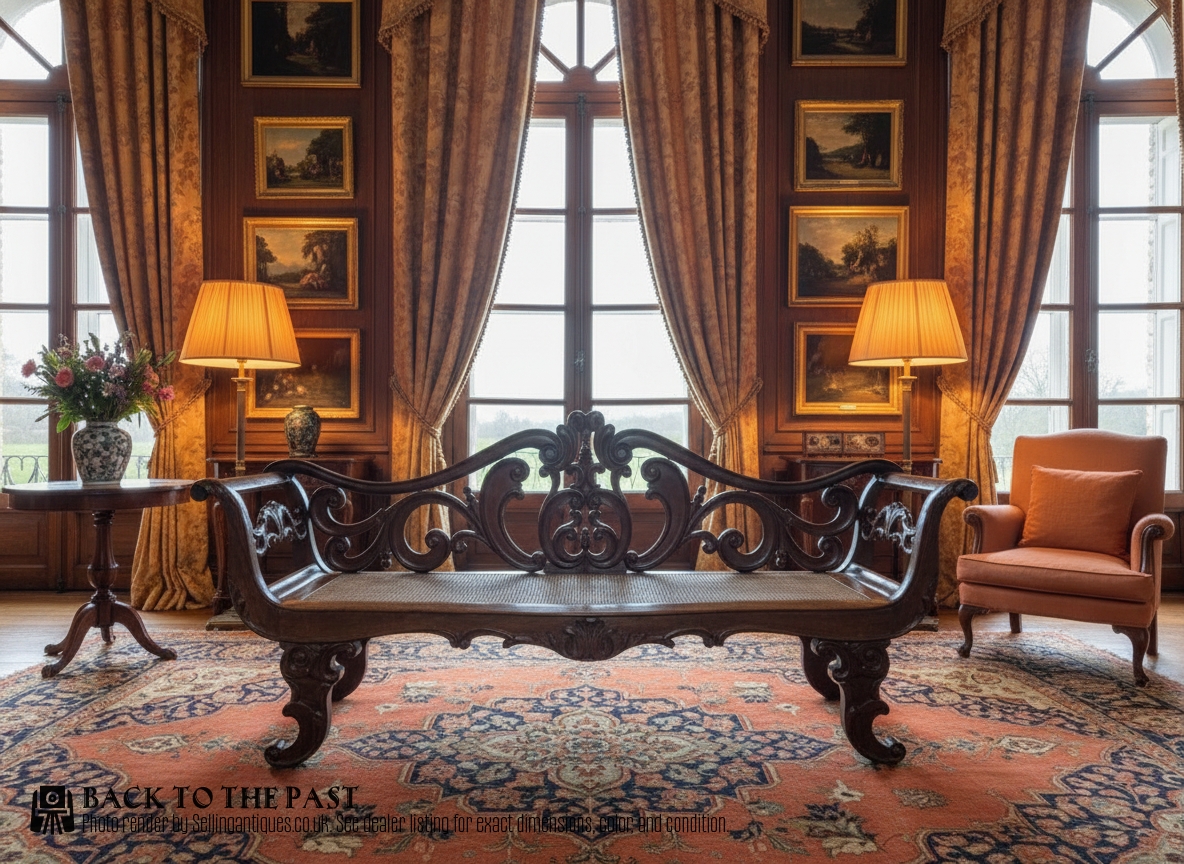
Colonial Carved Bench
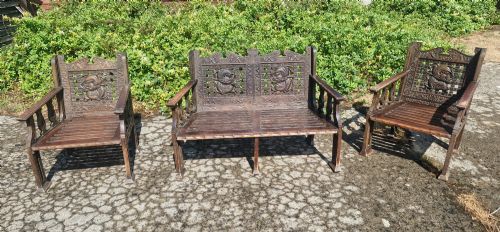
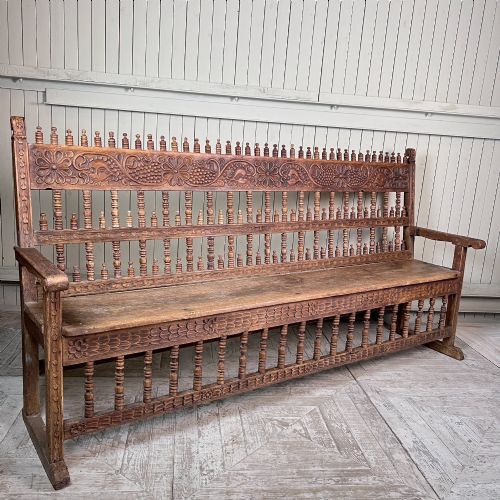
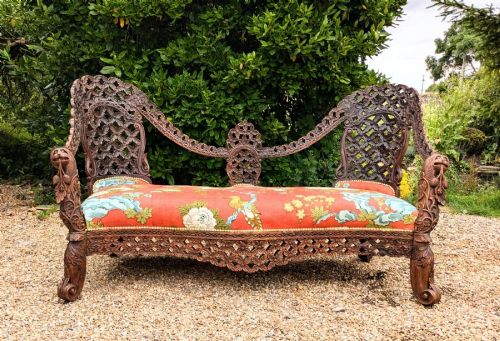
A colonial carved bench encompasses seating such as settees, daybeds, and hall benches created during periods of cross-cultural exchange and trade. The selection on this page centres on pieces originating from traditions like Anglo-Indian, Spanish Colonial, and Dutch Rococo design.
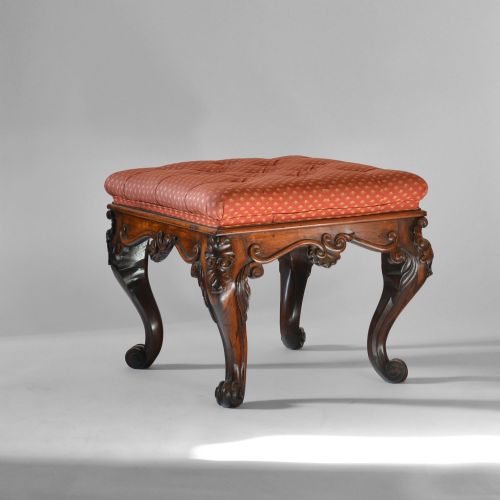
Buyers will encounter forms ranging from large veranda seating in teak to smaller rosewood stools and window seats. Many incorporate woven cane or rattan alongside substantial timber structures.
Origins span the eighteenth and nineteenth centuries, including Victorian iterations and specific regional workshops from Ceylon and Burma. These seating forms served practical and decorative functions in colonial residences and country houses.
How they were made
Construction relies on durable tropical timbers including teak, rosewood, ebony, and general hardwood. These dense woods supported deep, intricate hand-carving without losing structural integrity.
Many examples integrate natural materials like cane and woven rattan for seating panels, paired occasionally with bone inlay or textile upholstery such as tapestry and fabric.
Listings span the eighteenth and nineteenth centuries, featuring materials from teak and rosewood to cane and bone inlay.
What varies in quality
Quality rests primarily on the depth and crispness of the hand-carving across the timber frame. Pieces featuring complex motifs, such as figures or elaborate scrollwork, demonstrate superior artisanal skill.
The choice of primary wood and the integrity of integrated elements like cane work or bone inlay determine the overall standing of an individual piece.
The Colonial Carved Bench Glossary
- Anglo-Indian
- Pertaining to furniture made in India under British influence, frequently combining local cabinet-making traditions with European forms. These pieces often utilise indigenous rosewood or teak.
- Cane
- Material woven from the outer portion of rattan palms, utilised for flexible and breathable seat panels in tropical climates. It requires careful hand-weaving techniques.
- Hardwood
- Dense timber derived from broad-leaved trees such as teak and rosewood. This material provides the necessary strength for elaborate carving.
- Veranda bench
- A large seating form designed for transitional outdoor-indoor living spaces in colonial architecture. They prioritise durable construction against humid climates.
- Scroll back
- A chair or bench backrest featuring outward-curving wooden scrolls at the top rail. This design element reflects European stylistic influences absorbed into colonial workshops.
Colonial Carved Bench: Frequently Asked Questions
How do I style a colonial carved bench?
Position the bench as a focal point in a hallway, conservatory, or living area where the carved details remain visible. Pair it with simple surrounding decor to let the dense timber work stand out.
Consider the wood tone when placing the piece near other furnishings. Natural light enhances the grain of teak and rosewood elements.
Are these benches comfortable for daily sitting?
Many examples feature woven cane or rattan seats designed for breathability in warm climates, which offer a firm sit. Adding loose cushions can increase comfort for prolonged lounging.
Daybeds and settees often provide deeper seats suited for resting. Check the specific dimensions and backrest angles of each individual piece.
How do I care for antique tropical hardwoods?
Maintain the timber by dusting regularly with a dry cloth and avoiding harsh chemical polishes. Keep the furniture away from direct heat sources and drastic humidity changes to protect the wood.
Cane seating panels benefit from occasional gentle cleaning with a damp sponge. Ensure the material dries completely to prevent sagging.
What is the difference between an Anglo-Indian and a Spanish Colonial bench?
Anglo-Indian pieces typically display British furniture shapes executed by Indian artisans, often incorporating dense rosewood and intricate floral or animal carvings. They reflect the aesthetic exchange of the nineteenth century.