
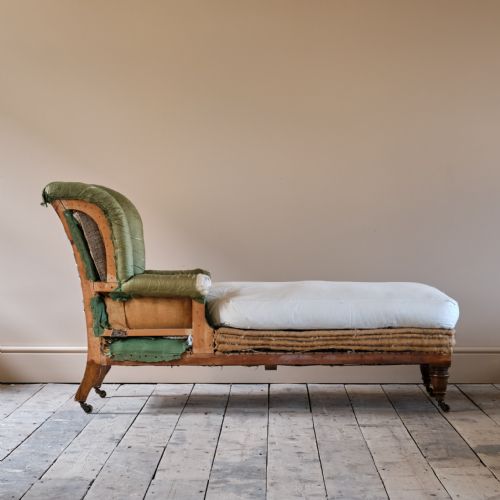
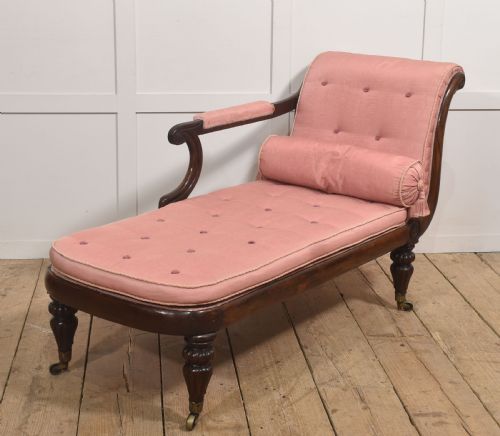
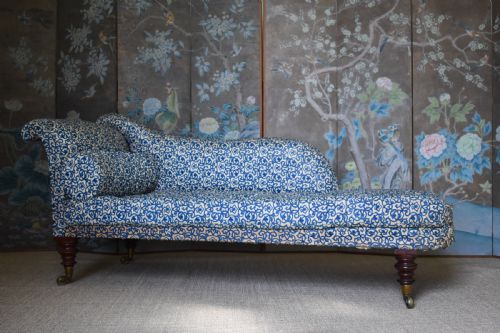

Victorian Scroll Sofa
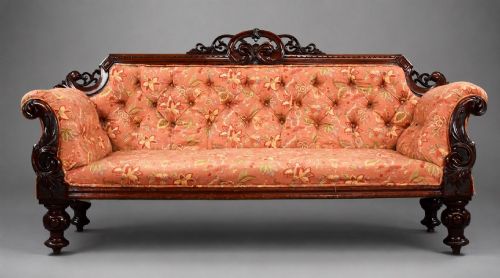
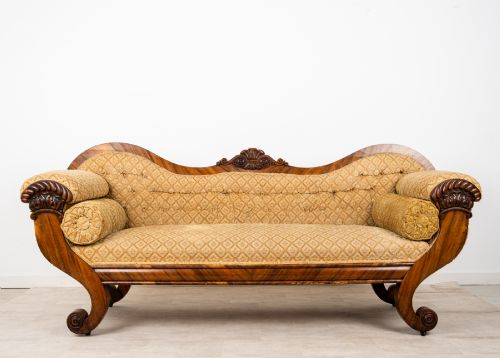
A victorian scroll sofa brings the generous proportions and architectural woodwork of the nineteenth century directly into a modern drawing room.
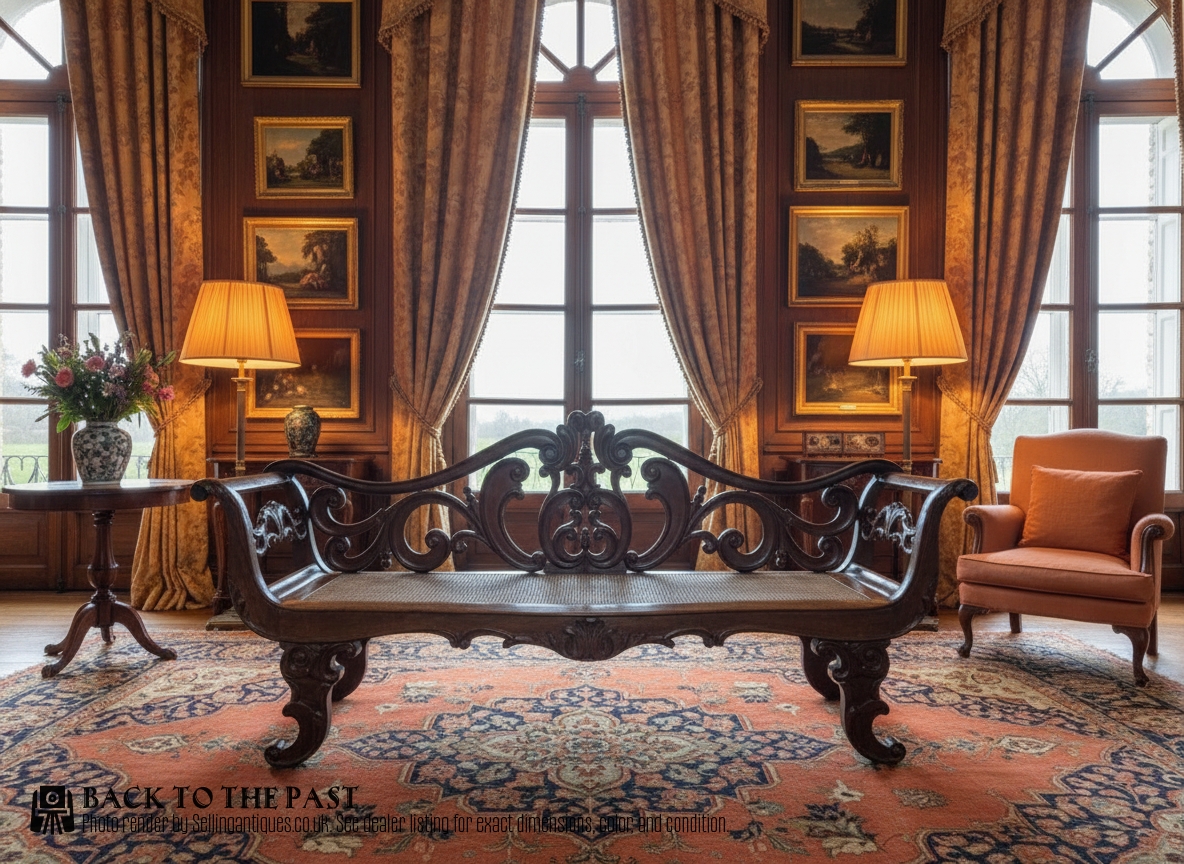
Victorian Scroll Sofa
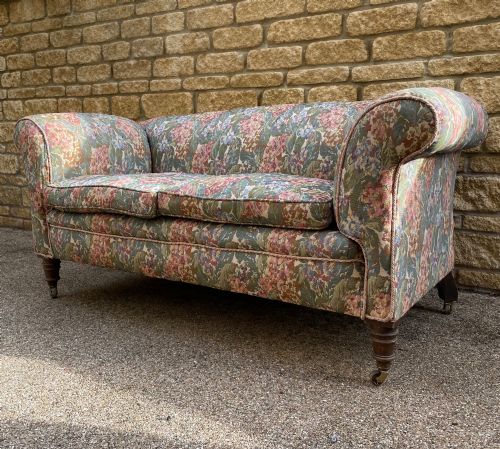
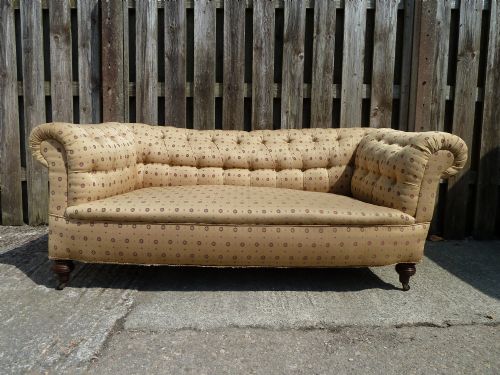
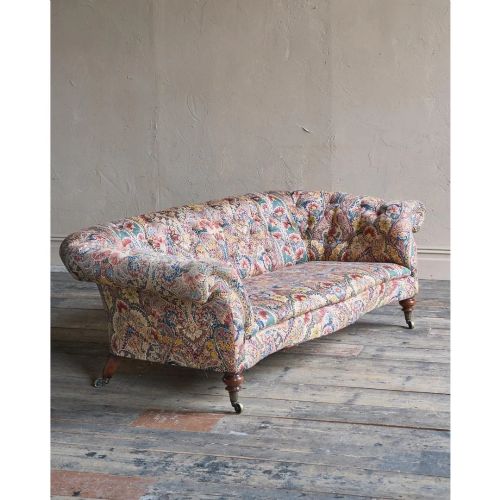
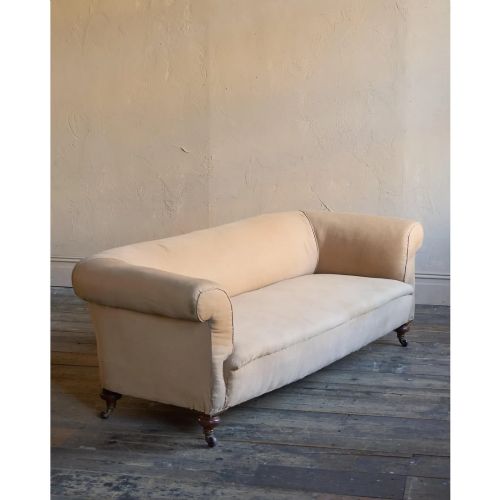
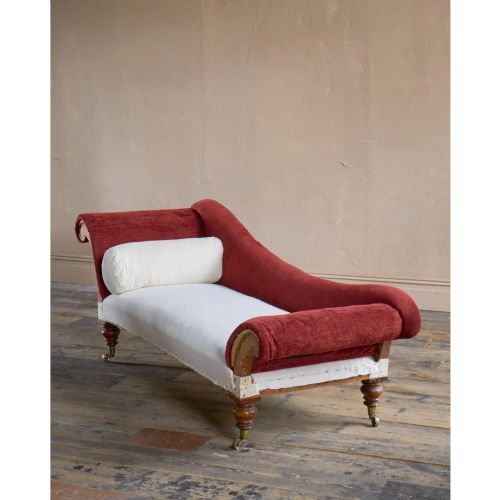
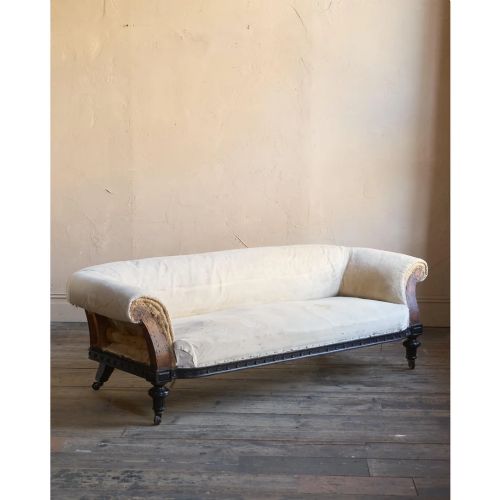
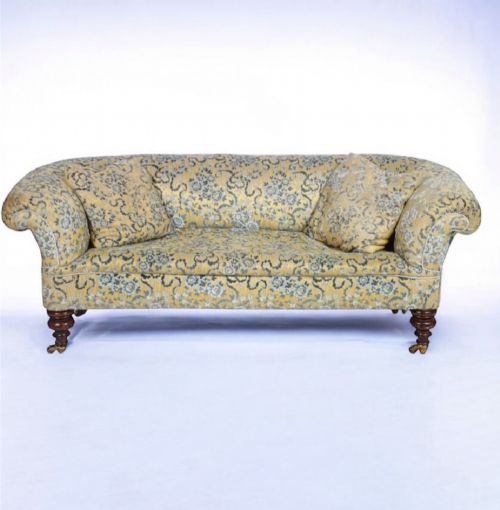
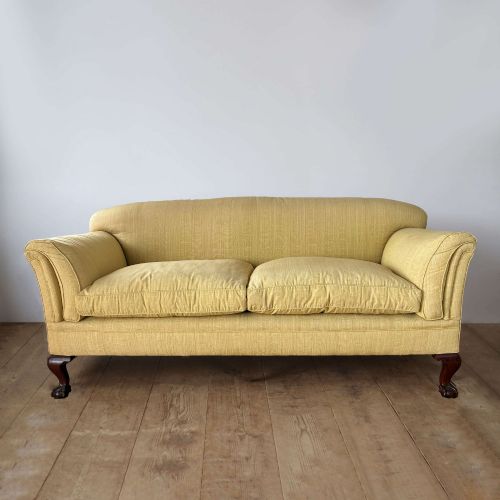
The victorian scroll sofa encompasses a range of deeply comfortable nineteenth-century seating forms, from button-upholstered Chesterfields to elegant scroll-end settees and chaise longues. These pieces typically feature sweeping, scrolled armrests and substantial frames designed for lounging.
The versions most commonly met on this page combine generous upholstered bodies with exposed timber show-wood frames, often standing on turned legs fitted with original castors.
Makers ranged from notable cabinet-making firms like Howard and Sons and Holland and Sons to regional workshops producing country house seating in various styles.
How they were made
Makers constructed the structural frames of a victorian scroll sofa using dense hardwoods such as mahogany, walnut, and rosewood, often choosing these timbers for their stability and capacity to hold elaborate carved details.
Upholstery techniques involved traditional stuffing methods beneath fabrics like velvet, damask, leather, and heavy cotton, sometimes featuring deep buttoning secured by twine through the interior webbing.
Listings feature nineteen-century pieces constructed from mahogany, walnut, rosewood, and cast iron.
What varies in quality
The distinction between standard workshop production and top-tier cabinet making rests on the crispness of the timber carving and the architectural balance of the scroll arms. Master makers ensured that exposed show-wood frames integrated seamlessly with the overall upholstery lines.
Internal joinery and the resilience of the original springing system dictate the structural integrity of the piece over generations of daily use.
Howard and Sons·Holland and Sons
The Victorian Scroll Sofa Glossary
- Scroll end
- A sweeping, outward-curving wooden or upholstered armrest characteristic of nineteenth-century seating. This design provides both ergonomic support and architectural presence.
- Chesterfield
- A deeply upholstered sofa featuring arms and back of the same height. This form typically displays signature button tufting across the inner back and sides.
- Show-wood
- Exposed polished timber frame components left visible around the upholstered portions of a settee or chair. This technique highlights the grain of walnut or mahogany.
- Chaise longue
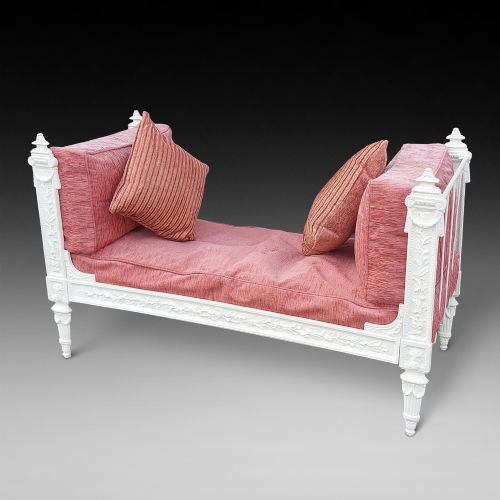
- An elongated upholstered seat designed for reclining, combining elements of a chair and a daybed. These often feature a single raised scroll end.
- Castor
- A small wheel attached to the base of furniture legs to facilitate movement across floor surfaces. Original brass or ceramic versions often indicate period authenticity.
Victorian Scroll Sofa: Frequently Asked Questions
What defines a victorian scroll sofa?
A victorian scroll sofa is distinguished by its characteristic outward-curving arms and substantial nineteenth-century wooden framework. These pieces often feature turned legs and deep upholstery designed for comfort.
They represent a period when seating transitioned from rigid formal styles to plush, ergonomic lounging furniture suitable for country houses and town residences alike.
How do I identify a Howard and Sons sofa?
Howard and Sons pieces typically display superior joinery, specific maker stamps on the castors, and robust internal webbing. Their designs range from classic deep-buttoned Chesterfields to low-slung armchairs and settees.
Examining the underside and leg stampings usually confirms the origin of these sought-after nineteenth-century workshop pieces.
Are these sofas suitable for daily use?
Most antique sofas from this era were built with hardwood frames and traditional coil springs designed for enduring structural strength. Regular maintenance of the upholstery keeps them functional for everyday living.
Placing them away from direct sunlight preserves the original fabrics and polished timber surfaces over time.
How can I tell a chaise longue from a settee?
A chaise longue is constructed for reclining with a single primary backrest and one raised scroll end, whereas a settee provides balanced seating for multiple people along a uniform back. Both forms share the characteristic carved show-wood frames of the period.
Understanding these architectural differences helps determine where each piece fits within a room layout.