


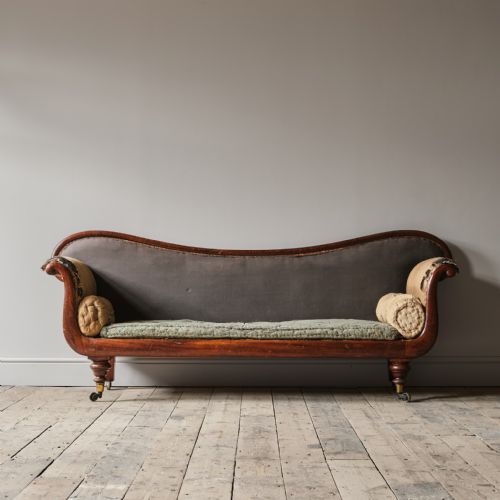


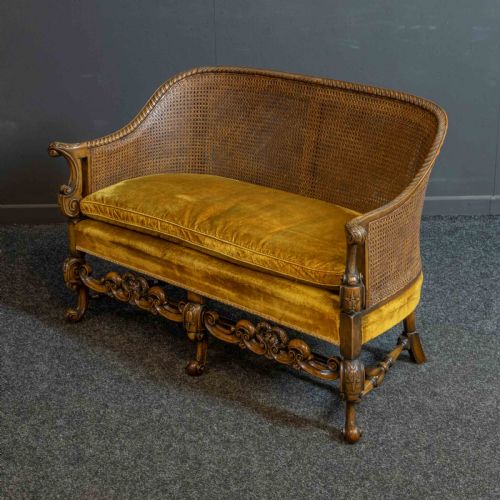


Scroll Back Bench
A scroll back bench offers sweeping lines and comfortable reclining, making it a striking focal point in a hallway or drawing room.
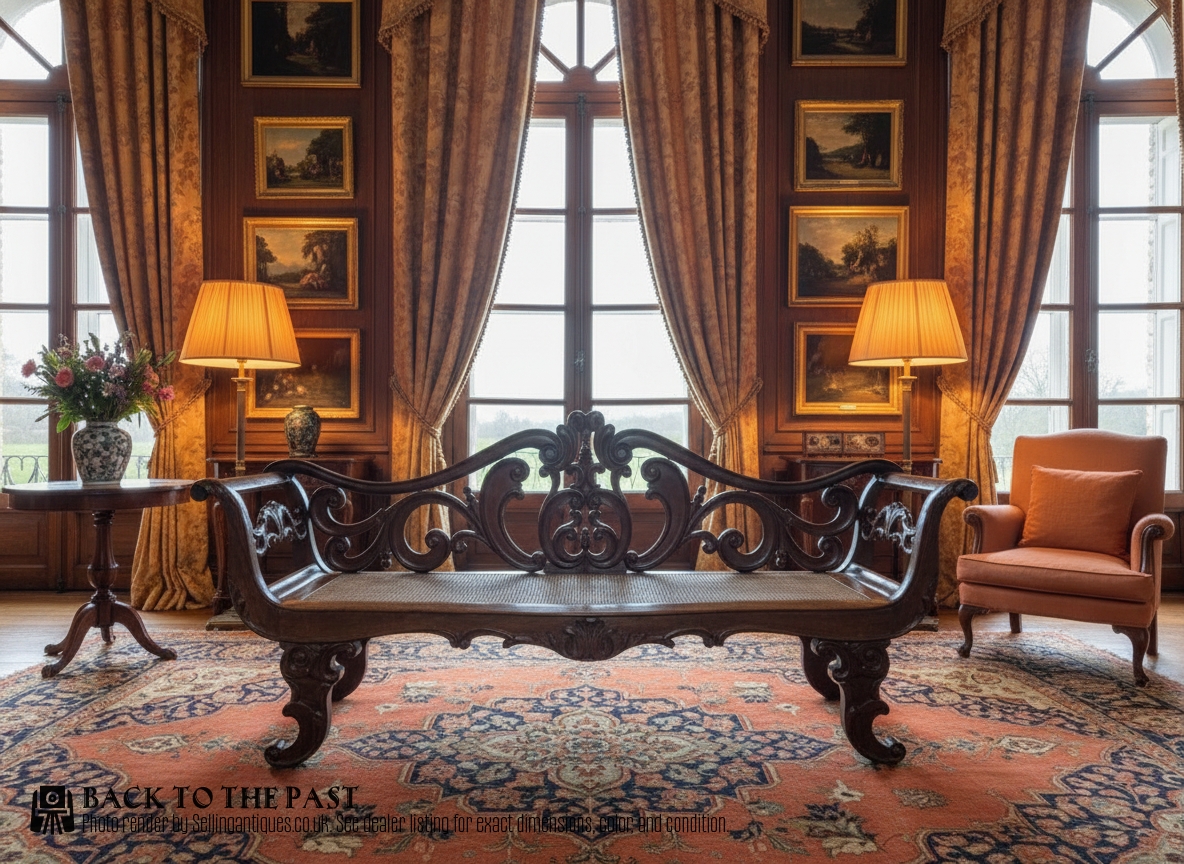
Scroll Back Bench
A scroll back bench brings together seating designed for reception spaces and daybeds intended for extended rest. These forms appear across the nineteenth century, drawing on Regency, Victorian, and William and Mary styles.
Most examples on this page reflect nineteenth century craftsmanship, including country house pieces and Anglo Indian variants. Buyers frequently encounter rosewood, mahogany, and walnut frameworks paired with upholstery fabric, velvet, or cane.
Makers shaped these benches for both grand apartments and modest country residences, resulting in varying scales from miniature furniture to large sofas. The overarching design unites sturdy timber frames with sweeping, scrolled arm or back supports.
Materials and Construction
Cabinetmakers utilised dense timbers such as mahogany, rosewood, walnut, and golden oak to build the structural frames of each bench. These hardwoods allowed for deep carving and stable joints capable of supporting long, sweeping architectural lines.
Surface detailing often relied on ebonisation or rich polish to highlight the grain of the wood. Craftsmen then integrated cane work for seating panels or prepared internal frames for heavy upholstery fabric and velvet coverings.
Listings feature periods spanning the Regency era, the Victorian epoch, and the early twentieth century up to nineteen twenty.
Judging Quality and Finish
The distinction between standard items and superior examples lies in the crispness of the timber carving and the integrity of the joinery. Fine pieces display fluid, uninterrupted scrollwork that flows naturally from the frame without clumsy proportions.
Selection of timber grade also dictates standing, with rich figured rosewood or burr walnut elevating a piece above plain secondary woods. Original surfaces and careful retention of period upholstery materials further separate ordinary items from exceptional ones.
The Scroll Back Bench Glossary
- Scroll Back
- A sweeping, curved wooden terminal on a bench or sofa that resembles a rolled scroll. This decorative and supportive feature defines the silhouette of nineteenth century seating.
- Chaise Longue
- An elongated upholstered chair designed for reclining, closely related to daybeds and settees. These forms frequently share the scrolled structural lines found on benches.
- Ebonised
- Timber treated with a dark finish to imitate expensive ebony. This technique was popular in nineteenth century cabinetmaking for creating high contrast decorative effects.
- Cane
- Woven rattan material used for lightweight seat panels and backs. It provides breathability and delicate visual texture within a hardwood frame.
Scroll Back Bench: Frequently Asked Questions
What is a scroll back bench?
A scroll back bench is a piece of nineteenth century seating featuring distinctive curved wooden terminals. These forms draw on Regency and Victorian design traditions.
They combine the formal presence of a hall seat or settee with the sweeping contours characteristic of daybeds and chaise longues.
How were these benches used historically?
Such seating served functional and decorative roles in country houses, grand hallways, and drawing rooms. They provided resting places for guests or casual lounging.
Larger sofa variants accommodated multiple sitters, while smaller frames or miniature furniture pieces often served as ornamental display items.
How do I care for a rosewood frame?
Keep timber surfaces away from direct sunlight and extreme temperature fluctuations to prevent the wood from drying out. Dust regularly with a dry, soft cloth.
Avoid chemical polishes that can build up on nineteenth century polished finishes and instead rely on occasional applications of appropriate furniture wax.
How do I identify a Regency period piece?
Regency items typically display classical architectural influences, restrained carving, and dark timbers like mahogany and rosewood. Proportions remain balanced and elegant.
Compare the structural joinery and decorative motifs against dated examples from the early nineteenth century to confirm the era.