




Tapestry Seat Stool
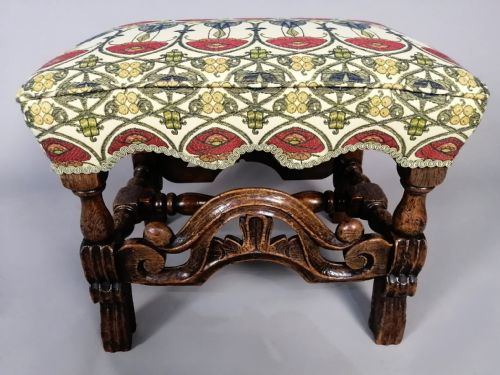
A tapestry seat stool brings texture and historic character to a room, combining solid timber frames with worked textile tops.
Tapestry Seat Stool
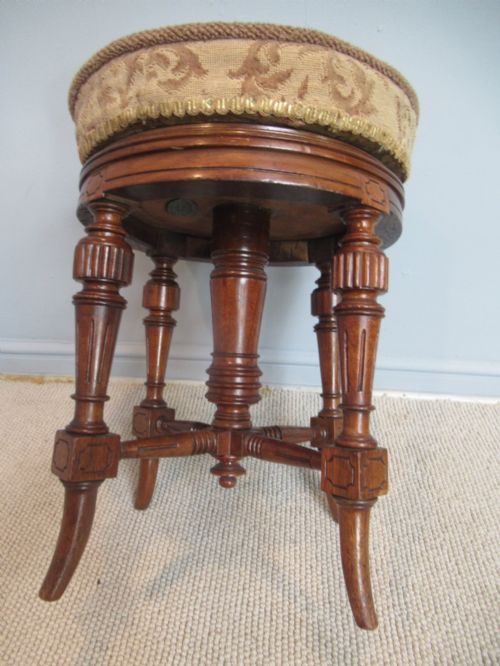
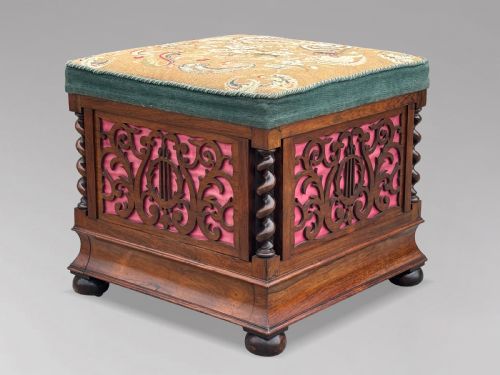
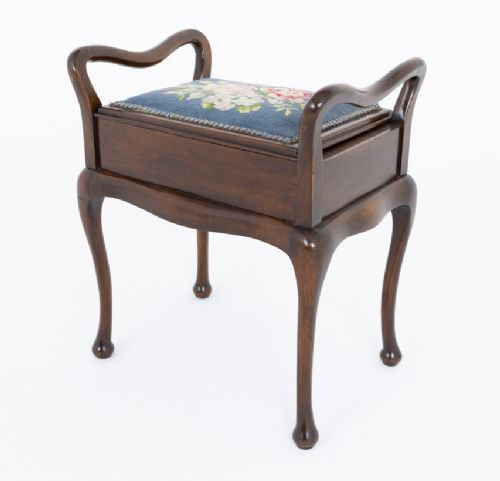
A tapestry seat stool is a low seating form designed for domestic utility, encompassing piano stools, dressing table stools, footstools, and window seats. When searching this phrase, buyers encounter pieces spanning the Regency, Victorian, and Edwardian eras, alongside revival styles.
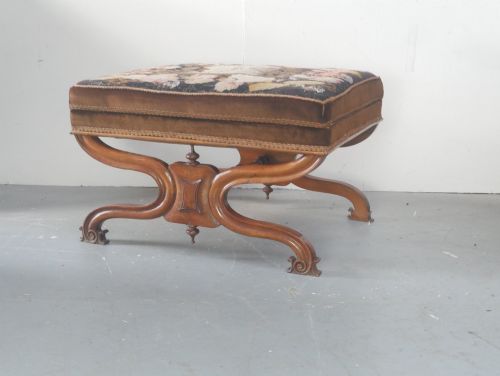
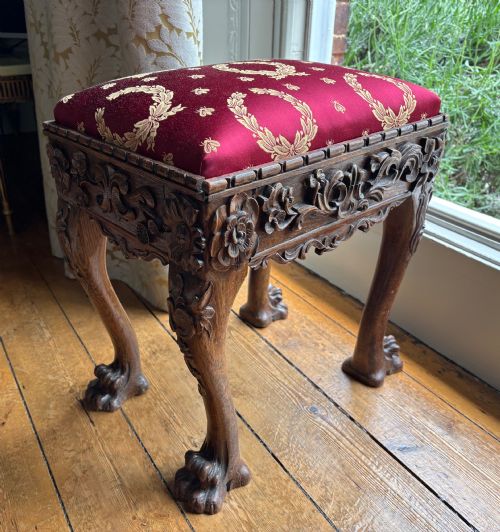
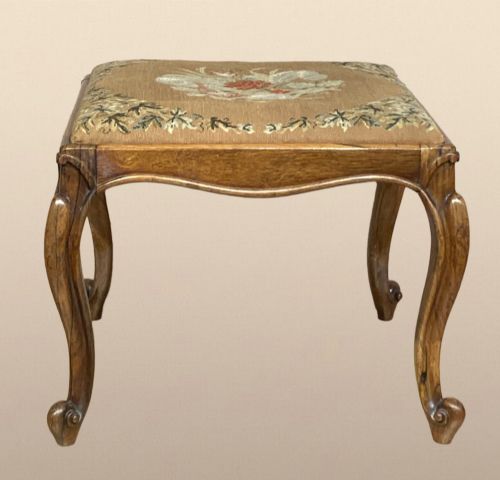
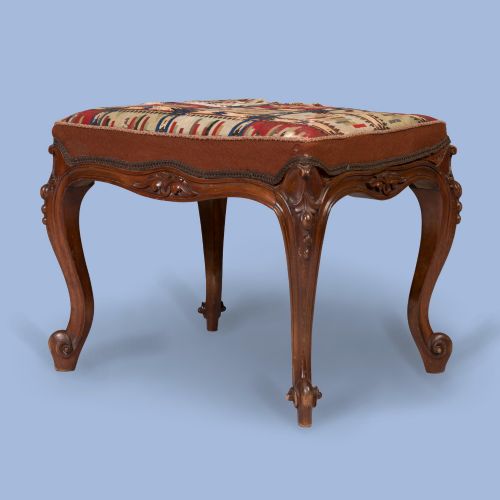
The most frequent examples on this page are Victorian walnut and mahogany pieces, often standing on carved cabriole legs or X-frames. These domestic items served multiple functions in nineteenth and early twentieth-century interiors, from music rooms to dressing chambers.
How they were made
The frames rely principally on timbers such as mahogany, walnut, and rosewood, shaped through turning, carving, and joinery techniques typical of their respective decades. Woods are selected for grain and strength, supporting complex structures like revolving mechanisms, adjustable heights, and cross stretchers.
Upholstery combines textile covers - including wool tapestry, needlepoint, beadwork, and kilim - applied over traditional stuffing and foundation materials. Textile panels frequently display hand-stitched floral or figural patterns secured directly to the wooden rails.
Current listings feature walnut, mahogany, rosewood, and oak frames paired with wool tapestry, needlepoint, and velvet textiles.
What varies in quality
Quality rests in the crispness of the timber carving, the structural integrity of the frame joints, and the precision of the upholstery work. Superior pieces exhibit well-defined motifs on woods like walnut or rosewood rather than soft, muddy detailing.
The sophistication of the mechanism, whether an adjustable screw thread for a piano stool or an X-frame construction, distinguishes standard production from finer workshop output. Original textiles and needlework in sound condition elevate a piece above later replacements.
Hallett & Sons·Jas Shoolbred
The Tapestry Seat Stool Glossary
- Cabriole leg
- A furniture leg that curves out and then in, resembling the leg of an animal. This form appears frequently on walnut and mahogany stools from the Victorian and revival periods.
- Needlepoint
- A type of embroidery worked on an open-weave canvas ground using wool or silk yarn. It forms the durable pictorial surface seen on many antique stool tops.
- X-frame
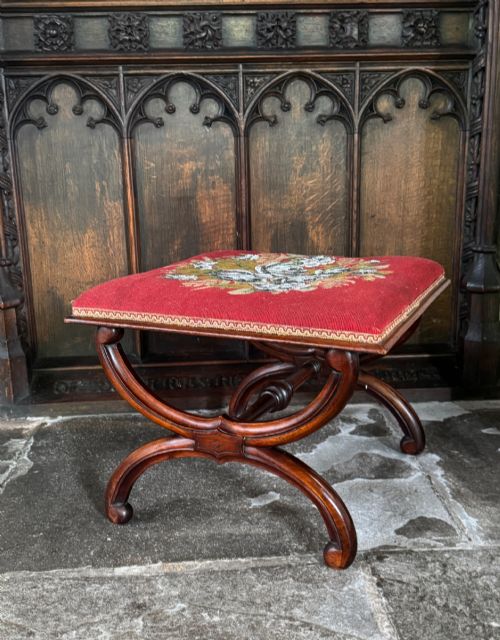
- A structural base formed by two crossing members shaped like the letter X. These folding or fixed frames provide stability and support for dressing stools.
- Cross stretcher
- A horizontal timber brace connecting the legs of a stool near the base for added rigidity. They frequently intersect at the centre beneath the seat.
- Aubusson tapestry
- A woven textile produced in the French town of Aubusson, known for pictorial scenes and floral designs. These fine panels occasionally surface on large window seats and ottomans.
Tapestry Seat Stool: Frequently Asked Questions
How do I date a tapestry seat stool?
Dating relies on timber choice, construction methods, and stylistic revival markers recorded in the piece. Victorian examples often feature rosewood or walnut with heavy carving, while Edwardian pieces frequently use inlaid mahogany.
Hardware, such as adjustable brass screw mechanisms or iron brackets, helps narrow down the decade of manufacture. Comparing the turning and stretcher design to known period patterns confirms the era.
Were these stools used for pianos?
Many surviving examples function specifically as piano or music stools, featuring built-in storage compartments for sheet music or revolving seats. The adjustable height mechanism allowed musicians to set the exact seating level required.
Non-musical variants served as dressing table stools, footstools, or window seats. Their compact dimensions made them easily movable around the principal rooms of a country house.
How should I clean a tapestry seat?
Textile tops require gentle surface cleaning with a soft brush or low-suction vacuum attachment to remove dust without stressing old wool or canvas threads. Moisture should be avoided unless handled by a professional textile conservator.
Wooden frames benefit from occasional waxing to nourish the grain of walnut, mahogany, or rosewood. Keeping the piece away from direct sunlight protects the dyed wool yarns from fading.
What is the difference between a footstool and an ottoman?
Footstools are smaller, low-profile pieces designed primarily to support the feet while seated in an armchair. They generally feature fixed upholstered tops on short legs or feet.
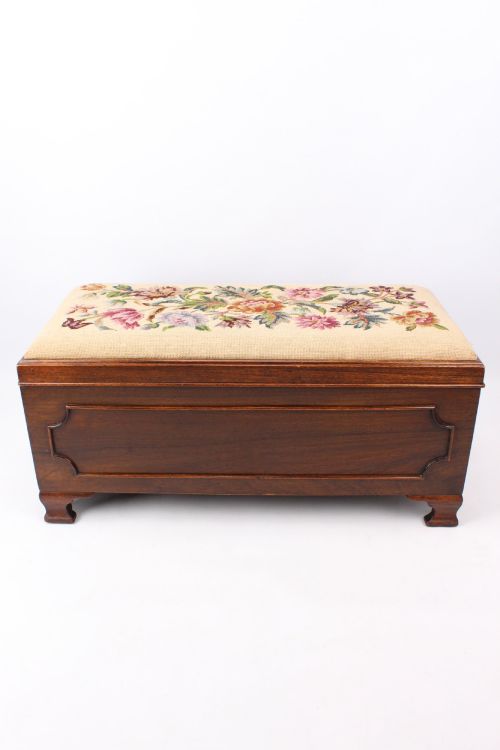
Ottomans are larger rectangular forms, often incorporating internal storage for blankets or linens beneath a hinged or lift-off tapestry seat. They function as secondary seating or occasional benches in larger interiors.