



Tambour Front Writing Desk
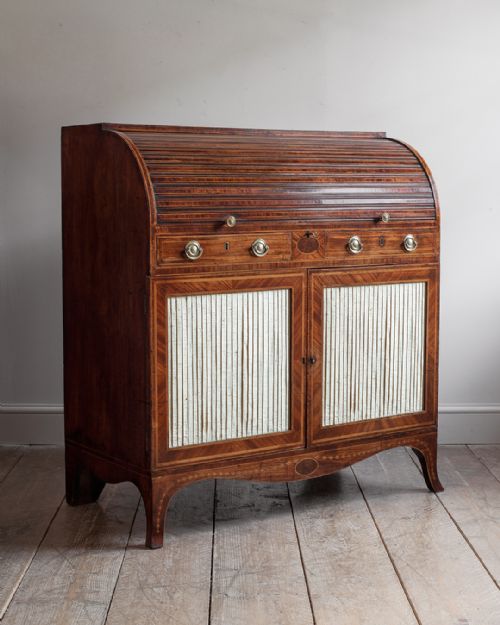
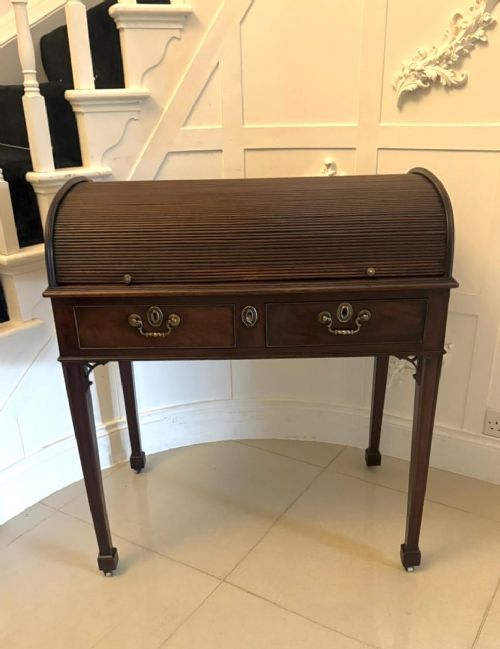
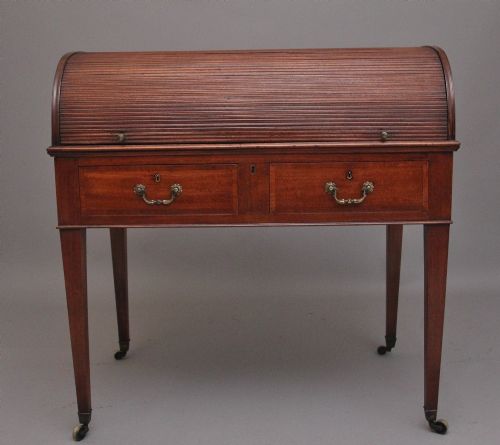
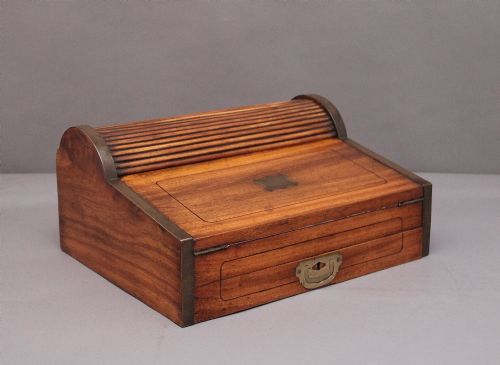
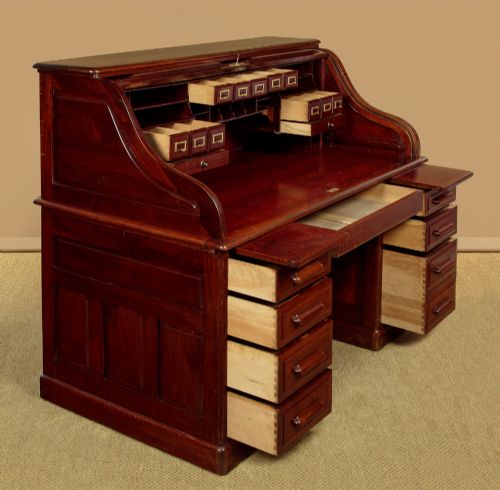
A tambour front writing desk conceals compartments behind sliding slats, offering fitted workspace with traditional craftsmanship.
Tambour Front Writing Desk
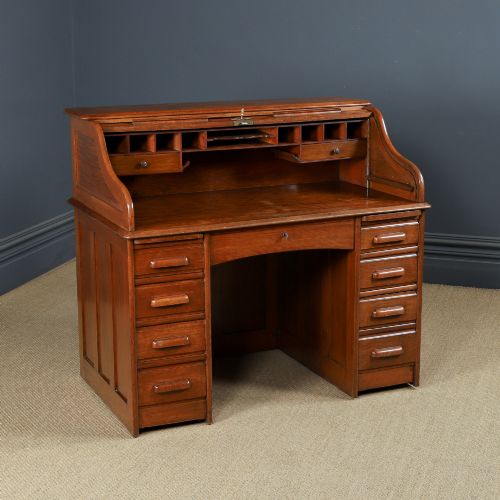
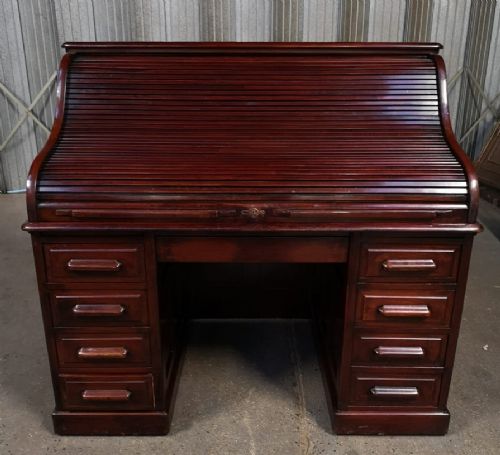
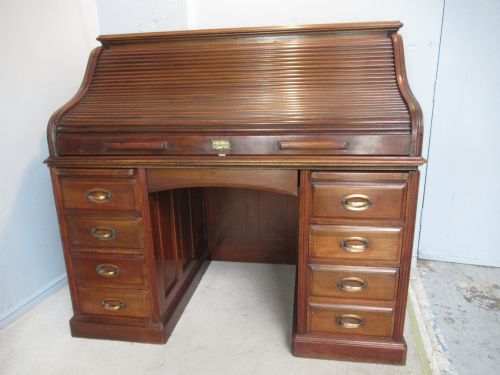
A tambour front writing desk brings together clever slatted shutters and compact writing surfaces across various historical periods. The search phrase covers examples originating from the eighteenth century up to the early twentieth century.
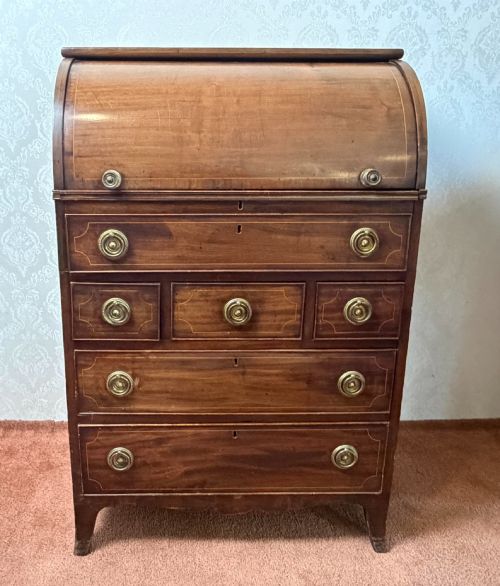
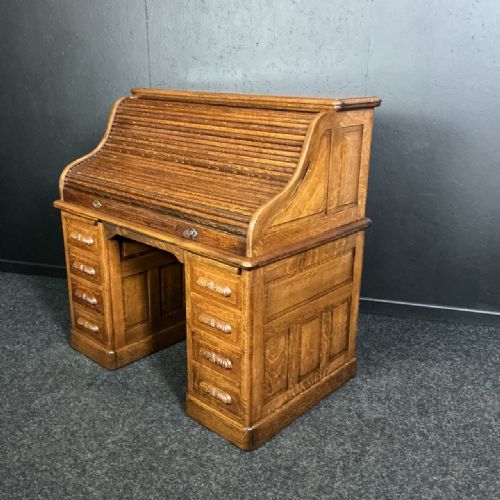
Edwardian and Victorian iterations appear frequently alongside Georgian pieces. Forms range from large pedestal desks to smaller writing cabinets and cylinder desks.
Makers utilised mahogany, oak and walnut, occasionally incorporating satinwood or partridgewood veneers. Many feature pull-out writing slides or fitted stationery interiors.
Materials and Technique
Makers built these pieces using solid timbers like mahogany, oak and walnut, complemented by brass hardware and leather inserts. Slats of wood for the tambour mechanism were glued to canvas or linen backings to allow smooth movement along curved tracks.
Inlaid stringing, satinwood crossbanding and delicate marquetry define the finer Georgian and Edwardian examples. Secondary woods such as pine appear on interior drawer linings and hidden partitions.
Several desks conceal secret compartments originally intended for hiding love letters from prying family members.
The Measure of Quality
Quality rests upon the smooth operation of the tambour mechanism and the precision of the slatted tracks. Superior examples exhibit tight joinery, carefully selected timber grains and intact internal fittings without binding shutters.
The degree of hand-carved detailing, fine marquetry inlay and original brass handles separates standard utility pieces from high-style drawing room furniture.
Boston Chair Company·Maples of London and Paris·James Shoolbred and Co
The Tambour Front Writing Desk Glossary
- Tambour
- A flexible shutter formed of narrow strips of wood glued to a fabric backing, allowing it to slide smoothly around a curved track. This clever mechanism conceals pigeonholes and small drawers.
- Cylinder desk
- A writing desk featuring a quarter-circle rotating wooden cylinder that covers the writing surface and interior compartments. It operates similarly to a tambour shutter.
- Pedestal desk
- A heavy freestanding desk supported by two banks of small drawers below the desktop. They frequently incorporate large writing surfaces and central drawers.
- Satinwood
- A pale, lustrous exotic hardwood utilised for contrasting stringing and decorative veneers on eighteenth and nineteenth-century furniture. It brings a bright golden sheen to cabinet fronts.
- Writing slope
- A portable or table-standing box with a slanted hinged lid that opens to reveal a lined surface and storage space for stationery.
Tambour Front Writing Desk: Frequently Asked Questions
How does a tambour mechanism work?
Narrow strips of wood are fastened side by side onto a canvas or linen backing, creating a flexible curtain that travels within recessed tracks. This allows the shutter to curve around the back of the desk housing.
When pushed upward or downward, the slats glide out of sight to reveal the interior pigeonholes and writing surface before locking securely into place.
Where were these desks placed?
These pieces served administrative duties in private libraries, estate offices and formal drawing rooms. Larger pedestal variants suited professional studies, while satinwood cabinets occupied ladies' boudoirs.
The lockable shutters kept confidential correspondence and valuable ledgers private when the room was unattended.
How do I distinguish Georgian from Edwardian examples?
Georgian pieces from the eighteenth century typically display delicate proportions, hand-cut mahogany framing, subtle satinwood inlays and fine tapering legs. They prioritise refined cabinetmaking.
Edwardian desks tend toward heavier oak construction, often incorporating roll-top mechanisms, multiple stationery drawers and practical compartments designed for home office use.
How should I care for the sliding shutter?
Keep the wooden tracks clean and free from dust buildup to ensure the flexible slats glide without catching. Avoid placing the desk in direct sunlight or overly damp environments.
Applying a light microcrystalline wax helps preserve the timber and maintains smooth movement along the curved runners.