



Tall Ship Seascape Art
Tall ship seascape art captures the power of historical sailing vessels navigating open waters across centuries of marine painting.
Tall Ship Seascape Art
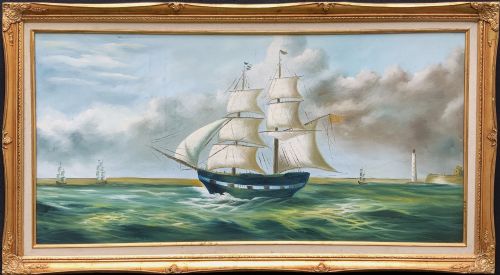
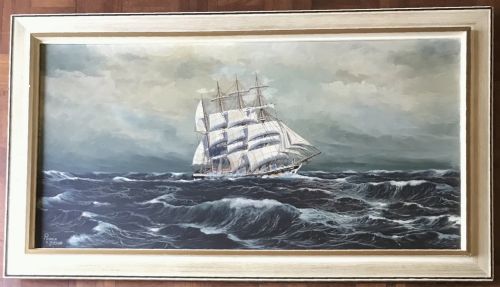
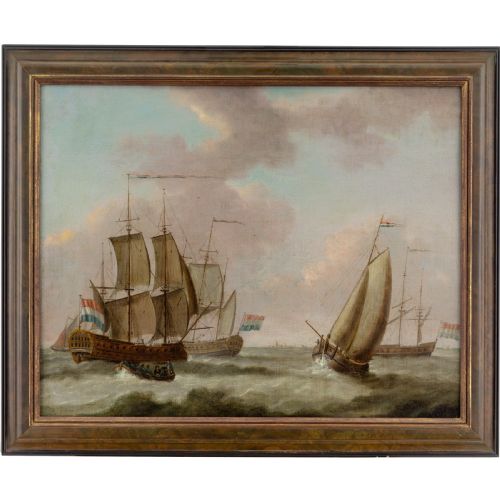
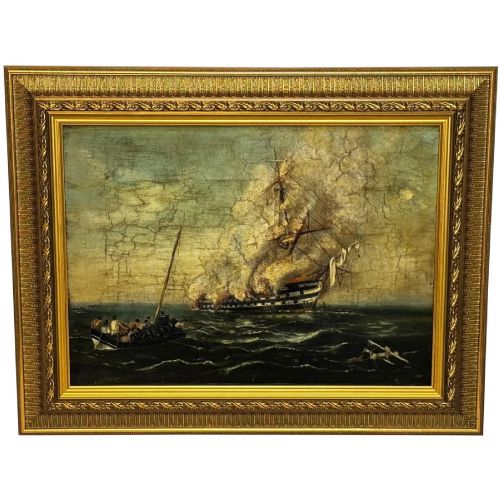
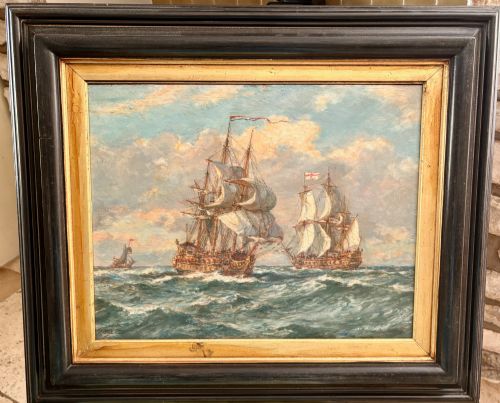
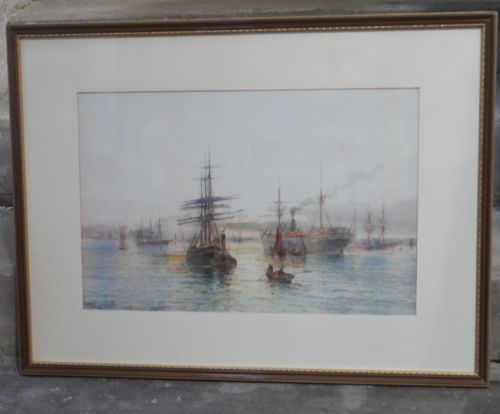
Tall ship seascape art comprises oil paintings, watercolours and works on board depicting historical sailing vessels in coastal waters, stormy seas and harbour settings. Buyers searching this phrase encounter works ranging from early 18th-century Dutch school scenes to 20th-century maritime depictions.
The pieces on this page span the 18th century, the Regency and Victorian periods, the Edwardian era and mid-20th-century production. Forms include framed oil paintings on canvas and board alongside works on paper.
How they were made
Artists applied oil paint and watercolour onto stretched canvas, wooden panels, board and paper supports. Many works incorporate carved and gilded wooden frames known as giltwood.
Techniques range from traditional Dutch school layering to 19th-century marine realism and atmospheric watercolour washes capturing changing coastal light.
Tall Ship Seascape Art Retail Price Guide 2026
Typical asking prices for tall ship seascape art among the pieces listed under this phrase on Sellingantiques today, from the lower quarter to the upper quarter. They describe what is for sale here now, not the wider market.
Represented periods include the 18th century, Regency, Victorian era, Edwardian period, and the 1930s to 1950s.
What varies in quality
Quality rests upon the artist's grasp of nautical rigging, vessel architecture and the atmospheric movement of water and wind. Superior works demonstrate precise handling of light across sails and convincing depth in rolling seas.
The distinction also lies in the stability of the medium, the preservation of the canvas or board, and the harmony of the period frame with the painting itself.
Bernard Gribble·Dion Pears·John Callow·Frank Wood·Joseph Heard·William Boyce·Frank Wasley·George Stainton·Rowland H. Hill·Stephen Brownlow
The Tall Ship Seascape Art Glossary
- Giltwood
- Carved wood treated with gold leaf or gold paint to create an ornate frame. These frames frequently accompany 19th-century oil paintings.
- Marine realism
- An artistic style focused on accurate depiction of ships, maritime weather and coastal topography. Artists working in this manner observed naval architecture closely.
- Oil on canvas
- Pigment suspended in a drying oil medium applied to woven fabric stretched over a wooden frame. This served as the primary medium for large marine works.
- Dutch School
- A historical tradition of painting originating in the Netherlands noted for atmospheric treatment of shipping and water. Early examples set foundational standards for maritime art.
Tall Ship Seascape Art: Frequently Asked Questions
What periods do these paintings cover?
The works span from the early 18th century through the Regency, Victorian and Edwardian periods into the mid-20th century.
This broad timeline encompasses shifting artistic styles from Dutch school traditions to later maritime realism and watercolour studies.
What materials were used by the artists?
Artists utilised oil paint and watercolour applied to canvas, wooden boards, panels and paper supports.
Many pieces are housed in their original or period giltwood frames, which complement the maritime subject matter.
How do I identify a ship portrait?
Ship portraits focus specifically on a named or identifiable vessel, such as a West Indiaman or a named tall ship, often shown in profile or active navigation.
These differ from broader coastal views and harbour scenes by placing the vessel at the centre of the composition.
Where should I hang a marine painting?
Marine paintings suit rooms with stable humidity and indirect natural light to protect oil on canvas and watercolour works on paper.
Consider pairing them with traditional interiors where the giltwood frames and nautical themes can be appreciated up close.