
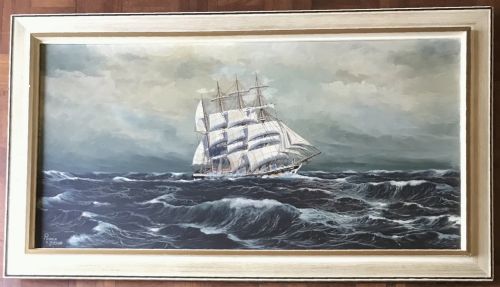

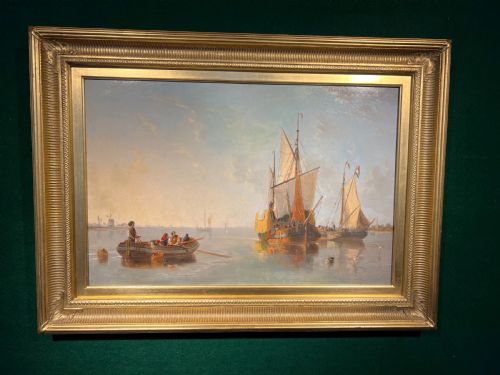
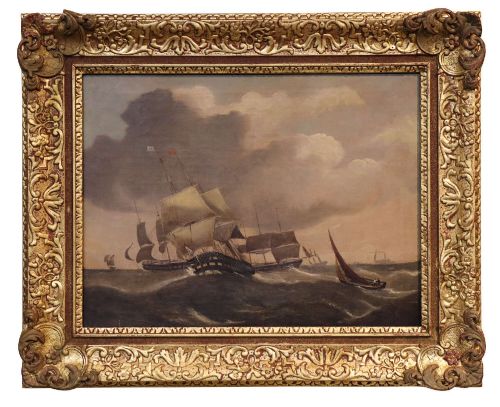
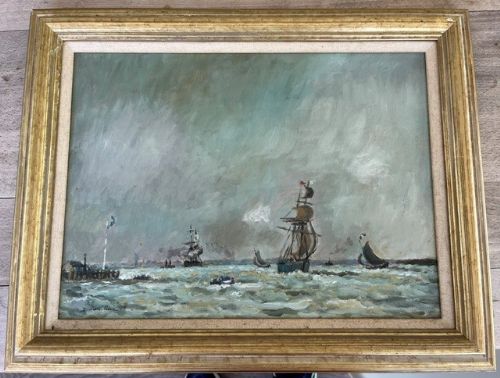


Framed Sailing Ship Picture
A framed sailing ship picture brings the motion of open water and nineteenth-century vessels directly onto a wall.
Framed Sailing Ship Picture
A framed sailing ship picture captures maritime history through historical works created across the nineteenth and twentieth centuries. These pieces record naval vessels, coastal shipping, and clippers navigating harbours and heavy seas.
The most common examples on this page are nineteenth-century watercolours and oils on canvas. Works from the Victorian period frequently depict named barques, lighthouses, and coastal scenes.
Formats range from intimate watercolours to large oil paintings housed in period wooden frames. Subjects include specific ships like the Mary Wylie alongside broader maritime scenes.
How they were made
Artists painted these works using watercolours on paper or oil on canvas and board. Pigments were applied to render water texture, rigging, and coastal light.
Works are typically presented behind glass for paper mediums or in original gilt wood, oak, and painted frames that match the period of the artwork.
Listings span the nineteenth and twentieth centuries, featuring paper, canvas, and gilt wood.
What varies in quality
Quality rests upon the artist's command of maritime perspective and the natural movement of water and wind. Superior works accurately render rigging detail and atmospheric light.
The integrity and age of the surrounding wooden or gilt frame also influence the overall character of the piece.
John Wilson Carmichael·Thomas Bush Hardy·William Langley·Frederick William Booty
The Framed Sailing Ship Picture Glossary
- Barque
- A sailing vessel with three or more masts. This rig configuration appears frequently in maritime paintings.
- Seascape
- A work of art depicting the sea. These compositions focus on open water, coastal views, and marine weather.
- Watercolour
- A paint consisting of pigment suspended in a water-soluble vehicle. This medium creates translucent effects on paper.
- Gilt wood
- Wood coated with a thin layer of gold leaf. Frames finished in this manner were standard for nineteenth-century fine art.
Framed Sailing Ship Picture: Frequently Asked Questions
How do I date a maritime painting?
Dating relies on stylistic markers, framing methods, and artist signatures recorded in the listing details. Victorian and Edwardian works often display specific technical traits and ship types characteristic of their era.
Paper discoloration, canvas texture, and handwritten inscriptions on the reverse also provide clues to the age of the piece.
Where should I hang a ship picture?
These works suit traditional studies, hallways, or living spaces where maritime history can be viewed closely. Keeping them away from direct sunlight protects watercolours and oils from fading.
Ensure the wall space accommodates the scale of the original wooden or gilt frame without crowding.
What is the difference between oil and watercolour?
Oils are painted on canvas or board with rich, opaque pigments that capture deep seas and heavy weather. Watercolours use translucent pigments on paper to achieve lighter, atmospheric coastal effects.
Both mediums require different framing methods, with watercolours sitting permanently behind protective glass.
Are these paintings of real ships?
Many works depict named vessels, such as the Mary Wylie or the barque Garthpool, recording actual maritime history. Other pieces illustrate generic coastal scenes and lighthouses typical of nineteenth-century trade routes.
Signatures and titles on the mount or canvas often identify the specific ship or location.