

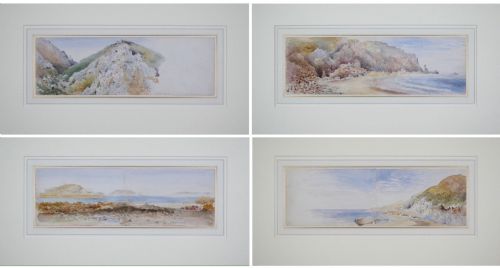
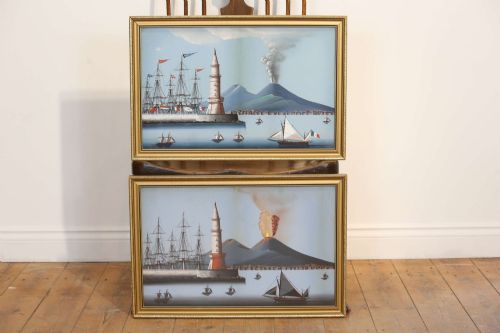
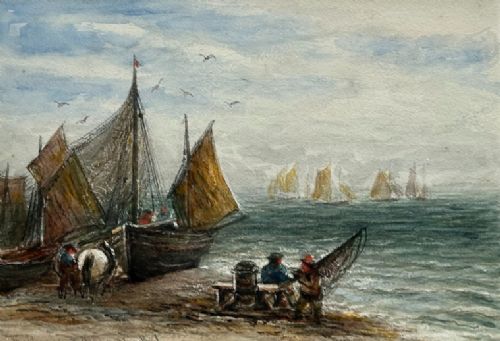
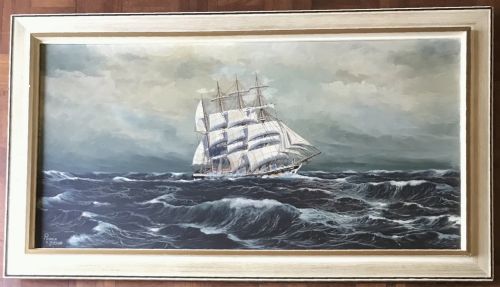




Framed Marine Sea Landscape
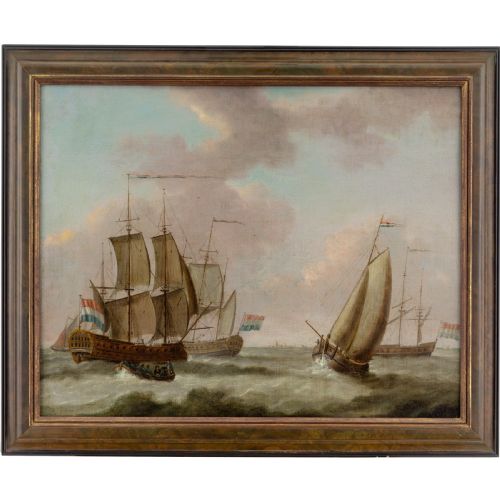
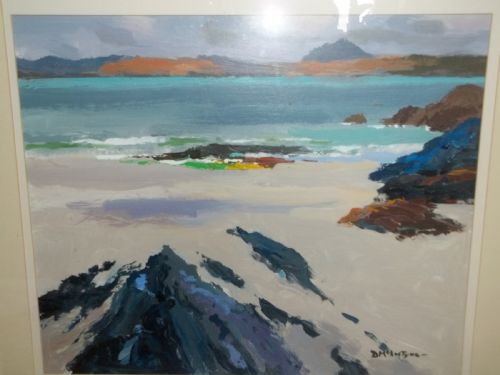
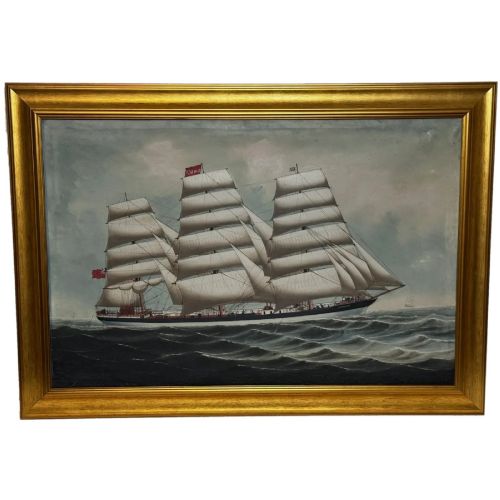
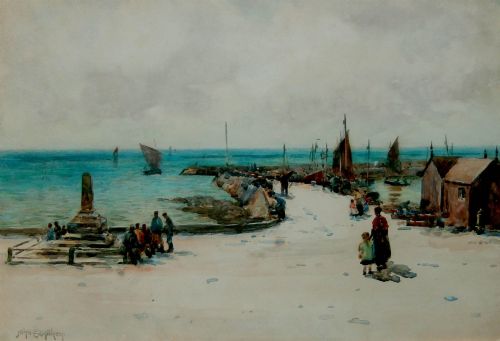
Framed marine sea landscape works capture coastal views, harbours and choppy waters across the nineteenth and twentieth centuries.
Framed Marine Sea Landscape
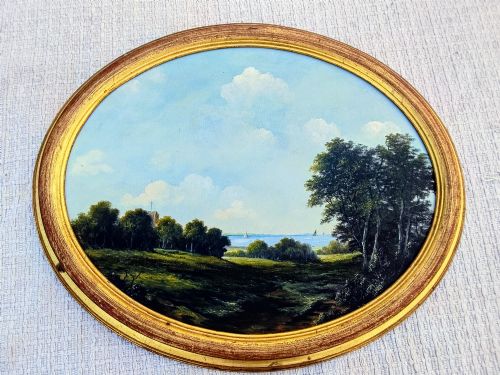
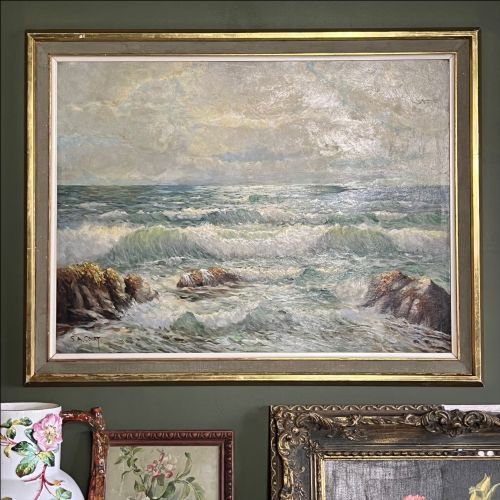
A framed marine sea landscape brings historical coastal views into an interior, often depicting British and European harbours, beaches and dramatic open waters. When exploring framed marine sea landscape options, buyers encounter oil paintings, watercolours and charcoal works spanning the Victorian era through to the mid-twentieth century.
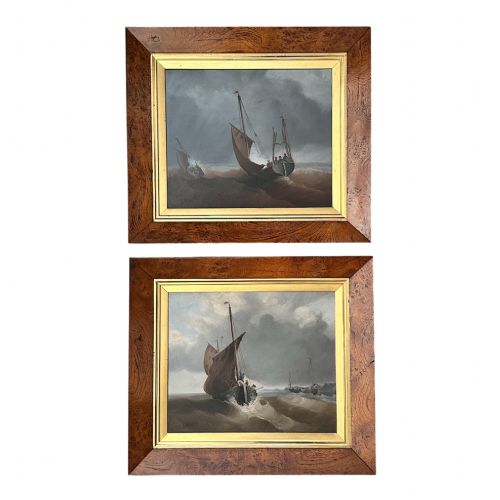
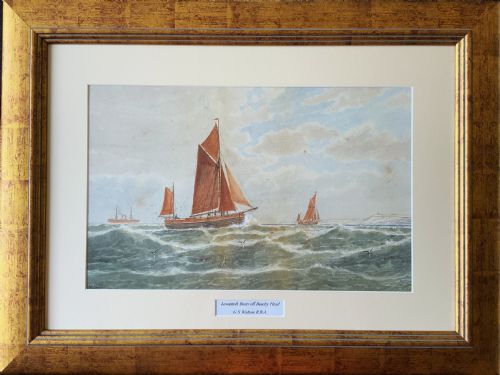
The subjects range from tranquil Cornish coves and Scottish fishing ports to stormy seas featuring sailing ships and shipwrecks. Many pieces preserve specific locations such as St Ives, Scarborough or the Isle of Man, recorded by artists working both in studios and en plein air.
Materials and techniques
Artists producing a framed marine sea landscape typically worked with oil paint on canvas or board, or applied watercolour to paper. These mediums captured the shifting light of coastal atmospheres, the texture of churning water and the weathered surfaces of wooden fishing boats.
Presentation relies heavily on period framing, frequently utilising wood and gilt wood alongside protective glass for works on paper. The frames themselves often date from the same period as the artwork, completing the composition.
Framed Marine Sea Landscape Retail Price Guide 2026
Typical asking prices for framed marine sea landscape among the pieces listed under this phrase on Sellingantiques today, from the lower quarter to the upper quarter. They describe what is for sale here now, not the wider market.
Listings feature works spanning the nineteenth century through the 1960s, executed in oil and watercolour.
Evaluating quality and execution
The strength of a framed marine sea landscape rests in the artist's handling of light, movement and maritime atmosphere. Stronger works convey the genuine weight of a stormy sea or the bright clarity of a summer coastal morning through confident brushwork and accurate proportion.
Condition and originality also define the piece, particularly the preservation of the original paint surface, paper integrity and period frame. Works bearing clear signatures and documented artist provenance offer greater historical context.
James Orrock·William Banks Fortescue·Bernard Benedict Hemy·George Stanfield Walters·William Lee Hankey·Thomas Bush Hardy
The Framed Marine Sea Landscape Glossary
- En plein air
- Painting outdoors directly from the subject to capture transient natural light and weather conditions. This method was widely used by coastal painters.
- Gilt wood
- Wood coated with a thin layer of gold leaf or metallic gilt, commonly used on nineteenth-century picture frames. It adds a warm metallic border to the artwork.
- Seascape
- A work of art depicting the sea, coastal views, ships or maritime activity. It forms the primary subject matter of these framed pieces.
- Watercolour
- A paint consisting of pigment suspended in a water-based solution, typically applied to paper. It yields transparent washes ideal for capturing sea and sky.
Framed Marine Sea Landscape: Frequently Asked Questions
How do I date a framed marine sea landscape?
Dating relies on stylistic clues, artist signatures, framing materials and any inscriptions on the reverse of the canvas or paper. Victorian works often feature heavier gilt frames and traditional academic realism, while later twentieth-century pieces lean towards impressionistic brushwork.
Examining the canvas weave, stretcher bars and paper type also helps narrow down the decade of creation.
Where should I hang a framed marine sea landscape?
These pieces suit rooms with natural light, where the coastal tones and atmospheric water scenes can be properly appreciated. Placing them away from direct sunlight protects oil pigments and watercolours from fading over time.
Matching the frame finish to existing furniture or neutral wall colours helps integrate the artwork into the interior space.
Are these coastal scenes historically accurate?
Many nineteenth and twentieth-century artists painted specific working harbours, identifiable ships and local coastal landmarks from direct observation. However, artists often rearranged elements or enhanced weather conditions for dramatic effect.
Signatures, titles written on the reverse and historical shipping records can help verify the specific locations depicted.