
Tabletop Swing Mirror
A tabletop swing mirror turns an ordinary chest into a dressing station, bringing movable glass and tidy drawer space to the surface.
Tabletop Swing Mirror
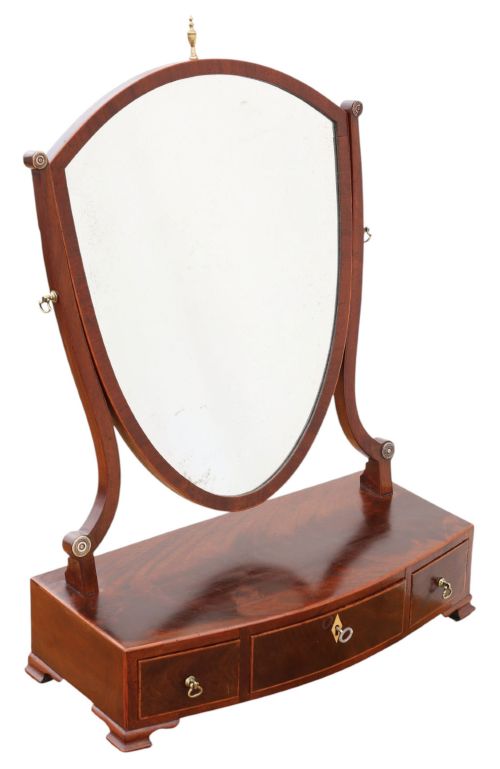
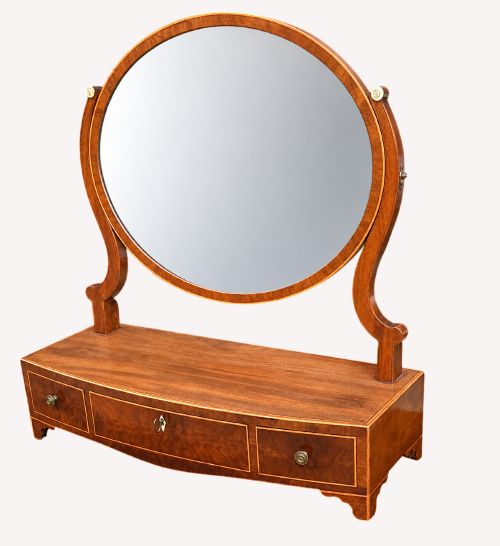
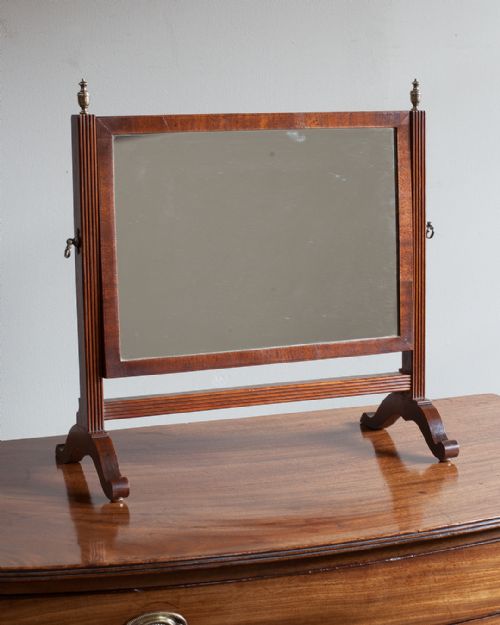
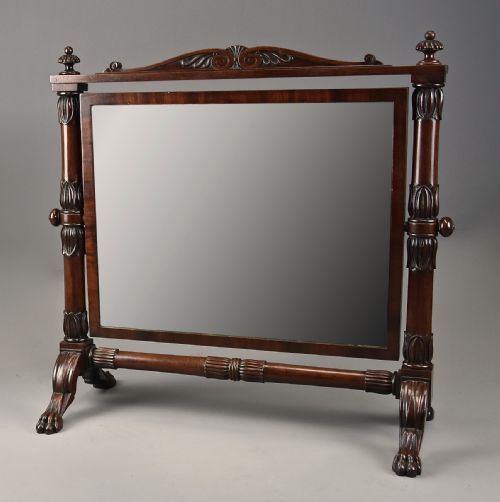
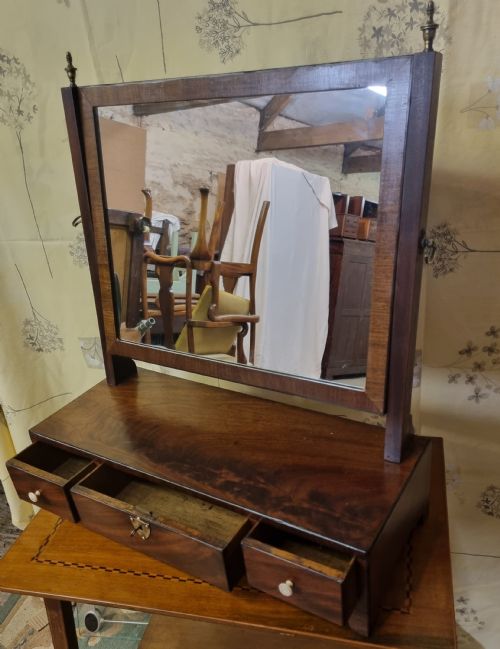
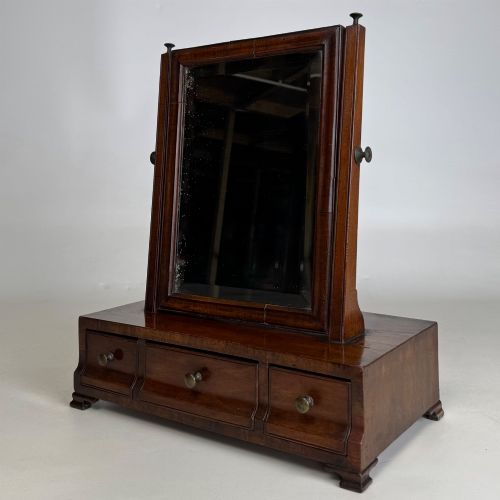
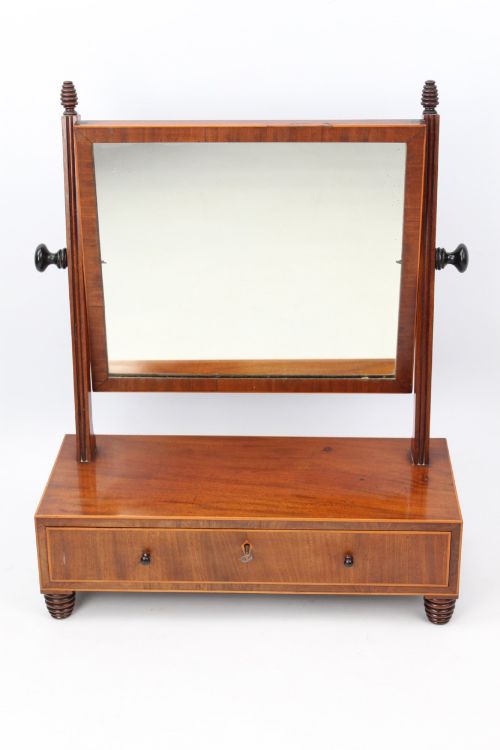
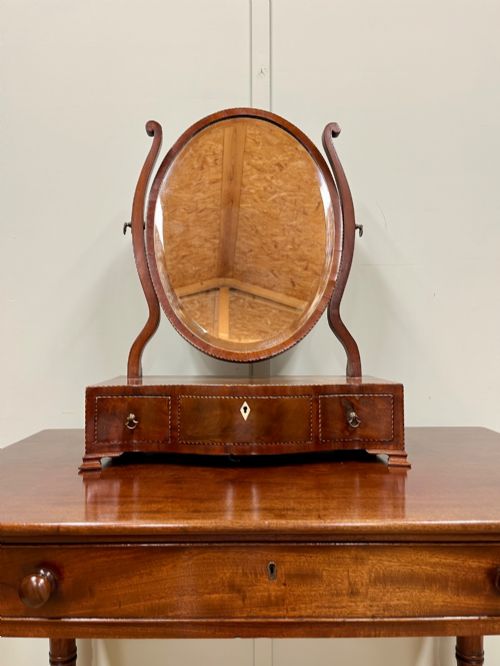
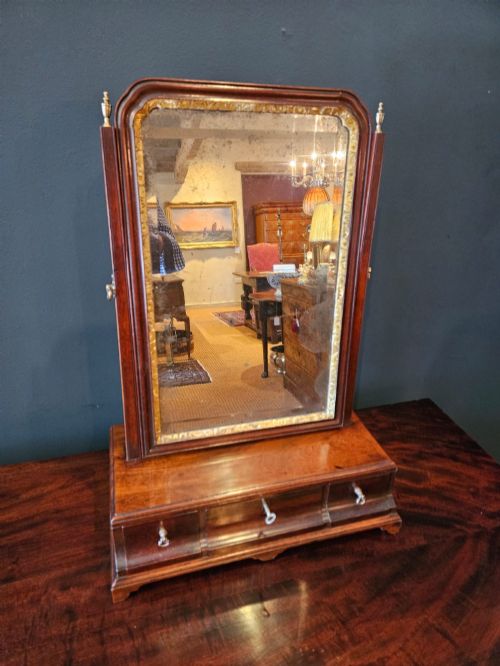
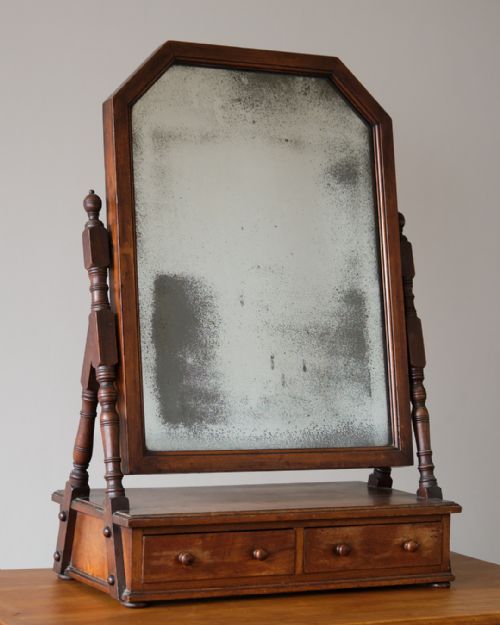
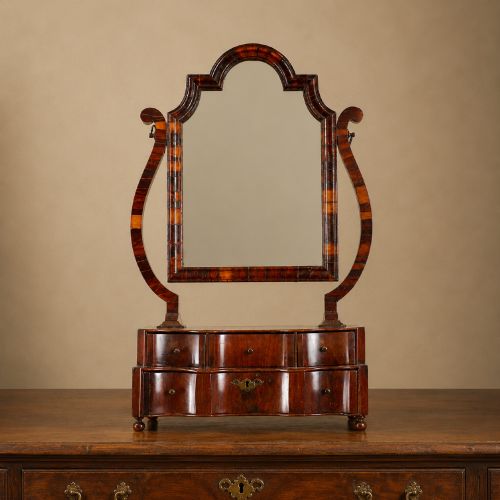
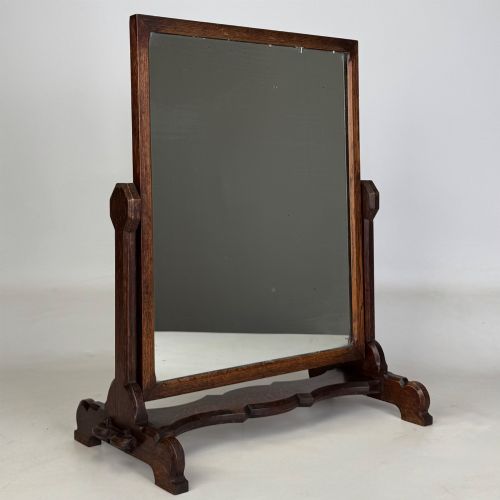
A tabletop swing mirror sits upon a base or frame, allowing the glass plate to tilt on pivots while resting on a desk, chest or dressing table. These pieces span the eighteenth, nineteenth and early twentieth centuries, drawing on Georgian, Regency, Victorian and Edwardian design traditions. The version you meet most frequently on this page is constructed from mahogany, often fitted with small drawers in the base.
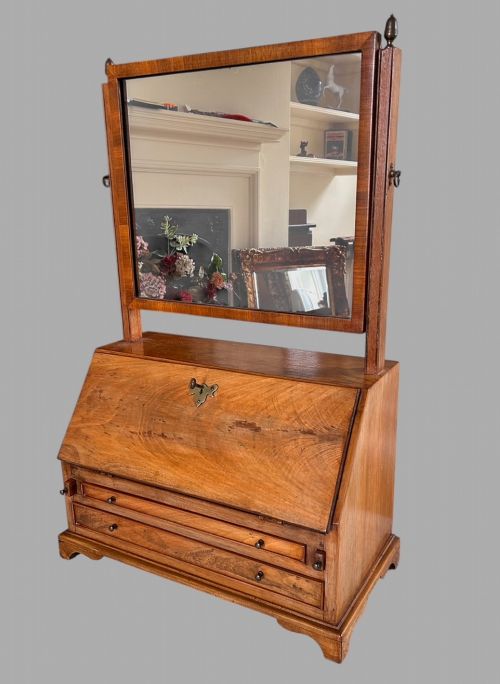
The form appears under several historic names in the evidence, including toilet mirrors, dressing glasses and dressing table mirrors. Some examples combine the swing glass with a bureau compartment or jewellery cabinet, serving multiple domestic functions at once. Makers ranged from workshop cabinetmakers to firms like Heal and Sons, producing both simple domestic pieces and elaborate inlaid variants.
Materials and construction
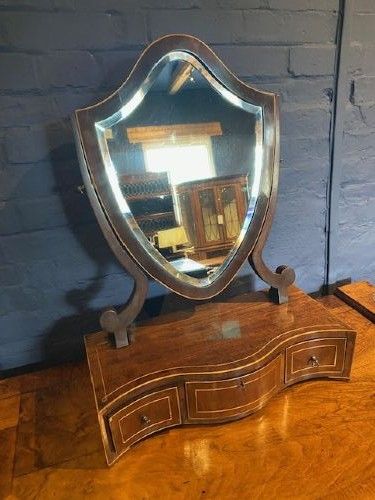
Timber selection dictates the character of these frames, with solid and veneered mahogany dominating the record alongside walnut, satinwood, kingwood, oak and giltwood. Cabinetmakers employed crossbanding, stringing and marquetry to enrich the surfaces of bases and drawer fronts. Brass side arms, screws and candle sconces provided the hardware needed to mount and adjust the swinging glass plate.
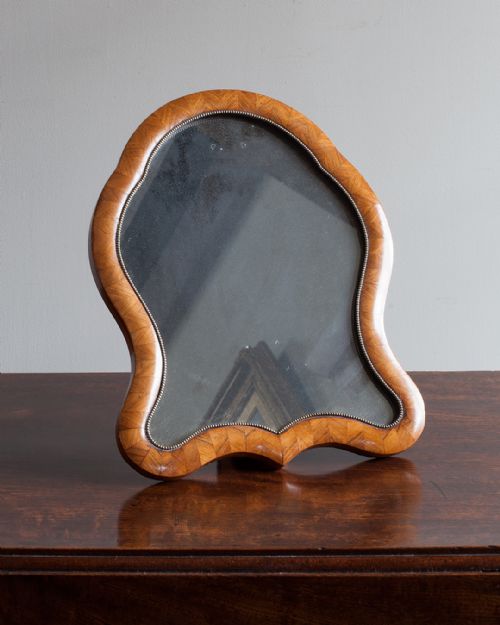
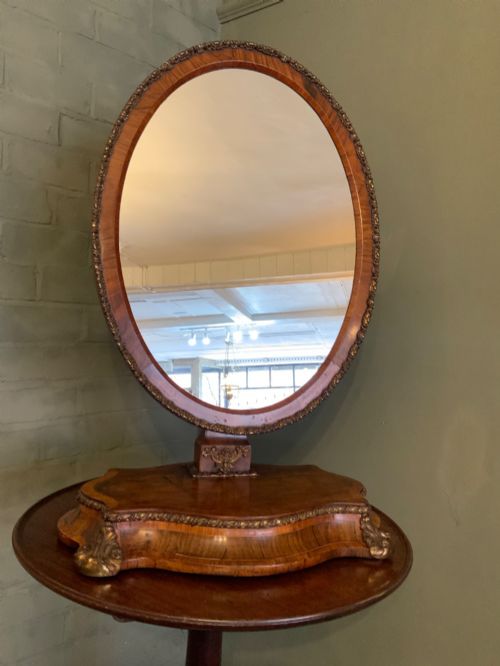
Mirror glass itself was set into rebated frames, sometimes shaped into shield or oval contours alongside the standard rectangular plates. Bases frequently incorporate box plinths containing one, two or three small drawers, joined with traditional cabinetmaking methods to support the weight of the pivoting superstructure.
Tabletop Swing Mirror Retail Price Guide 2026
Typical asking prices for tabletop swing mirror among the pieces listed under this phrase on Sellingantiques today, from the lower quarter to the upper quarter. They describe what is for sale here now, not the wider market.
Some miniature dressing mirrors include secret compartments hidden behind the smallest drawers for storing personal notes or trinkets.
Judging quality and proportion
The relationship between the size of the mirror plate and the scale of the supporting base determines the visual balance of the piece. Superior examples display refined proportions where neither the glass nor the drawer section overwhelms the other. Figured timbers, such as flame mahogany or burr walnut, signal a more ambitious commission than plain deal or secondary woods.
Execution of detail separates standard workshop production from finer cabinet work. Crisp mouldings, well-fitted drawer dovetails and original brass pivot hardware contribute to the integrity of a piece. The presence of secondary details like bone escutcheons or delicate inlay work points to greater care taken by the maker.
Heal and Sons
The Tabletop Swing Mirror Glossary
- Toilet mirror
- A smaller mirror designed to sit on a dressing table or chest of drawers for personal grooming. The term appears frequently in eighteenth and nineteenth-century inventories.
- Shield mirror
- A mirror plate cut into the outline of a heraldic shield. This shape gained popularity during the Georgian period.
- Crossbanding
- A strip of veneer applied to the border of a panel or drawer front with the wood grain running perpendicular to the main surface. It frames the central timber.
- Cheval mirror
- A full-length freestanding mirror, though some tabletop variants adopt the name when built as miniature versions of the frame.
- Ormolu
- Gilded bronze mounts applied for decoration. Found on more ornate walnut and exotic wood frames.
Tabletop Swing Mirror: Frequently Asked Questions
What is a tabletop swing mirror?
A tabletop swing mirror is a portable looking glass mounted on pivots between upright arms, allowing the user to tilt the reflection.
These pieces typically rest on a wooden base that incorporates small drawers for storage.
Where were they used?
They were placed on top of chests of drawers, sideboards or dedicated dressing tables in bedrooms and dressing rooms.
Before fitted wardrobes with built-in mirrors became common, these portable units provided the primary reflection for daily grooming.
How do I date a swing mirror?
Dating relies on timber choice, base construction, and the shape of the mirror frame and plate. Georgian examples often feature mahogany with delicate ogee feet, while Victorian versions tend to be heavier with round plinths.
Examining the drawer construction and hardware fixings provides further clues to the period of manufacture.
Are the mirror plates original?
Many older mirrors have replacement glass because mercury-backed plates degraded or broke over centuries of use.
Slight foxing or distortion in the reflection often indicates surviving early glass, whereas a perfectly clear reflection usually points to a modern replacement.