

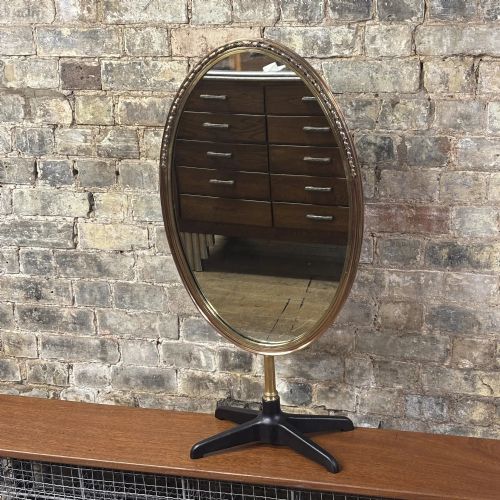
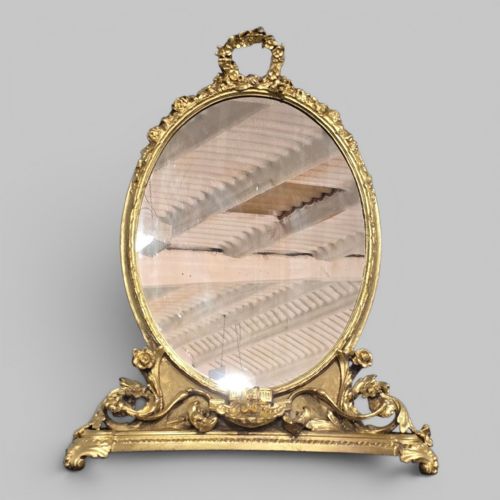
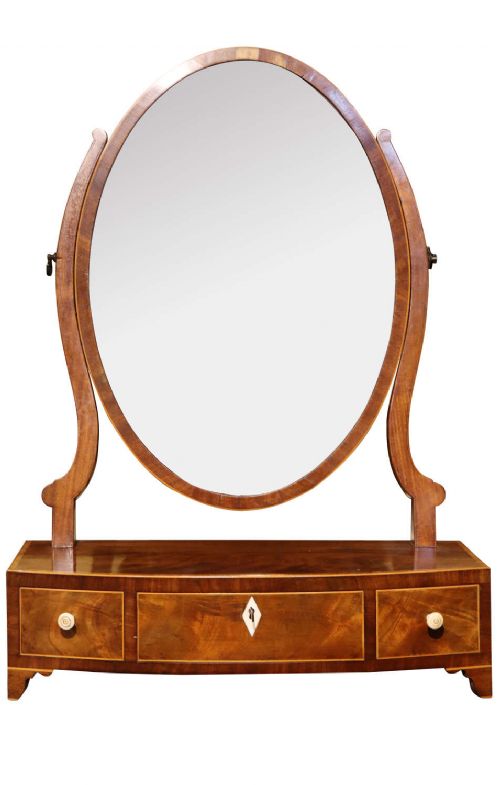


Tabletop Oval Vanity Mirror
A tabletop oval vanity mirror brings proportion and reflected light to a dressing chest, serving as a functional centrepiece for daily grooming.
Tabletop Oval Vanity Mirror
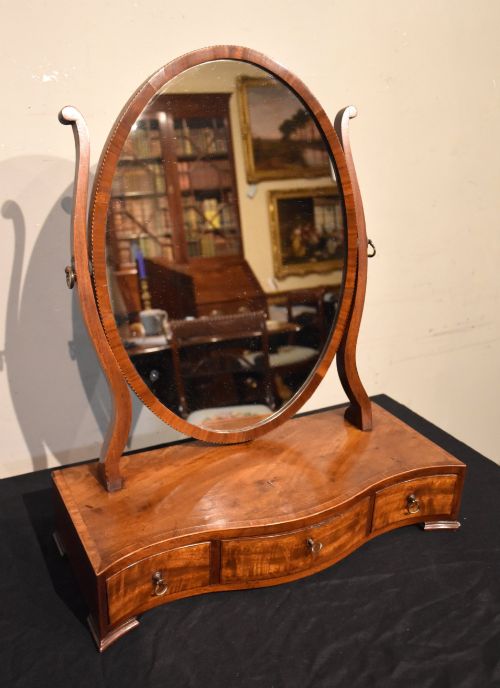
A tabletop oval vanity mirror sits upon a base or frame designed for placement on a chest of drawers or dressing table. The search phrase encompasses pieces built to adjust the angle of reflection through pivoted side supports.
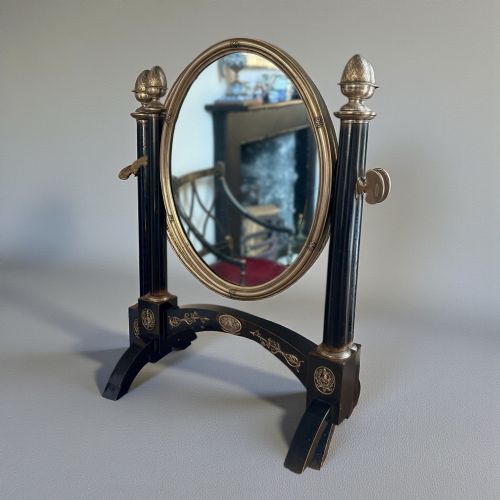
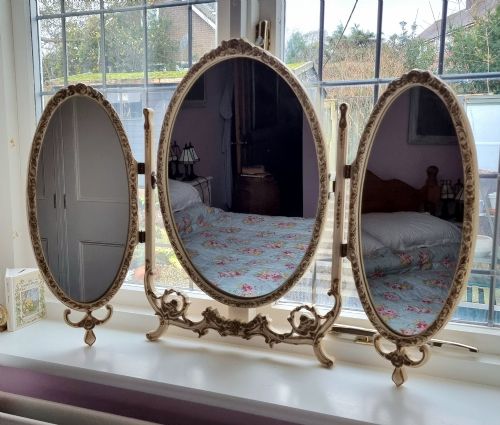
The selections recorded here span the eighteenth century and the Georgian period through to the Victorian era and early twentieth century. Examples range from compact mahogany frames to larger walnut, giltwood, and champleve variations.
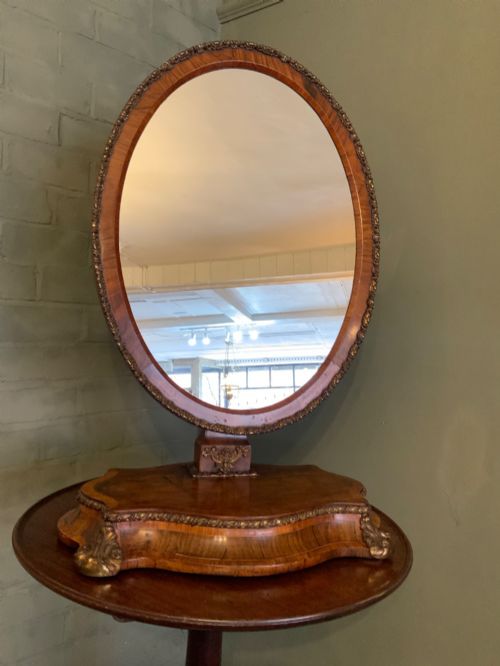
Origin points stretch from British workshops following Georgian and Sheraton traditions to French, Italian, and Black Forest centres of production. Buyers frequently encounter mahogany iterations featuring shaped drawer bases alongside brass, bronze, and chrome alternatives.
Quality Variations
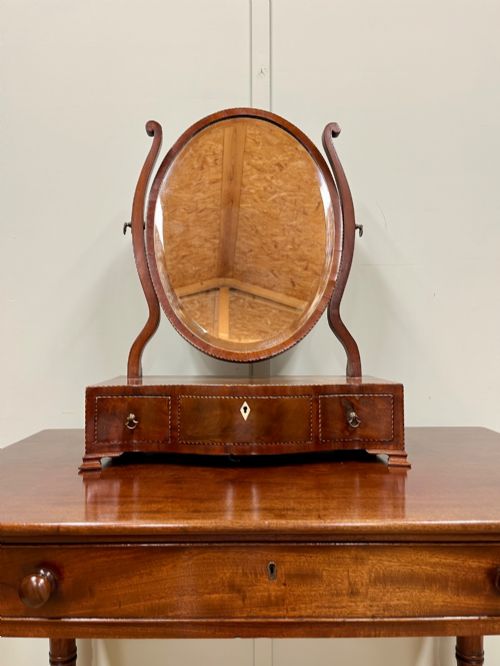
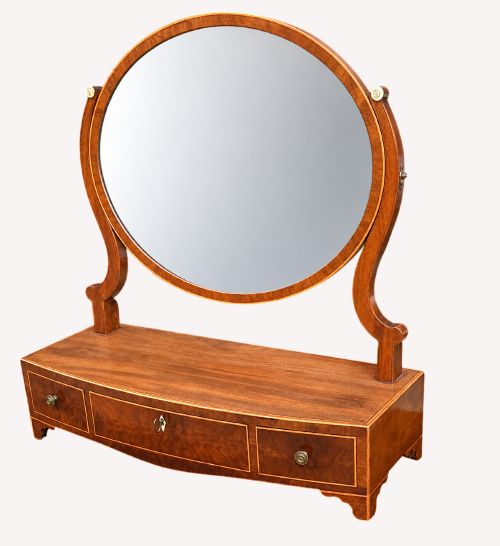
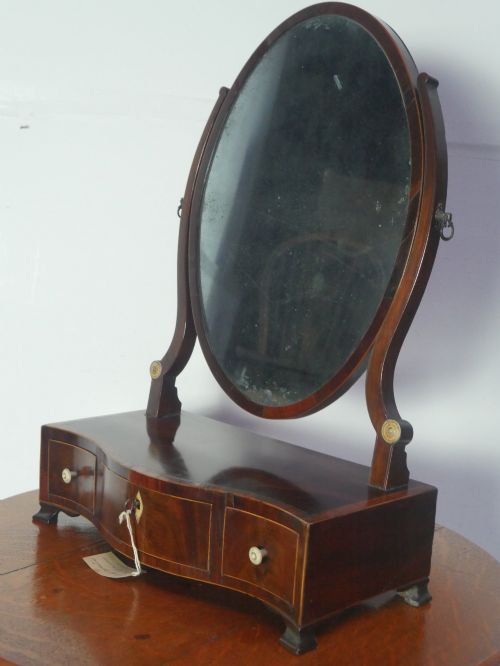
The grade of timber selection dictates visual success, where matched flame mahogany or fine crossbanding separates standard utilitarian items from master cabinetmaker productions. Drawer construction shows similar divergence, moving from simple butt joints to neat dovetailing within serpentine or bow-fronted box bases.
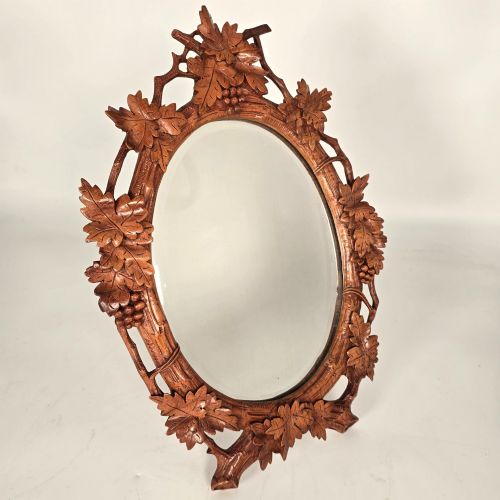
Carving execution defines the upper tier, seen in the crispness of acanthus scrolls, shaped supports, and applied mouldings rather than soft or repetitive casting. The integration of secondary woods and the retention of original brass hardware contribute to overall integrity.
Tabletop Oval Vanity Mirror Retail Price Guide 2026
Typical asking prices for tabletop oval vanity mirror among the pieces listed under this phrase on Sellingantiques today, from the lower quarter to the upper quarter. They describe what is for sale here now, not the wider market.
Form variations include simple swing mirrors, serpentine three-drawer box bases, and elaborate Black Forest lime wood carvings.
The Tabletop Oval Vanity Mirror Glossary
- Serpentine
- A curved line of furniture fronting that sweeps inward centrally and outward at the ends. This profile adds visual movement to the drawer base supporting the mirror.
- Crossbanding
- A narrow strip of veneer applied across the grain of the primary wood along the borders of a frame or drawer front. It creates a defined visual boundary.
- Champleve
- An enamelling technique where trenches are gouged into metal surfaces and filled with vitreous paste before firing. It appears on decorative frames from the late nineteenth century.
- Gesso
- A plaster-like mixture applied to wood surfaces as a smooth base for gilding and relief ornamentation. It allows intricate moulded detail.
- Flame mahogany
- Timber cut from the fork of the mahogany tree, producing a distinctive flickering flame pattern. Cabinetmakers reserved this veneer for prominent surfaces.
Tabletop Oval Vanity Mirror: Frequently Asked Questions
What is a tabletop oval vanity mirror?
A tabletop oval vanity mirror is a portable dressing glass mounted within a frame that pivots between two upright supports. It sits securely upon a chest of drawers or table surface.
Most variations include a small box base fitted with drawers for storing trinkets or grooming accessories. The combination of the oval plate and the fitted base defines the traditional form.
How do I date a Georgian dressing mirror?
Dating relies on timber choice, base proportions, and the construction methods used for the drawers. Eighteenth-century examples typically feature fine mahogany, hand-cut dovetails, and elegant bracket feet.
Later nineteenth-century interpretations often display heavier proportions, different secondary woods, and cast brass fittings. Examining the backboards and screw types provides additional clues to the era of manufacture.
Were these mirrors always used on dressing tables?
These pieces were designed to be placed upon any stable surface where personal grooming took place. They offered a movable alternative to large wall-fixed glasses.
Bedchambers and dressing rooms utilised them on chests of drawers before dedicated vanity tables became common. Their portability allowed users to chase natural daylight near windows.
How do swing mirror mechanisms work?
The glass frame connects to two vertical arms via metal pins or threaded bolts set into the sides. Washers and tension nuts allow the user to tilt the glass to the desired angle.
Over decades, these pivot points may wear or require adjustment to hold the glass firmly in place. Original hardware adds considerable authenticity to the piece.
Can I place a heavy antique mirror on a modern chest?
Antique tabletop mirrors vary significantly in weight depending on the size of the glass and the density of the wood used in the base. Ensuring the receiving surface is level and deep enough to support the feet prevents tipping.
Felt pads are often placed beneath the feet to protect modern furniture surfaces from friction. The weight rests primarily on the four corners of the base.