





Vintage Tabletop Mirror Box
A vintage tabletop mirror box combines a functional glass and a fitted base for daily grooming and small valuables.
Vintage Tabletop Mirror Box
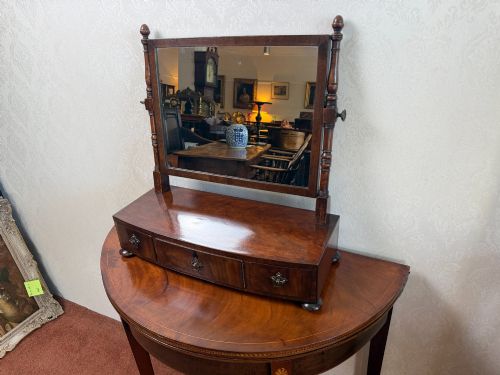
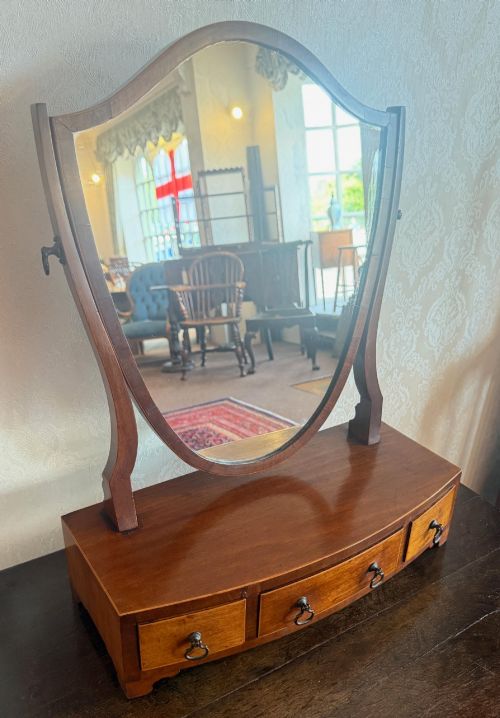
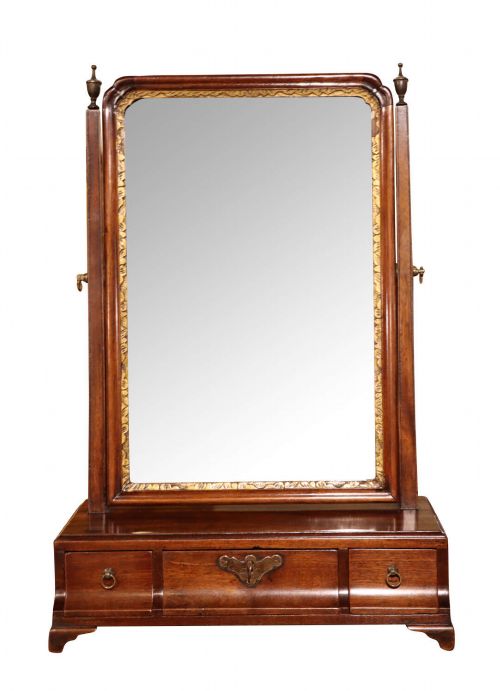
A vintage tabletop mirror box sits upon a chest of drawers or dressing surface to provide a movable reflection alongside a small compartment or drawer. The pieces collected under the vintage tabletop mirror box search phrase span several centuries, with particular emphasis on Georgian and Victorian examples.
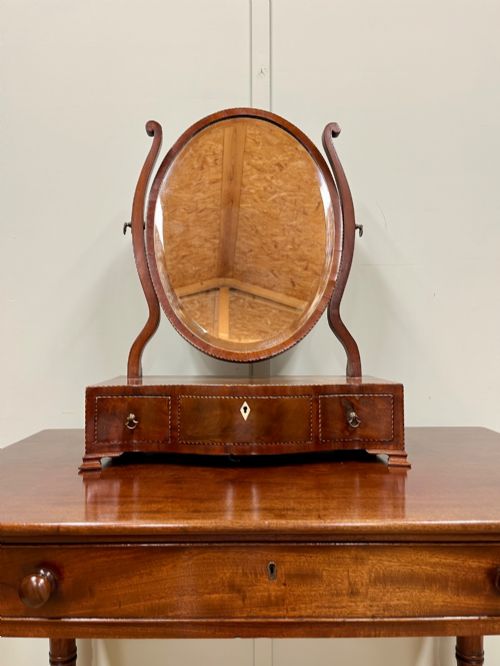
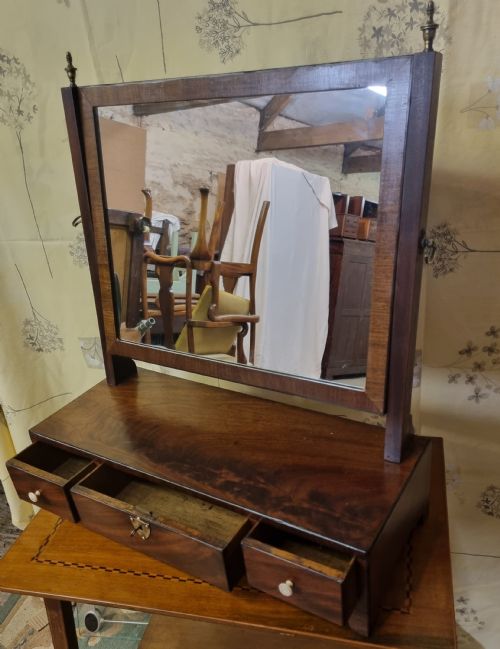
Most entries encountered on this page take the form of dressing table mirrors, toilet mirrors, or box mirrors built to hold personal items. These objects appear primarily in mahogany and walnut, frequently featuring pivoting plates held by upright arms.
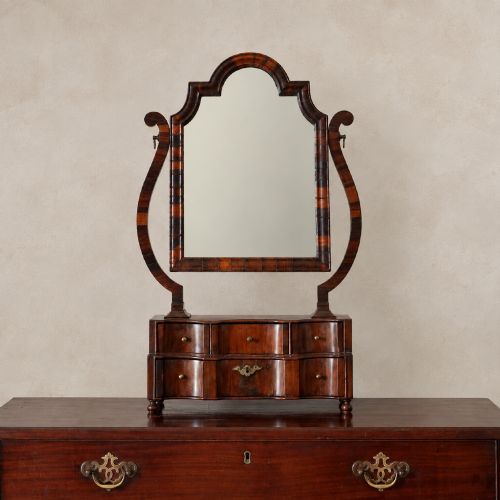
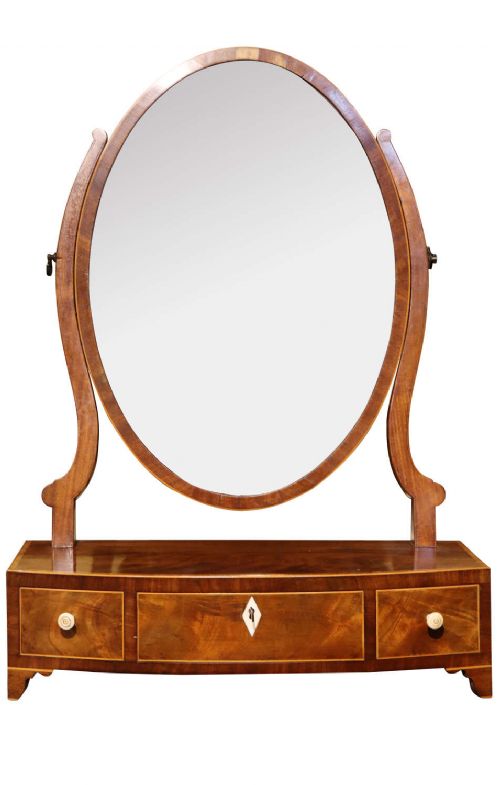
Makers and workshops across the eighteenth and nineteenth centuries produced these items in various regional interpretations, including serpentine outlines and inlaid surfaces. Buyers find both simple utilitarian boxes and elaborate versions fitted with multiple drawers.
Materials and construction
Cabinet makers utilised dense timbers such as mahogany and walnut, frequently selecting figured grains for the primary surfaces and secondary woods for internal partitions. Crossbanding, marquetry, and boxwood stringing added decorative contrast to the exterior panels.
The mirror plates themselves utilise glass set within pivoting frames, connected to upright supports mounted directly onto the top of the box. Brass hinges, handles, and locking mechanisms provided the mechanical movement for drawers and tilt actions.
Vintage Tabletop Mirror Box Retail Price Guide 2026
Typical asking prices for vintage tabletop mirror box among the pieces listed under this phrase on Sellingantiques today, from the lower quarter to the upper quarter. They describe what is for sale here now, not the wider market.
A few miniature wardrobes and small armoires sneaked into the mirror box collection.
Assessing quality and proportion
Superior examples display balanced proportions where the weight of the mirror plate matches the stability of the base box. The finesse of the dovetail joinery on the internal drawers indicates the standard of workshop execution.
Finishes range from plain timber surfaces to intricate crossbanded veneers and serpentine fronts that require precise carpentry. The retention of original brass hardware and the clarity of the mirror glass contribute significantly to the standing of an individual piece.
John Franklin London
The Vintage Tabletop Mirror Box Glossary
- Toilet mirror
- A small mirror mounted on a box base designed for placement on a table during personal grooming.
- Box mirror
- A compact dressing mirror featuring a compartment or drawers integrated into the supporting plinth.
- Serpentine
- A curved outline featuring a convex centre flanked by concave wings, commonly seen on drawer fronts.
- Crossbanding
- A border veneer applied perpendicularly to the grain of the main panel to frame the surface.
- Parcel-gilt
- Partially gilded woodwork where gold leaf highlights specific carved details or mouldings.
Vintage Tabletop Mirror Box: Frequently Asked Questions
Where should I place a tabletop mirror box?
These boxes sit comfortably on top of chests of drawers, sideboards, or dedicated dressing tables where the height allows for easy use.
Ensure the surface is stable and level to support the weight of the timber base and pivoting glass.
What is the difference between a toilet mirror and a dressing mirror?
The terms are largely interchangeable in historical listings, both describing a movable mirror attached to a freestanding base.
Some variations incorporate small drawers beneath the glass to hold trinkets, while others use a simpler box construction.
How do I date an antique mirror box?
Dating relies on timber selection, structural joinery, and the style of the base cabinet, ranging from Queen Anne walnut pieces to later Victorian mahogany examples.
Details such as serpentine shaping and marquetry inlay provide further clues to the period of manufacture.
Can the mirror glass be replaced?
While original glass is preferred by collectors, many surviving pieces have had their plates updated over centuries of use.
Replacement glass is typically cut to fit the existing frame and secured with traditional backing methods.