

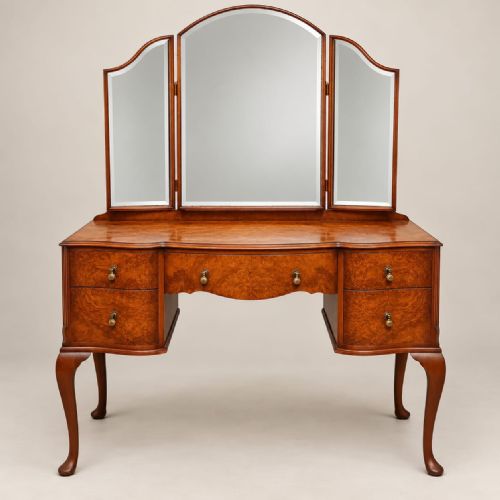




Serpentine Front Dressing Mirror
These serpentine front dressing mirror examples bring gentle movement and rich mahogany or walnut timber to a chest or table.
Serpentine Front Dressing Mirror
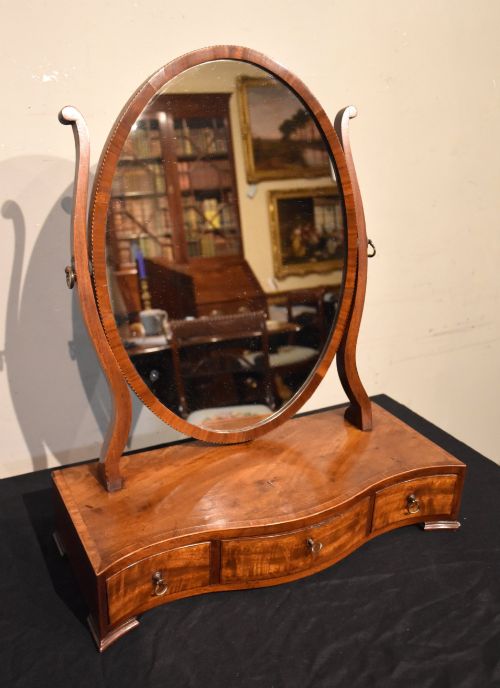
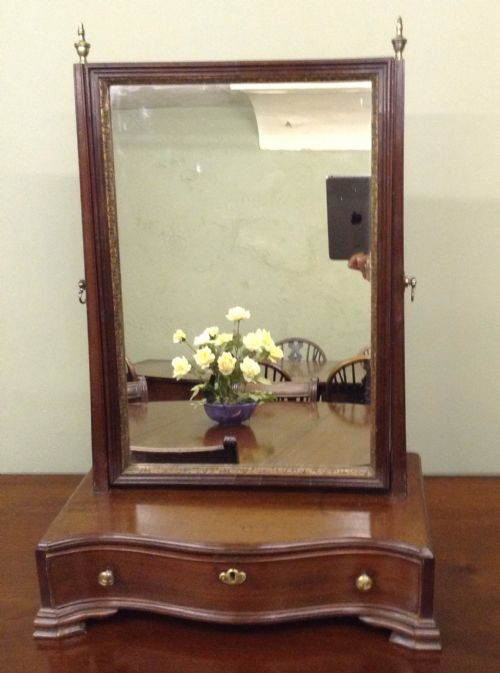
When you search for a serpentine front dressing mirror, you are looking at tabletop looking glasses designed to sit upon a chest or table for grooming and dressing. They combine a pivoting mirror plate with a stepped or curved base that houses small drawers for trinkets and cosmetics.
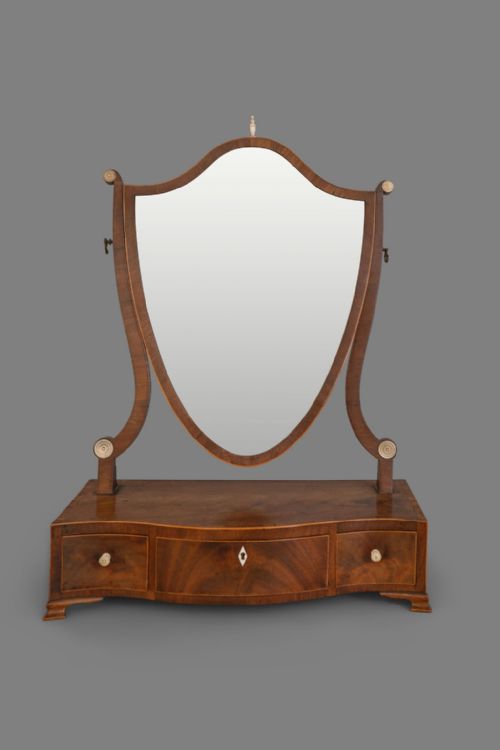
The versions you are most likely to meet on this page hail from the Georgian, Victorian, and 18th century periods, executed primarily in mahogany, flame mahogany, or walnut. These pieces span compact tabletop toilet mirrors to grander examples featuring three small drawers or box bases.
Many of these surviving pieces retain their original glass and brass fittings, showing the care taken by cabinet makers across the Georgian and Victorian eras. The curving front line defines the group, offering a softer profile than a flat rectangular box.
How they were made
Cabinet makers constructed the bases of these mirrors using solid mahogany or walnut, frequently selecting figured veneers such as flame mahogany to catch the light on the curved drawer fronts. The undulating serpentine shape required careful sawing and shaping of the timber.
Brass fitments, including delicate knobs, hinges, and arm brackets, secured the pivoting frame above the box base. Early examples often utilised bone escutcheons around keyholes, adding a subtle pale contrast to the dark timber.
Serpentine Front Dressing Mirror Retail Price Guide 2026
Typical asking prices for serpentine front dressing mirror among the pieces listed under this phrase on Sellingantiques today, from the lower quarter to the upper quarter. They describe what is for sale here now, not the wider market.
Some of these diminutive drawers still hold traces of old scented powder left behind by Georgian users.
What varies in quality
The finesse of the serpentine curve sets the better examples apart, where the wood grain flows naturally around the undulating angles without distortion. Superior pieces show precise dovetailing in the tiny drawers and well-proportioned mirror uprights.
The choice of timber creates a clear distinction, as highly figured flame mahogany or rich walnut elevate a mirror above plain stock. Original brasswork and undisturbed mirror plates further elevate the stature of a piece.
The Serpentine Front Dressing Mirror Glossary
- Serpentine front
- A furniture silhouette featuring a central convex curve flanked by two concave curves, creating an undulating line. This shape demands considerable skill from the woodworker.
- Toilet mirror
- A period term for a small dressing glass designed to sit upon a table or washstand. These often include a box base with small drawers.
- Flame mahogany
- A veneer cut from the fork of the mahogany tree where branches meet the trunk, producing a fiery, flamelike pattern. It was favoured for fine cabinet work.
- Box base
- The lower section of a dressing mirror constructed as a small chest or plinth containing drawers. It provides stability and storage for small items.
- Escutcheon
- A small protective plate of brass or bone fitted around a keyhole. It prevents the wood from splintering when a key is inserted.
Serpentine Front Dressing Mirror: Frequently Asked Questions
Where should I place a dressing mirror?
These mirrors suit the top of a low chest of drawers, a dressing table, or a sideboard where their proportions can be appreciated.
Because they are tabletop objects, they require a stable surface and careful placement away from direct moisture.
How do I date a mirror like this?
Dating relies on timber choices, construction methods in the drawers, and the profile of the mirror frame supports.
Georgian and 18th-century examples often display fine secondary woods and hand-cut dovetails, while Victorian pieces can feature heavier mahogany framing.
What is the difference between a toilet mirror and a dressing mirror?
In historical terms, the two phrases were often used interchangeably for mirrors equipped with a small drawer base for cosmetics.
Today, both describe the same tabletop form designed to assist with personal grooming.
Can the mirror angle be adjusted?
The pivoting frame is held between two upright arms using original brass screw knobs or pins that allow the glass to tilt.
Adjusting these side screws lets you set the preferred viewing angle for daily use.