





Georgian Swivel Mirror Base
Georgian swivel mirror base pieces anchor the dressing glass on your table, bringing period character and practical reflection to daily life.
Georgian Swivel Mirror Base
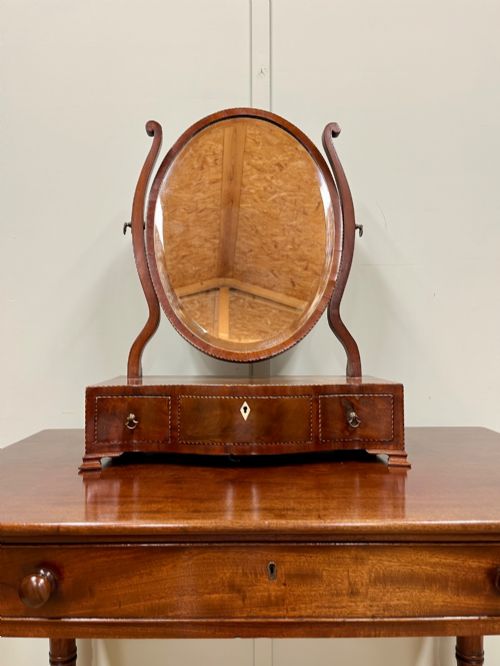
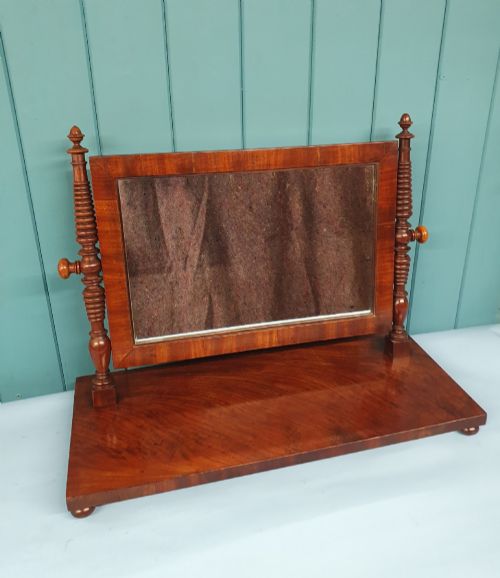
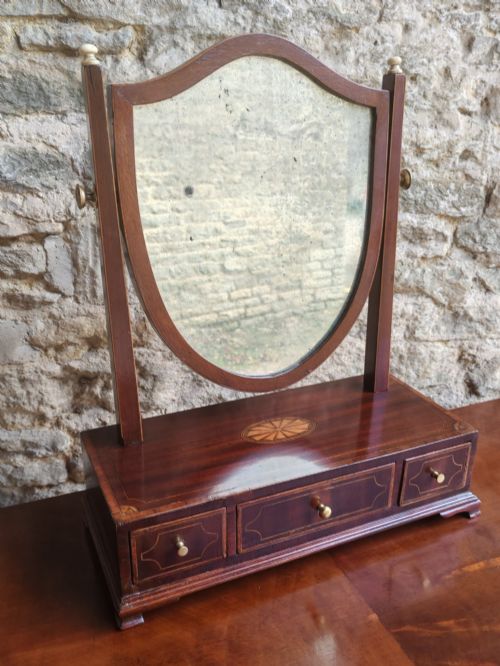
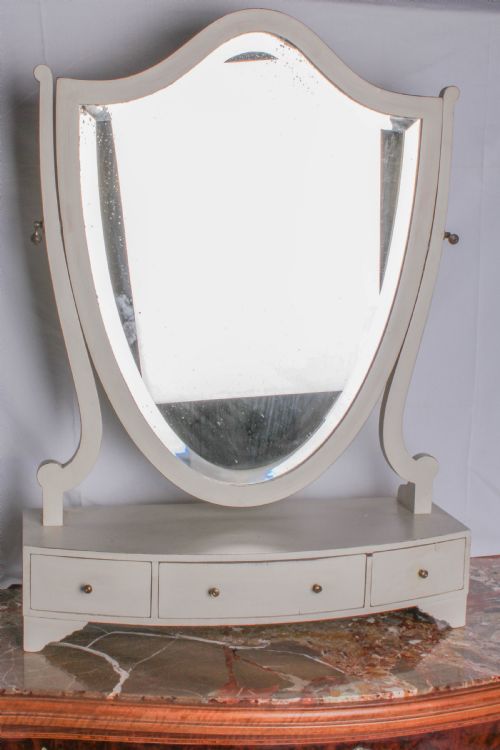
A georgian swivel mirror base supports a tilting glass plate designed for the dressing table, combining utility with period cabinet-making. These items appear in forms such as dressing table mirrors, toilet mirrors, and box mirrors across this page.
Most examples date from the Georgian and 19th Century periods, constructed primarily in mahogany with occasional painted wood finishes. The woodwork typically takes rectangular or serpentine outlines to house small drawers beneath the pivot pivots.
Variations span oval and shield shapes supported by upright arms, often featuring box bases with fitted compartments. Pieces stretch from the 18th century through to Edwardian revivals, maintaining the traditional table-top format.
How they were made
Cabinet-makers constructed these structures largely from solid and veneered mahogany, shaping timber by hand into serpentine fronts and shield contours. Brass fittings such as adjusting screws and small knobs secure the glass frame between vertical uprights.
Internal elements incorporate secondary woods and small drawer boxes, sometimes detailed with bone escutcheons or marble tops. Original mirror glass sits within rebated frames, held safely by wooden beads or backing boards.
Georgian Swivel Mirror Base Retail Price Guide 2026
Typical asking prices for georgian swivel mirror base among the pieces listed under this phrase on Sellingantiques today, from the lower quarter to the upper quarter. They describe what is for sale here now, not the wider market.
Listings span mahogany, brass, bone, marble, and painted wood across the Georgian, Regency, and Edwardian eras.
What varies in quality
Quality rests in the crispness of the cabinet-making, visible in the handling of serpentine curves and the tightness of dovetail joints on the drawer boxes. Superior examples maintain balanced proportions between the upright supports and the base.
The choice of figured timber and the retention of original brass hardware elevate an item above simpler vernacular versions. Finer pieces show careful attention to internal secondary woods and precise turning on the support arms.
The Georgian Swivel Mirror Base Glossary
- Toilet mirror
- A small mirror designed to sit upon a dressing table or chest of drawers. These portable glasses were essential for grooming in bedchambers.
- Shield shape
- A mirror plate cut into the outline of a heraldic shield. This contour became popular during the latter half of the eighteenth century.
- Serpentine
- A front line curving outward at the centre and inward at the sides or vice versa. This undulating form requires skilled woodworking.
- Box mirror
- A dressing glass mounted upon a small storage base containing one or more drawers. The base provides stability and space for small valuables.
Georgian Swivel Mirror Base: Frequently Asked Questions
What is a georgian swivel mirror base used for?
These items support the pivoting glass plate on a dressing table, allowing the user to tilt the reflection to various angles during grooming.
They sit directly on tabletops and often incorporate small drawers in the base for storing jewellery or cosmetics.
How do I tell different periods apart?
Pieces from the eighteenth century typically display hand-cut dovetails, dense mahogany timber, and subtle serpentine shaping to the base.
Later nineteenth-century and Edwardian examples may show machine-sawn elements, painted wood finishes, or revival styling that departs from strict period proportions.
Where should I place a table mirror?
They suit dressing tables, chest of drawers, or sideboards in bedrooms and hallways where surface space permits a portable glass.
Ensure the supporting furniture is deep enough to bear the weight and dimensions of the box base safely.
Are these mirrors fixed in place?
The glass plates swing on brass or wooden pivot screws fitted into vertical arms, allowing you to adjust the tilt forward or backward.
Tightening these side screws holds the glass steady at your chosen angle during use.