



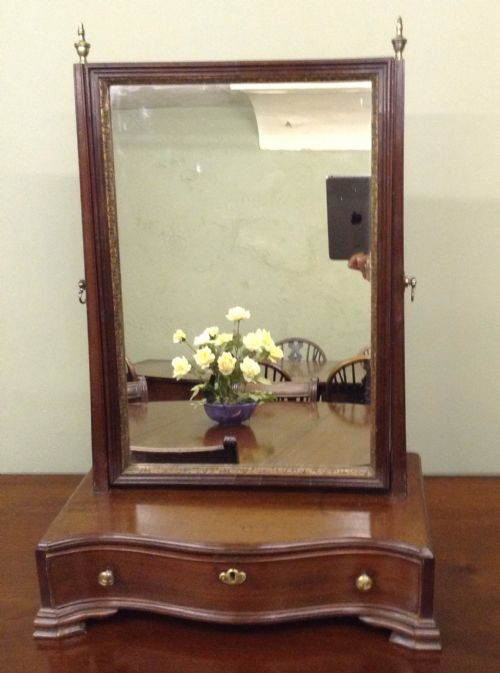


Serpentine Mahogany Box Mirror
These serpentine mahogany box mirrors bring elegance to a dressing table, combining rich timber and practical storage in a classic Georgian form.
Serpentine Mahogany Box Mirror
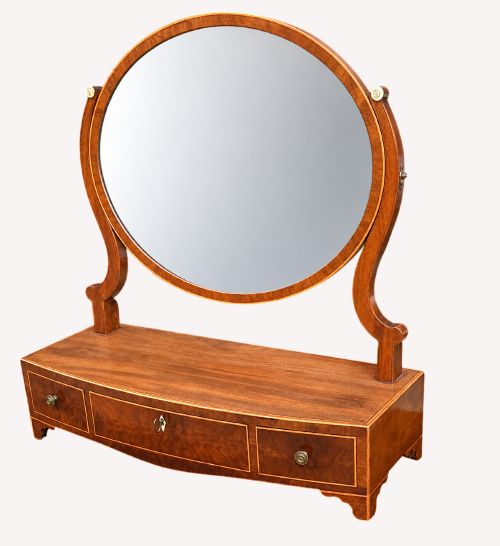
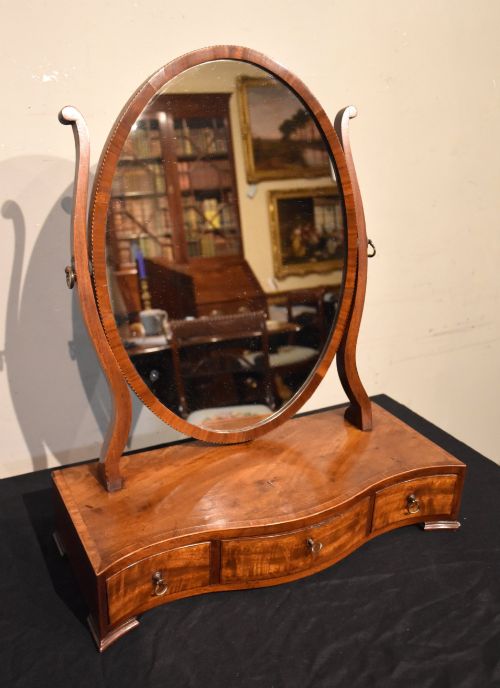
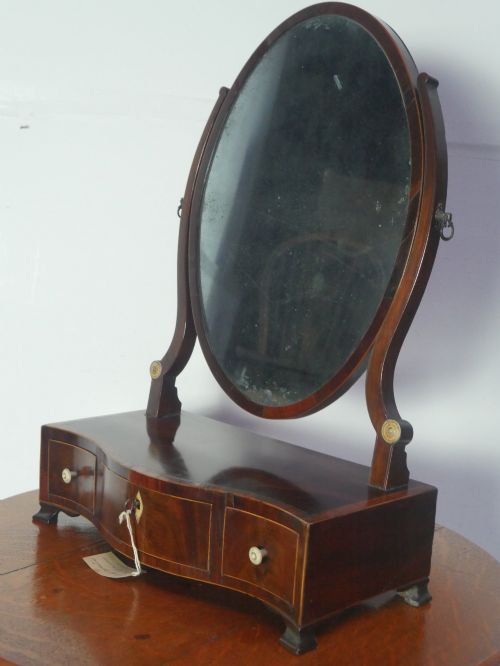
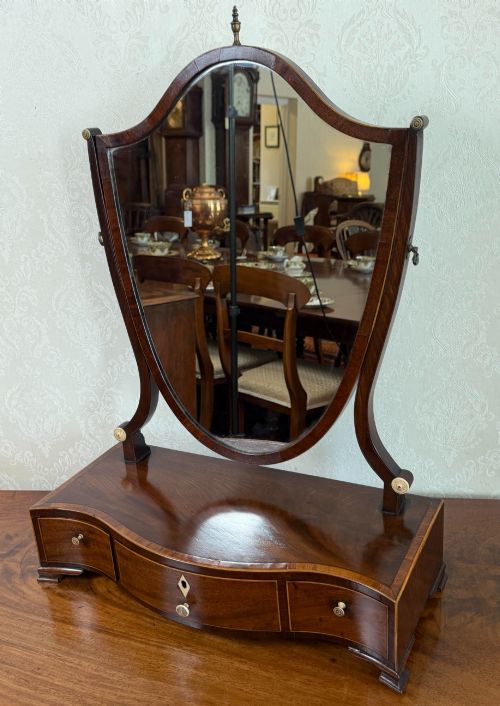
A serpentine mahogany box mirror sits upon a small box base fitted with drawers, designed to rest on a dressing table or chest. When buyers search for a serpentine mahogany box mirror, they find compact toilet mirrors meant for grooming and personal reflection.
The versions met most frequently on this page date from the eighteenth and nineteenth centuries, including Georgian and Regency periods. Makers constructed these mirrors with curved serpentine fronts, often incorporating three small drawers beneath the glass frame.
Object types vary slightly in title between dressing table mirrors, dressing mirrors, and toilet mirrors, yet all share the distinctive undulating front edge. Surviving examples reflect the cabinet-making standards of the Georgian and Victorian eras.
What varies in quality
The refinement of the serpentine curve defines the distinction between standard items and exceptional examples. Skill in cutting the undulating timber front requires steady precision from the maker, separating fluid shapes from rigid ones.
Secondary details such as boxwood stringing, satinwood highlights, and well-fitted drawer compartments elevate a piece. The integration of original brass hardware and clear glass further indicates superior craftsmanship.
Serpentine Mahogany Box Mirror Retail Price Guide 2026
Typical asking prices for serpentine mahogany box mirror among the pieces listed under this phrase on Sellingantiques today, from the lower quarter to the upper quarter. They describe what is for sale here now, not the wider market.
Object forms span dressing table mirrors, dressing mirrors, and toilet mirrors with distinctive serpentine drawer bases.
The Serpentine Mahogany Box Mirror Glossary
- Serpentine
- A curved line that undulates outward in the centre and inward at the sides, creating a wave-like shape on the front of the box base. This contour requires expert woodworking skill.
- Toilet mirror
- A smaller tabletop mirror historically placed upon a dressing table or washstand for personal grooming. These items usually feature a set of small drawers in the base.
- Boxwood stringing
- A thin, narrow inlay of pale boxwood set into the darker mahogany surface to create decorative borders. It provides a crisp visual contrast.
- Escutcheon
- A small protective plate surrounding the keyhole of a drawer, frequently fashioned from bone or brass. It prevents the surrounding wood from wearing down through daily use.
- Plate glass
- The flat sheet of mirrored glass held within the pivoting frame. Older mirrors may show subtle variations in the reflection due to historical manufacturing methods.
Serpentine Mahogany Box Mirror: Frequently Asked Questions
Where were these mirrors placed?
These mirrors sat atop dressing tables, chests of drawers, or dedicated toilet tables in bedrooms and dressing rooms. Their compact footprint allowed them to provide a functional reflecting surface without occupying floor space.
Owners utilised the small drawers in the box base to store jewellery, cosmetics, and small personal items. This combination of mirror and storage made them central pieces of daily Georgian and Regency routines.
How do I date a serpentine mirror?
Dating relies upon observing the construction methods, timber choices, and secondary decorative elements like stringing or inlay. Eighteenth-century examples often display simpler, robust proportions, while later nineteenth-century pieces may incorporate finer satinwood details or different drawer configurations.
The presence of specific styles mentioned in titles, such as George II or Regency, offers further clues regarding the decade of manufacture. Examining the hardware and the backboards helps confirm the period.
Are the mirrors adjustable?
Yes, the vertical glass frame hangs between two upright support posts attached to the box base. Metal pivot screws or wooden peg joints allow the user to tilt the glass forward or backward.
This mobility ensured that individuals of different heights could adjust the reflection easily during grooming. Surviving examples retain these original pivoting mechanisms.
What is boxwood inlay?
Boxwood inlay involves embedding narrow strips of pale, dense boxwood into shallow channels carved into the darker mahogany surface. This technique creates geometric borders and outlines the edges of the drawers.
Craftsmen used this method to brighten the appearance of the timber and highlight the serpentine curves. The pale wood contrasts sharply with the deep brown tones of the mahogany.