


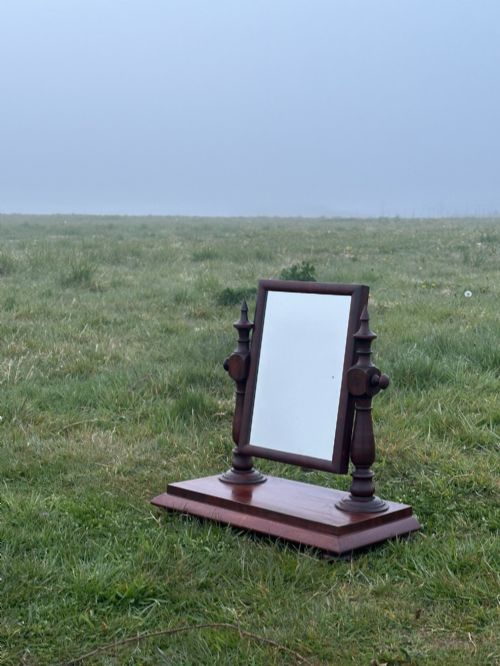

Tabletop Cheval Dressing Mirror
A tabletop cheval dressing mirror brings proportion and practical reflection to a surface, offering an adjustable frame for daily grooming.
Tabletop Cheval Dressing Mirror
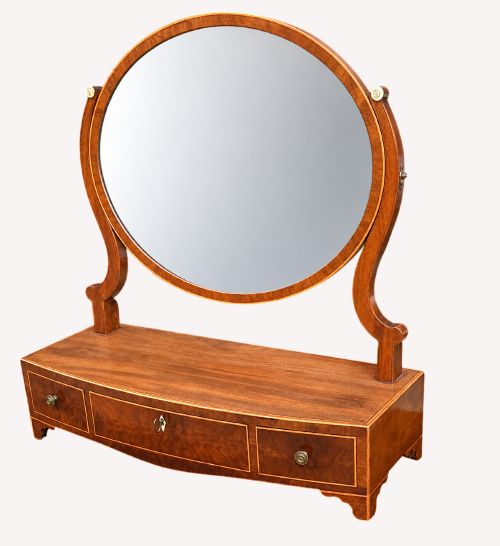
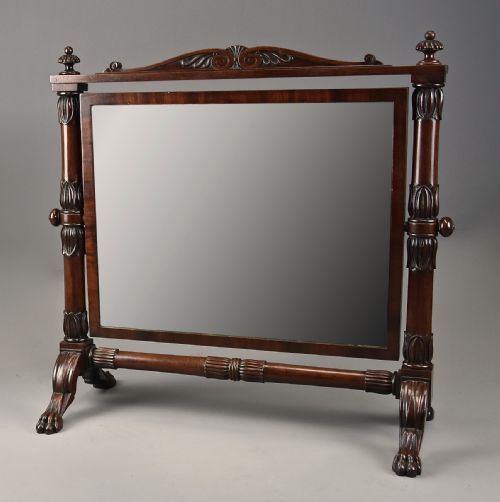
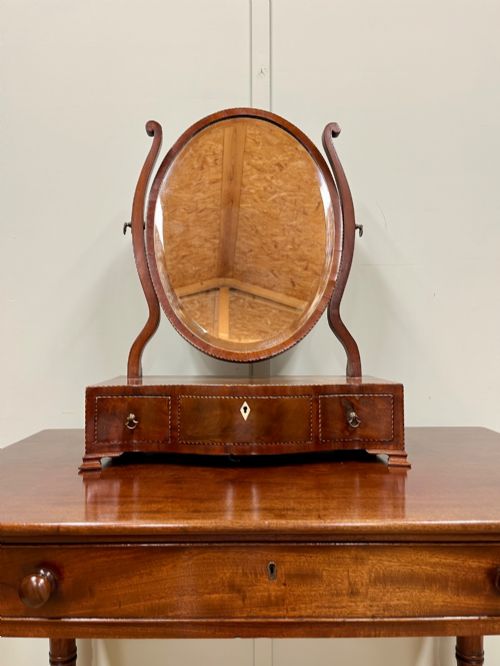
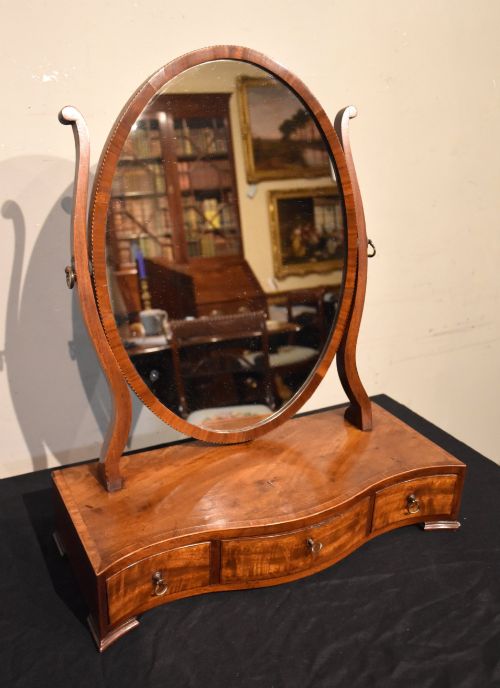
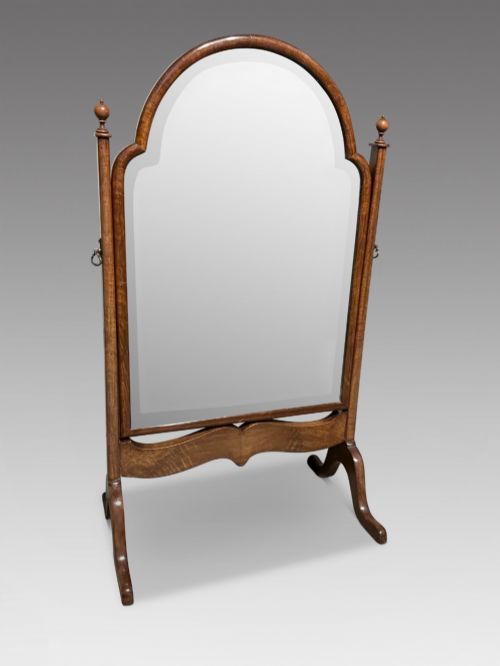
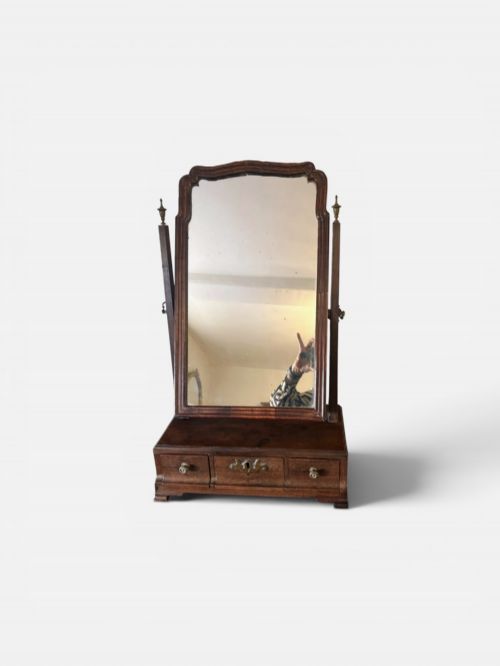
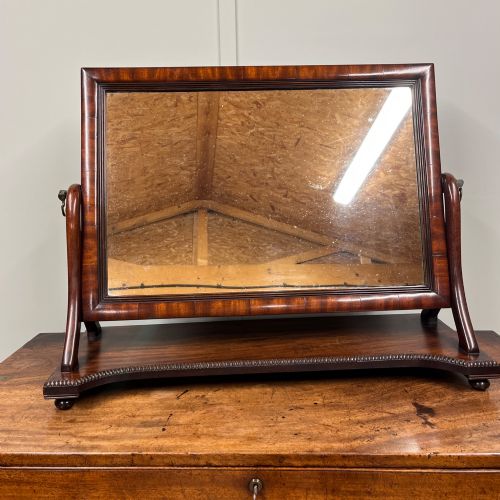
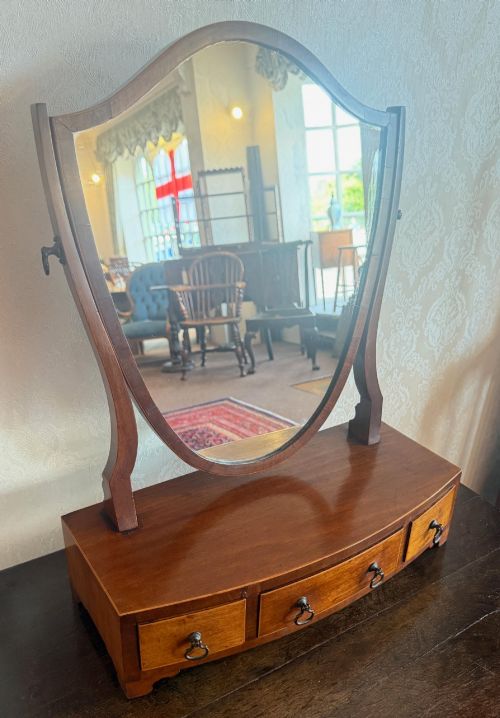
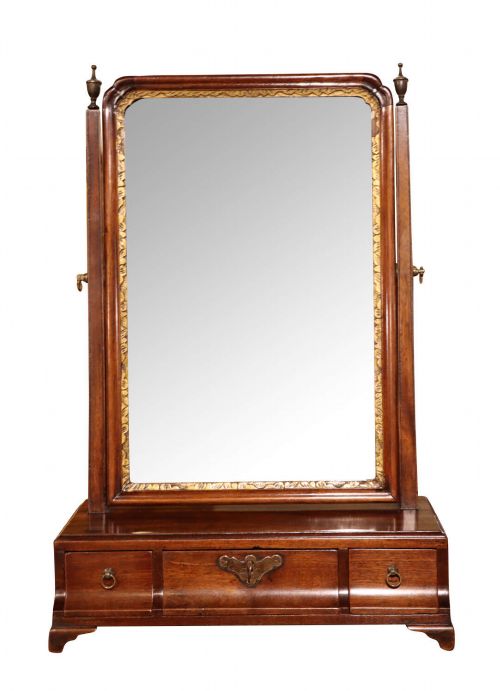
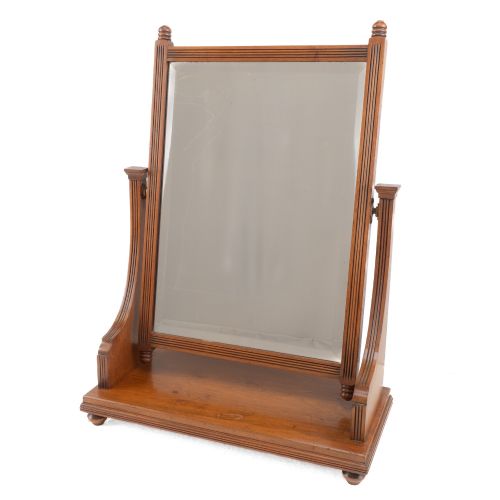
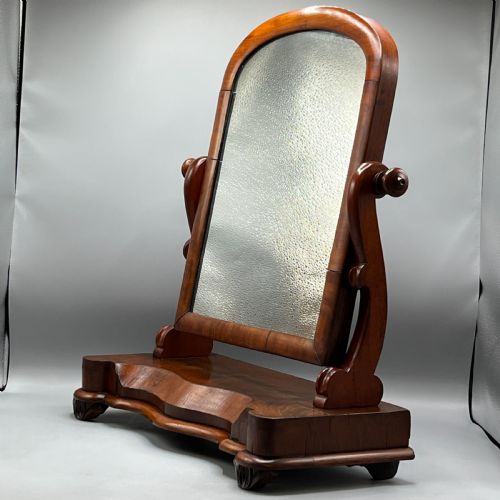
A tabletop cheval dressing mirror sits upon a chest or table rather than standing on the floor, providing a movable glass surface for a dressing room or bedroom. When seeking a tabletop cheval dressing mirror, buyers encounter various forms including swing mirrors, toilet mirrors, and dressing table mirrors dating from the eighteenth century through the Edwardian period.
The prevailing examples on this page are constructed in mahogany and walnut, frequently incorporating small drawers or box bases beneath the frame. These pieces originate across periods such as the Georgian, Regency, and Victorian eras, reflecting the domestic habits and cabinet-making skills of those times.
Materials and construction methods
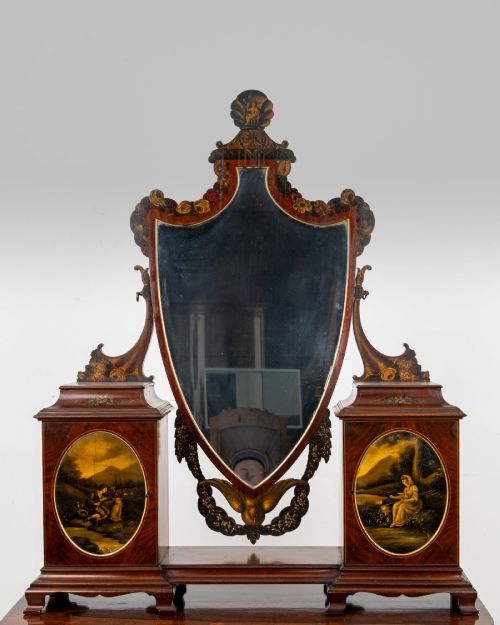
Cabinet-makers built these mirrors predominantly using timbers such as mahogany, walnut, and satinwood, often accentuating the surfaces with boxwood inlay, marquetry, or burr walnut veneers. Brass fittings supported the pivot mechanism, allowing the glass frame to tilt securely between upright supports.
Glass was silvered and set within rebated frames, while base sections frequently featured fitted compartments, jewellery drawers, or bureau fitments constructed with traditional joinery.
Several mirrors include hidden drawers or tiny bureau compartments designed to keep secret letters and trinkets safe.
Distinctions in craftsmanship
Quality rests in the selection of figured timber veneers, the crispness of any inlay work, and the structural integrity of the pivot mechanism supporting the glass. Superior examples display refined proportions, dovetail joints on the base drawers, and heavy brass hardware.
Simpler pieces rely on plain mahogany planks and straightforward swing frames without auxiliary storage, representing more utilitarian domestic production from the nineteenth century.
P and MA Nicholson·Jean Gille
The Tabletop Cheval Dressing Mirror Glossary
- Cheval mirror
- A freestanding mirror supported on a frame with vertical posts that allow the glass to swing. This design enables a full view when proportioned for tabletop use.
- Toilet mirror
- A smaller dressing mirror designed to sit on a dressing table or chest of drawers, frequently incorporating small storage drawers in the base.
- Swing mirror
- A glass plate mounted on pivots between two upright arms, permitting the angle of reflection to be adjusted.
- Marquetry
- Decorative patterns formed by inserting pieces of contrasting wood veneer into a prepared surface.
- Bureau fitment
- A small desk interior integrated into the base of a mirror stand, featuring pigeonholes or miniature drawers.
Tabletop Cheval Dressing Mirror: Frequently Asked Questions
How do I date a tabletop cheval dressing mirror?
Dating relies upon timber selection, hardware style, and construction methods. Earlier Georgian and Regency examples favour solid mahogany or satinwood with delicate proportions, while Victorian pieces often employ heavier timbers and burr walnut veneers.
Secondary woods used inside drawer construction also provide clues to age, alongside the bevel and thickness of the mirror glass itself.
Where should I place a tabletop mirror?
These mirrors suit dressing tables, low chests of drawers, or sideboards where the height allows comfortable use while standing or sitting. Placement near a window maximises natural light for grooming.
Ensure the supporting surface is deep and stable enough to bear the weight of the frame and base.
What is the difference between a toilet mirror and a cheval mirror?
A toilet mirror is traditionally designed to sit upon a dressing table or chest, often featuring a box base with small drawers. A cheval mirror is typically a full-length glass on a floor-standing frame, though smaller tabletop versions also utilise the pivoting cheval post design.
Both types serve the same primary function of adjustable personal reflection.
How do I care for antique mirror glass?
Maintain the glass by dusting gently with a soft cloth and avoiding harsh chemical cleaners that can damage the silvering behind the plate. Keep the mirror away from direct sunlight and damp environments to protect the wooden frame and veneer.
Period mirrors often display minor foxing, which is a natural sign of age and authenticity.