
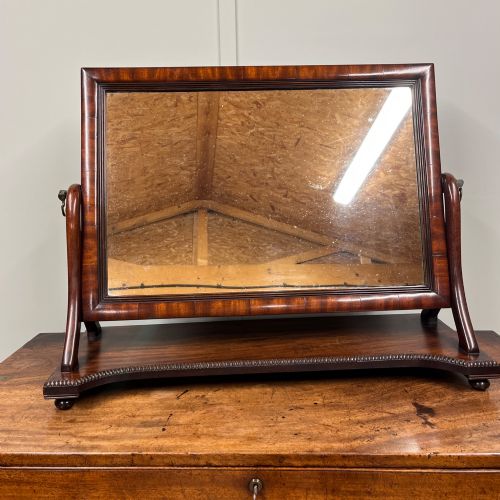
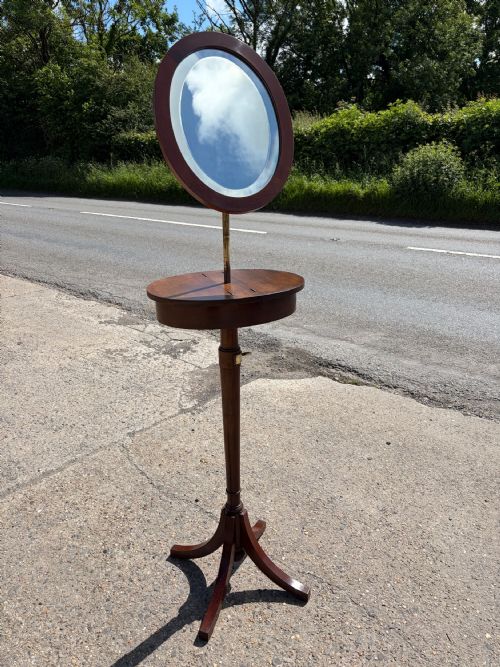


Freestanding Mahogany Vanity Mirror
These freestanding mahogany vanity mirror pieces offer practical utility and classic warmth, making them essential for a traditional dressing room or bedroom.
Freestanding Mahogany Vanity Mirror
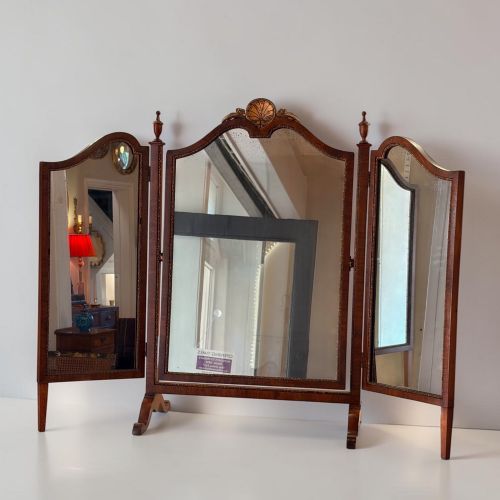
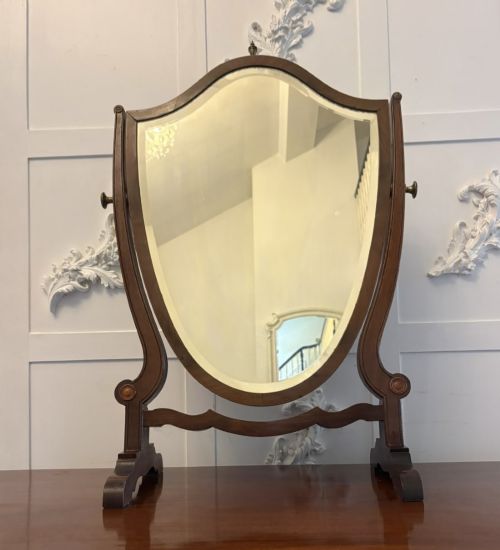
A freestanding mahogany vanity mirror brings historical craftsmanship directly to your dressing space, combining rich timber frames with adjustable glass. When searching for a freestanding mahogany vanity mirror, you encounter various forms including compact toilet mirrors designed for chests of drawers and taller cheval mirrors for full-length viewing.
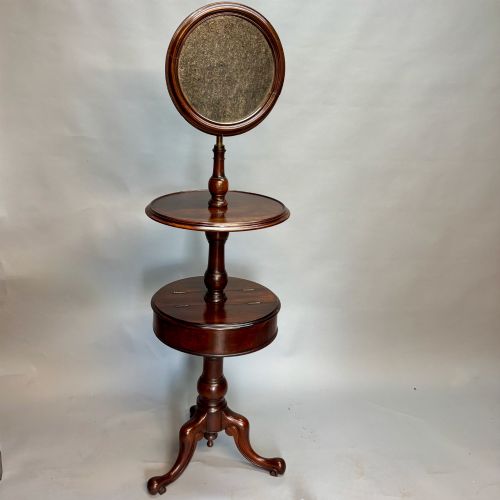
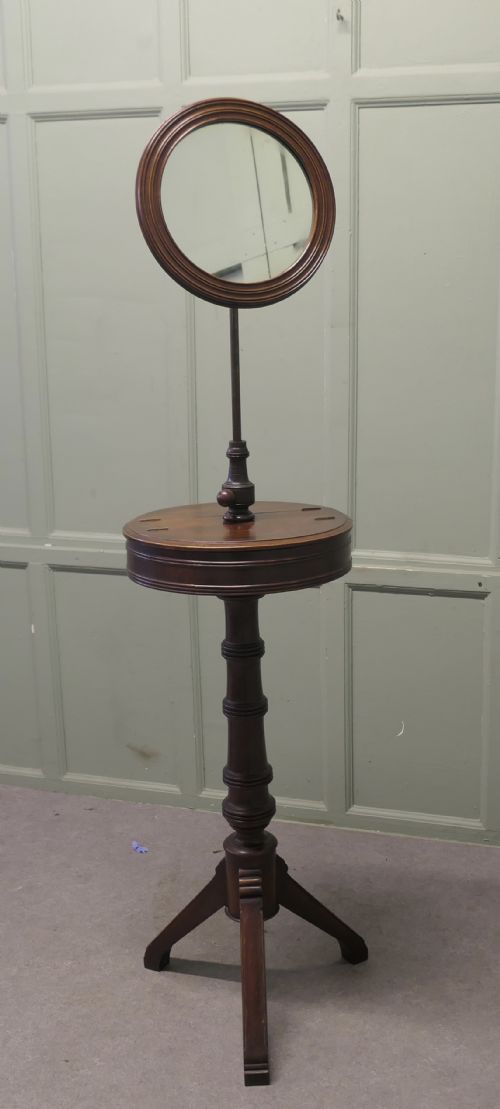
The selection ranges from simple swing mirrors on serpentine boxes to complex telescopic shaving stands on tripod bases. Most examples hail from the Victorian and Edwardian eras, alongside pieces attributed to the Regency period and the wider nineteenth century.
Makers utilised these versatile designs for daily grooming rituals, creating pieces that sat comfortably on dressing tables or stood independently on the floor. The overarching style focuses on rich grain patterns and functional movement through brass hinges and pivots.
How they were made
Glass panels provide the reflection, occasionally accompanied by secondary elements of painted metal and fabric depending on the specific shaving or dressing stand configuration. Cabinetmakers shaped the timber through turning and carving, particularly evident on the tripod stands and shaped box supports characteristic of the period.
The surviving inventory encompasses a wide stylistic range from Regency simplicity through to ornate Victorian carving and lighter Edwardian dressing forms.
What varies in quality
The calibre of a freestanding mahogany vanity mirror rests in the depth of the timber's grain and the crispness of any applied carving. Superior examples display thoughtful proportions where the mirror plate balances harmoniously against its supporting standards and base.
Mechanism precision also dictates worth, as top-tier pieces feature robust, original brass adjustments that hold the glass firmly at any chosen angle without slipping. Inferior items often show clumsy timber repairs, mismatched fittings, or sluggish telescopic mechanisms that fail to maintain their position.
The Freestanding Mahogany Vanity Mirror Glossary
- Cheval mirror
- A freestanding full-length dressing mirror mounted on a vertical swivelling frame between two pillars. This large form allows a person to view their entire outfit.
- Toilet mirror
- A smaller mirror designed to sit atop a dressing table, chest, or vanity unit. These typically incorporate a small box base fitted with small drawers.
- Telescopic
- Describing a standard or shaft that adjusts in height through an inner sliding rod secured by a thumbscrew. This mechanism allowed users to alter the mirror level for sitting or standing.
- Swing mirror
- A glass plate hung on horizontal pivots between two upright arms, enabling the user to tilt the reflection up or down. It remains the defining mechanical feature of nineteenth-century dressing glasses.
- Tripod base
- A three-legged support structure commonly found on nineteenth-century shaving stands and pedestal mirrors. It provides a stable footing on uneven chamber floors.
Freestanding Mahogany Vanity Mirror: Frequently Asked Questions
What is a freestanding mahogany vanity mirror?
A freestanding mahogany vanity mirror is a movable looking glass housed in a wooden frame that rests on a table, chest, or the floor. These items were designed for personal grooming and dressing.
The category includes small toilet mirrors with drawers, tall cheval mirrors, and adjustable shaving stands originating from the nineteenth and early twentieth centuries.
How do I use a telescopic shaving mirror?
A telescopic shaving mirror functions by loosening the brass thumb screw on the vertical shaft to raise or lower the glass to your eye level. Once adjusted, you tighten the screw to hold the height.
Many of these mirrors also feature tilting pivots on the frame itself, allowing you to angle the glass precisely for shaving or hair styling.
Where should I place a dressing table mirror?
A dressing table mirror sits best on top of a sturdy chest of drawers, a dedicated dressing table, or a sideboard where the surface depth supports the base. Ensure the placement receives good natural light from a nearby window.
Floor-standing cheval mirrors operate independently and fit well in bedroom corners or dressing room spaces where full-length reflections are required.
How do I date a Victorian mahogany mirror?
Dating a Victorian mahogany mirror involves examining the construction methods, the type of brass hardware used, and the clarity or bevel of the glass plate. Mid-nineteenth-century examples often feature hand-turned tripod bases and simple mahogany frames.
Later Victorian and Edwardian pieces may introduce subtle carved details, machine-made brass components, or different internal wood species in the secondary framing.