
19th Century Mahogany Dressing Mirror
A 19th century mahogany dressing mirror brings tactile warmth and refined proportion to a bedroom, offering a practical glass for daily grooming.
19th Century Mahogany Dressing Mirror
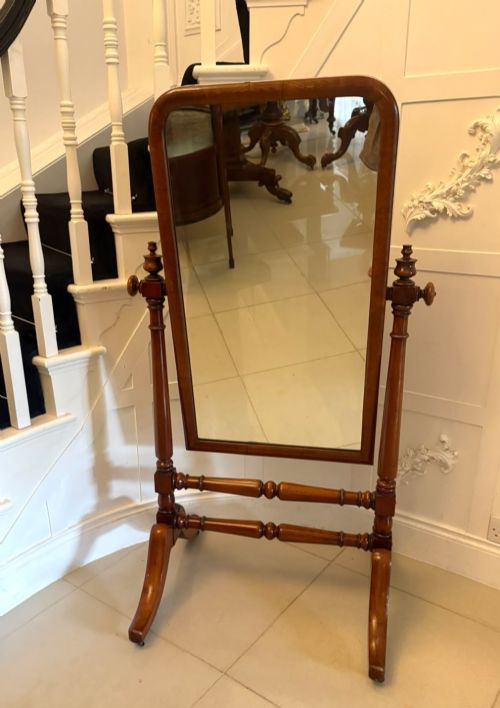
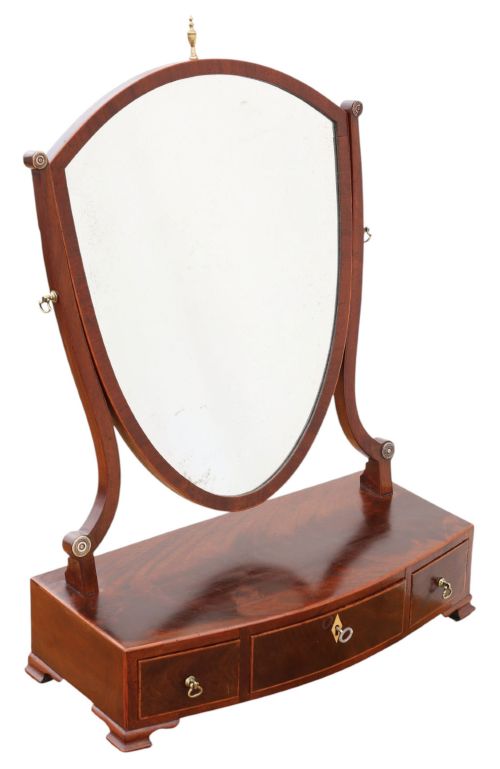
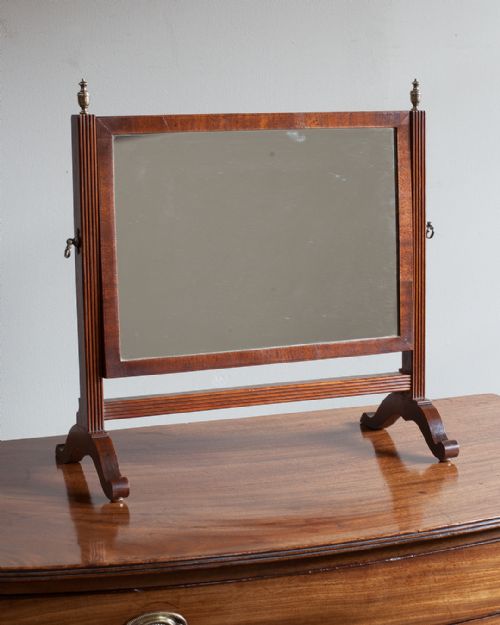
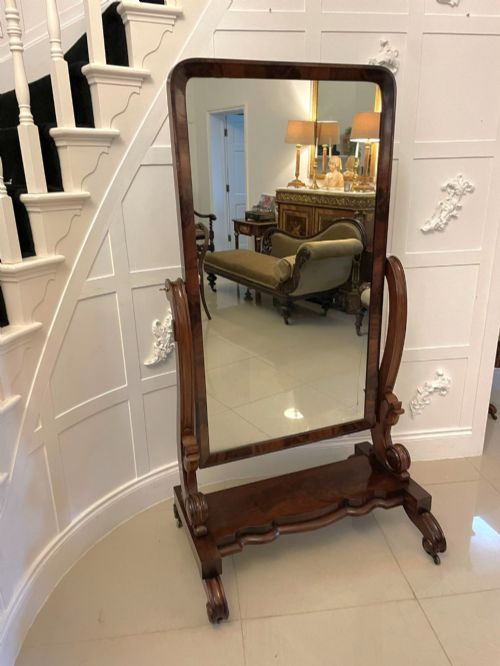
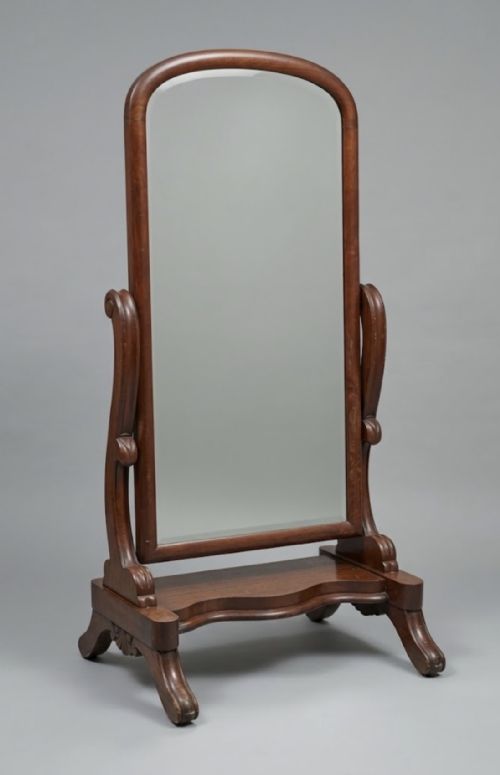
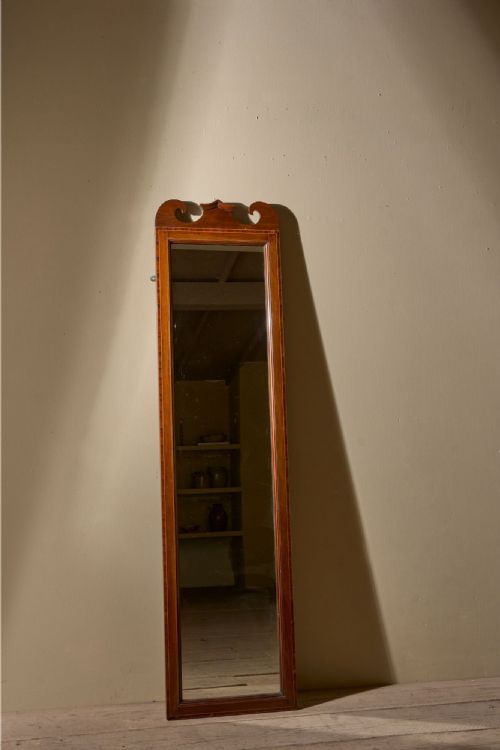
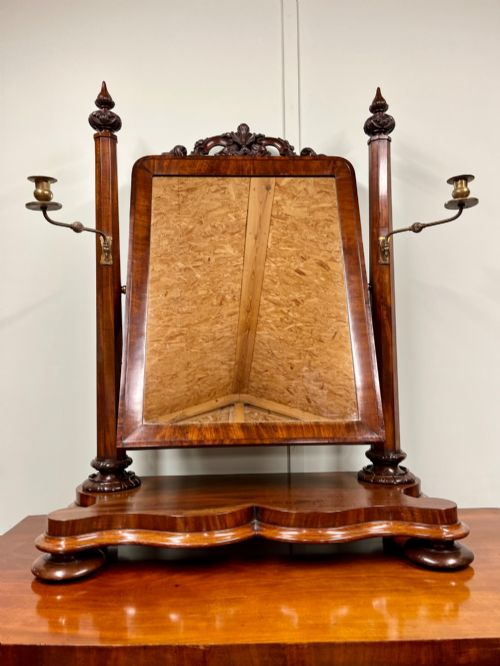
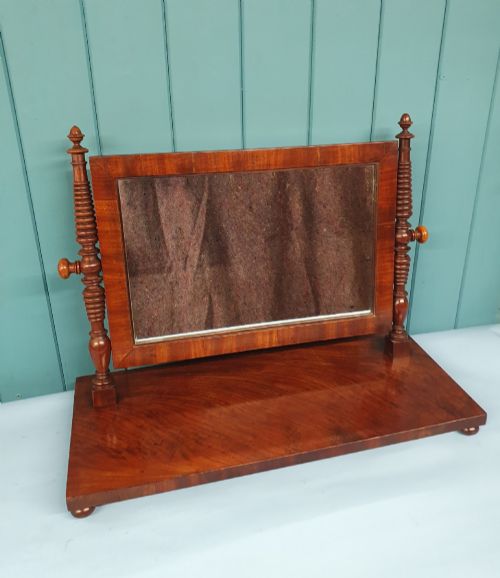
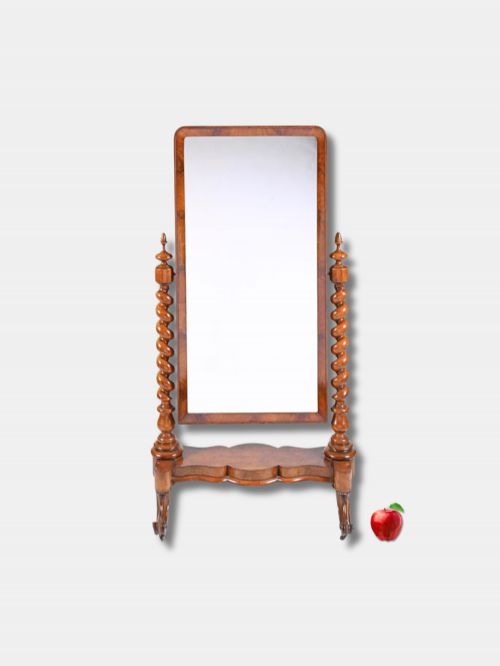
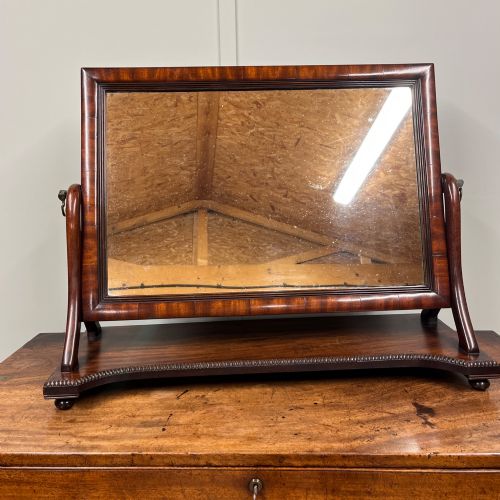
A 19th century mahogany dressing mirror typically takes the form of a smaller toilet glass designed to sit upon a chest or dressing table, or a larger freestanding cheval mirror meant to stand directly on the floor. Pieces span the Georgian, Regency, William IV and Victorian periods, reflecting shifting domestic habits and interior tastes across the decades.
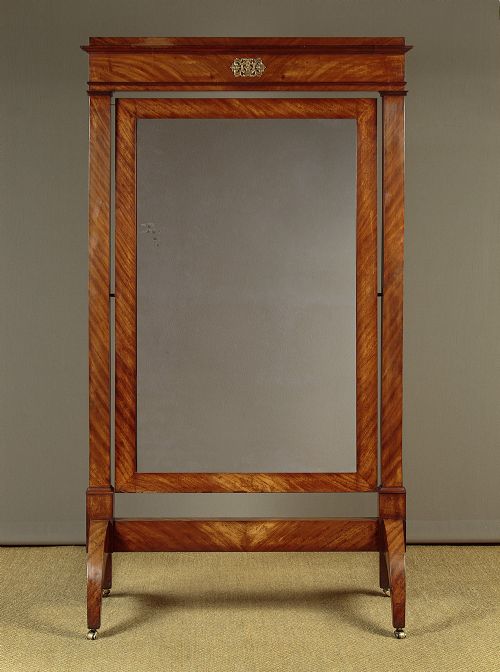
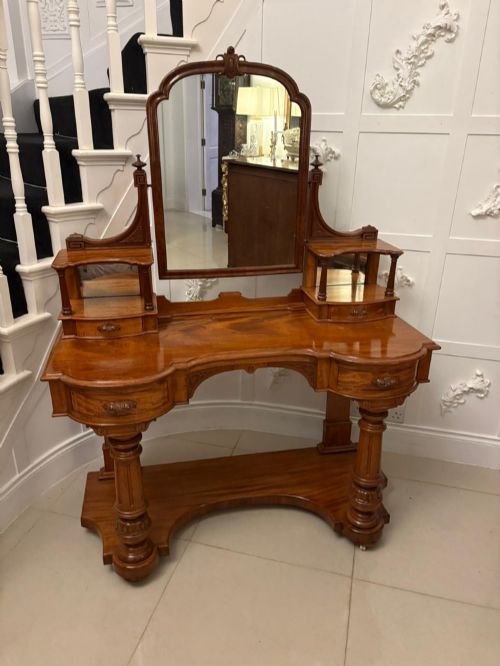
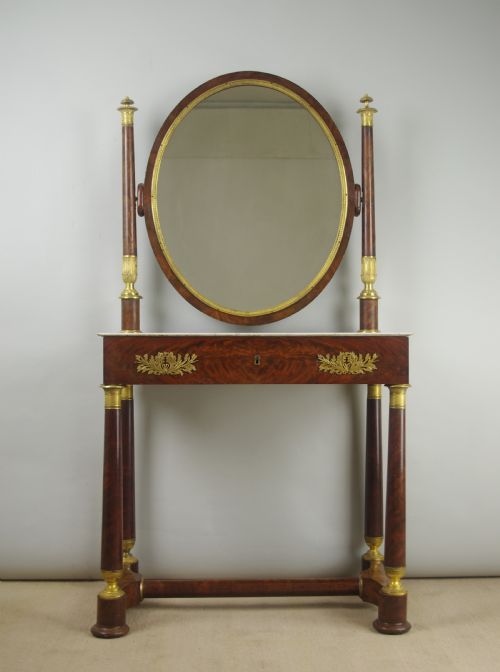
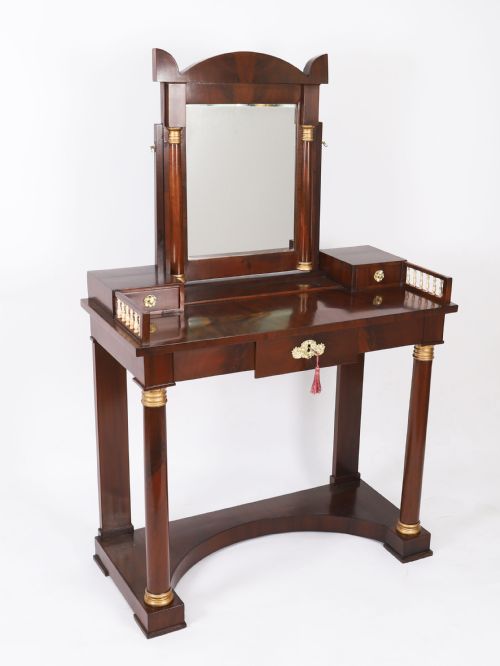
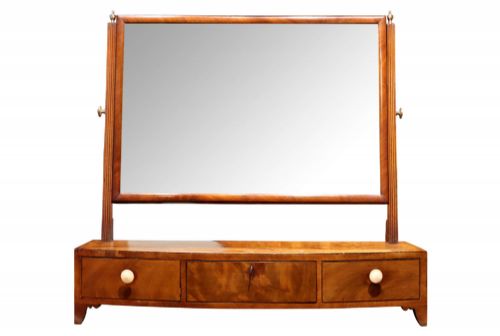
The most common formats on this page are compact swing mirrors with fitted drawers beneath the glass and tall floor-standing cheval mirrors designed for full-length viewing. Makers in both Britain and France produced these varied shapes, incorporating details such as shield plates, oval frames, and rectangular glass supported by upright pillars.
Materials and Construction
Cabinet makers utilised solid timber and veneers of mahogany, often selecting figured or flame grains to create lively visual movement across the surfaces of frames and box bases. Brass fittings such as swivelling screw knobs, castors, sabots, and swan-neck handles appear frequently, providing both functional movement and structural accent.
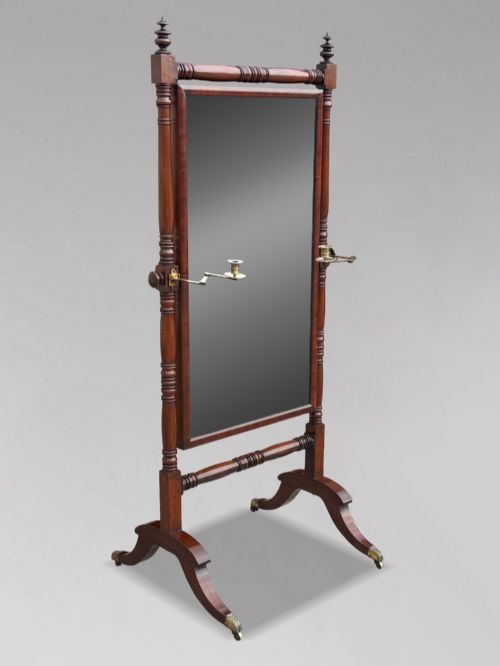
Glass plates are held within rebated frames, sometimes augmented by secondary supports like barley twist columns or sabre legs. Ormolu and gilt bronze mounts surface on French Empire examples, while inlaid stringing decorates the edges of select Georgian and Regency table boxes.
Listings feature mahogany, glass, brass, marble, and ormolu across styles spanning Georgian, Regency, French Empire, and Victorian eras.
Judging Quality and Execution
Quality rests heavily on the depth and figure of the mahogany veneer, the crispness of any carved elements such as foliate scrolls or barley twists, and the integration of original brass hardware. Better examples show careful timber selection where grain patterns match logically across drawer fronts and upright supports.
Proportion and stability dictate the upper tier of the range, ensuring that freestanding cheval frames or table swing boxes pivot smoothly on their original trunnions without sagging. The presence of secondary timbers like oak or pine within drawer carcases further signals traditional workshop standards.
Gillows
The 19th Century Mahogany Dressing Mirror Glossary
- Cheval mirror
- A large freestanding floor mirror supported by four legs and vertical posts that allow the glass plate to swing. This format became popular in the late 18th century and remained a bedroom staple through the Victorian era.
- Toilet mirror
- A smaller table-top glass often fitted with a set of small drawers in the base. It was designed to sit on top of a dressing table or chest of drawers.
- Flame mahogany
- A veneer cut from the fork where a branch joins the main trunk, creating a distinctive flickering, flame-like grain pattern. Cabinet makers reserved this striking material for prominent display surfaces.
- Trunnion
- The pivot screw or pin set into the side uprights that allows a swing mirror to tilt at an angle. Original brass trunnions are prized for their period integrity.
- Sabre leg
- A curving, outwardly splayed leg of uniform thickness that tapers slightly towards the foot. It is frequently encountered on Regency and William IV cheval frames.
19th Century Mahogany Dressing Mirror: Frequently Asked Questions
What is the difference between a cheval mirror and a toilet mirror?
A cheval mirror is a tall, floor-standing glass designed to show the full figure, supported by an upright frame with four legs.
In contrast, a toilet mirror is a compact table-top glass that usually rests on a small box base fitted with one or more drawers.
How can I tell a Regency dressing mirror from a Victorian one?
Regency mirrors tend to feature cleaner architectural lines, reeded columns, and brass sabre legs with castors, often using rich dark mahogany.
Victorian examples frequently display heavier proportions, carved scrolling supports, or barley twist pillars reflecting evolving 19th-century tastes.
Did these mirrors always have drawers?
Table-top toilet mirrors very often incorporated a small box base with one, two, or three drawers for storing small personal items and trinkets.
Freestanding floor models and simpler skeleton frames generally omitted drawers entirely to maintain a lighter visual profile.
Where should I place a dressing mirror in a modern room?
Table-top swing mirrors work well placed atop a low chest of drawers, a side table, or a dedicated vanity surface where their pivoting action remains accessible.
Floor-standing cheval mirrors suit bedrooms or dressing areas with sufficient clearance for their pivoting frames and splayed legs.