
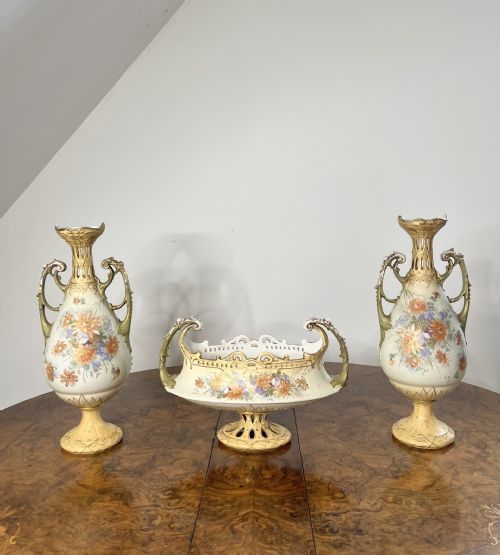
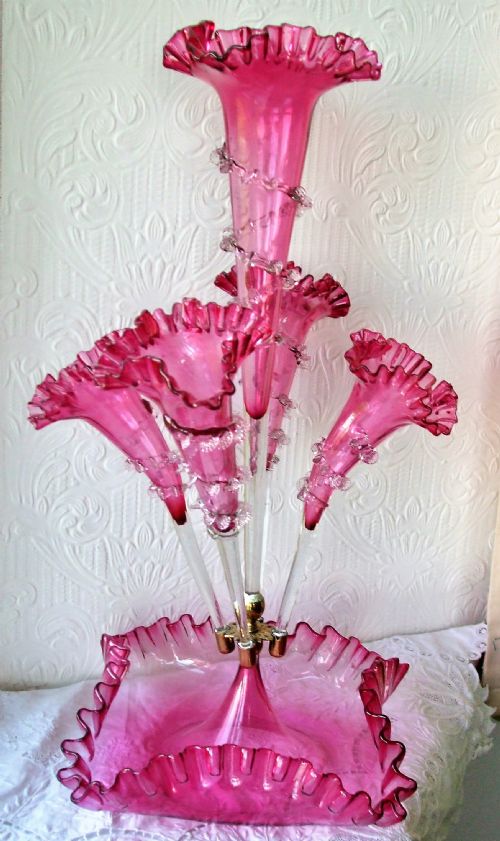


Table Centrepiece Vase
A table centrepiece vase sits right in the middle of the room, drawing the eye with blown glass and metal mounts.
Table Centrepiece Vase
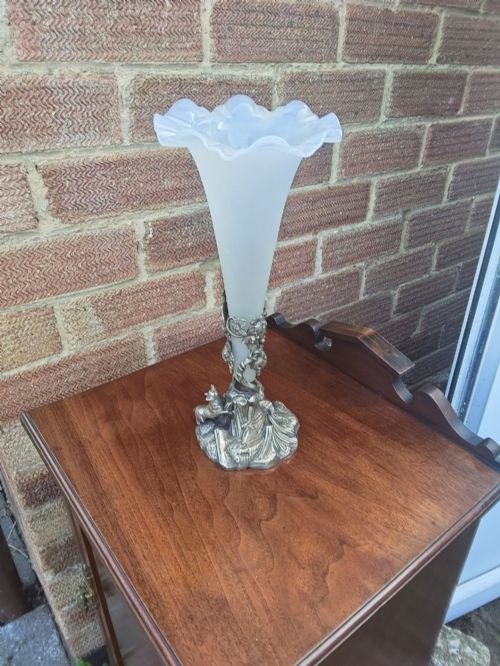
When you search for a table centrepiece vase, you are looking at elaborate display vessels meant to command the middle of a dining table or sideboard. These pieces combine sculptural metal frames or carved wooden bases with blown glass inserts, porcelain figures, or crystal bowls.
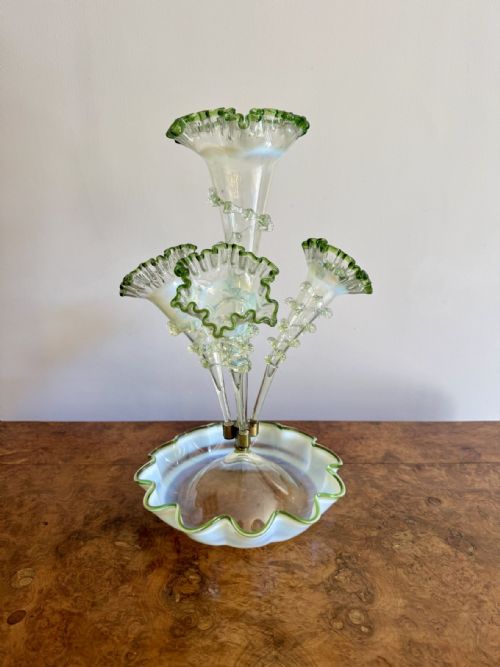
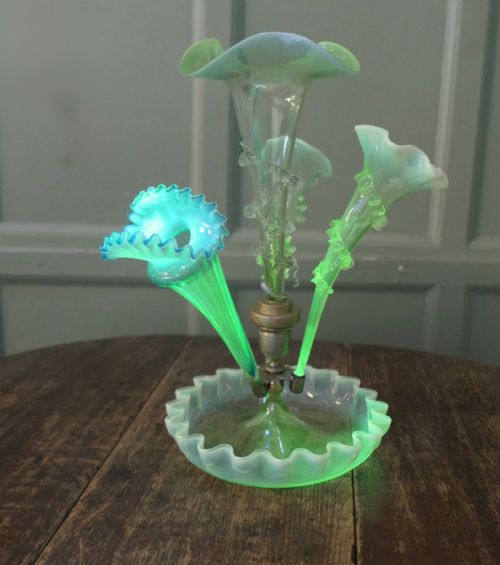
The version you are most likely to meet on this page is the epergne, often featuring multiple trumpets or hanging baskets designed for fruit or flowers. The listings range across the nineteenth century into the Edwardian period, showing Victorian cranberry glass alongside silver plated mounts and carved Black Forest wood.
Materials and construction
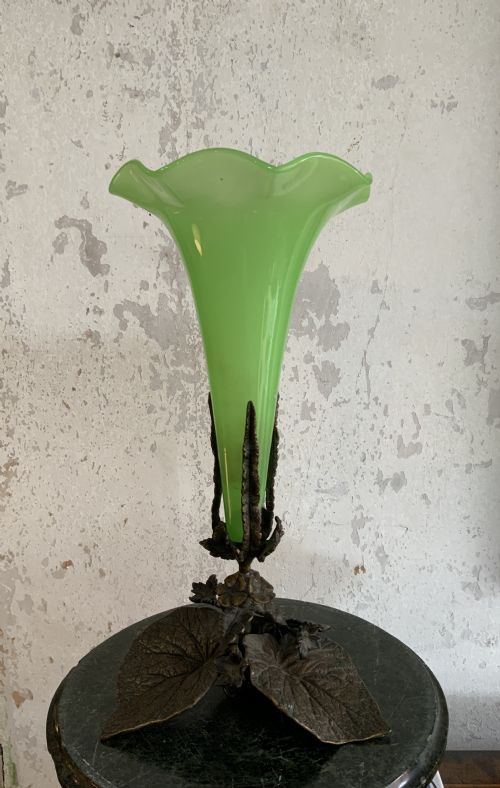
Makers combined cast metals such as bronze, brass, and silver plate with hand-blown glass, utilising uranium, cranberry, and opaque glass for dramatic colour. Crystal bowls and trumpets were frequently wheel-engraved, gilded, or decorated with enamel.
Carved wood provides the structural base in Black Forest pieces, while ceramic works rely on porcelain and pottery figures. Metal elements often incorporate piercing, casting, and mercury gilding before securing glass liners.
Materials recorded across the inventory include silver plate, sterling silver, brass, gold leaf, carved wood, and several varieties of coloured glass.
Distinctions in quality
Quality rests upon the crispness of the casting in the bronze or silver-plated mounts and the weight and clarity of the glass. Finer pieces display hand-painted enamel work, intricate wheel-engraving, and heavy crystal or Baccarat components rather than plain pressed glass.
The harmony between the metal stand and its removable glass insert dictates the success of the object. Maker attribution, such as work originating from established glassworks or silversmiths, elevates the standing of the piece.
St Louis glassworks·Walker & Hall·Josiah Williams & Co·Daniel & Arter·Royal Vienna·Royal Dux
The Table Centrepiece Vase Glossary
- Epergne
- An ornamental centrepiece for a dining table, featuring a central dish or basket surrounded by smaller hanging baskets or trumpets for fruit or flowers.
- Cranberry glass
- A transparent pinkish-red glass produced by adding gold chloride to the molten batch. It is a defining material of Victorian decorative items.
- Silver plate
- A base metal, such as copper or white metal, coated with a thin layer of silver. Many Victorian centrepieces utilise this technique for durable display items.
- Champlevé
- An enamelling technique where troughs are carved into a metal surface and filled with vitreous enamel before firing. It appears frequently on nineteenth-century French desk and table wares.
- Uranium glass
- Glass containing a small amount of uranium, typically appearing yellow or green and glowing brightly under ultraviolet light.
Table Centrepiece Vase: Frequently Asked Questions
How do I clean an antique epergne?
Remove all glass inserts from the metal frame before washing them in warm soapy water to avoid damaging fragile applied enamel or gilding.
Polish silver-plated or bronze bases gently with a dry cloth, keeping moisture away from any carved wooden or fabric components.
Were these pieces used for food?
Larger bowls and baskets held fresh fruit or sweetmeats during formal dining, while trumpet vases accommodated cut flowers.
Many examples served a purely decorative function as part of a garniture set on a sideboard rather than a dining table.
How do I spot replacement glass?
Examine the fit of the trumpets or bowls within the metal collars to ensure they rest securely without excessive packing or movement.
Check that the colour, glass type, and age wear match consistently between the metal stand and the removable glass inserts.
What is Black Forest woodcarving?
This style involves highly detailed carving of animals, foliage, and natural scenes in Linden or walnut wood, originating in the Swiss mountain region.
Pieces often incorporate crystal bowls or glass liners held within elaborately carved wooden tree trunks or figures.