
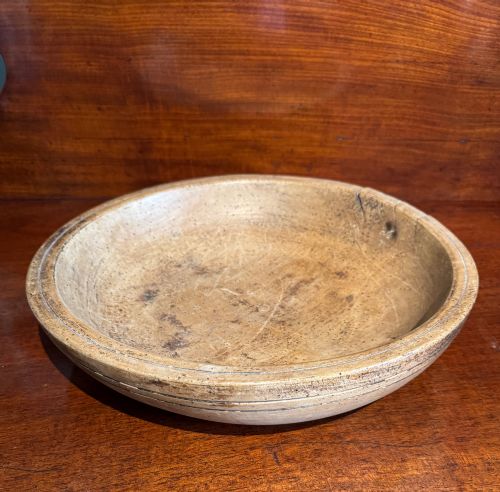
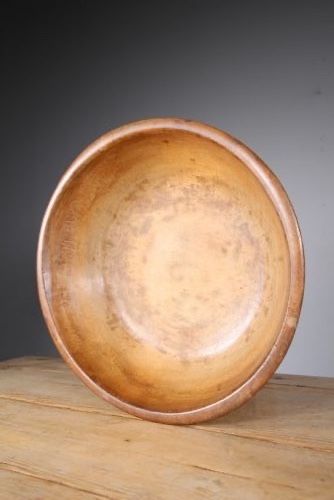
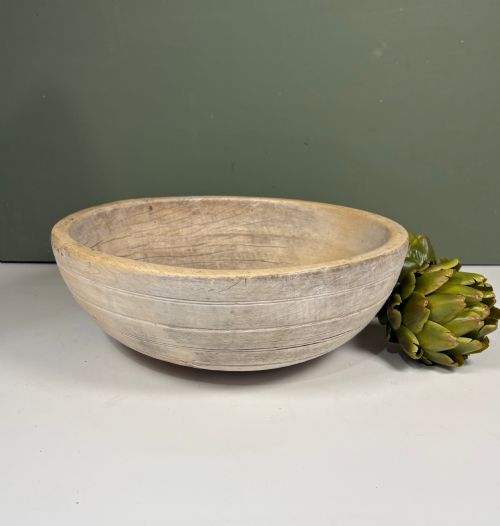


Sycamore Wooden Bowl
A sycamore wooden bowl brings honest utility and warm grain into a room, shaped for the dairy or the kitchen by hands from a century past.
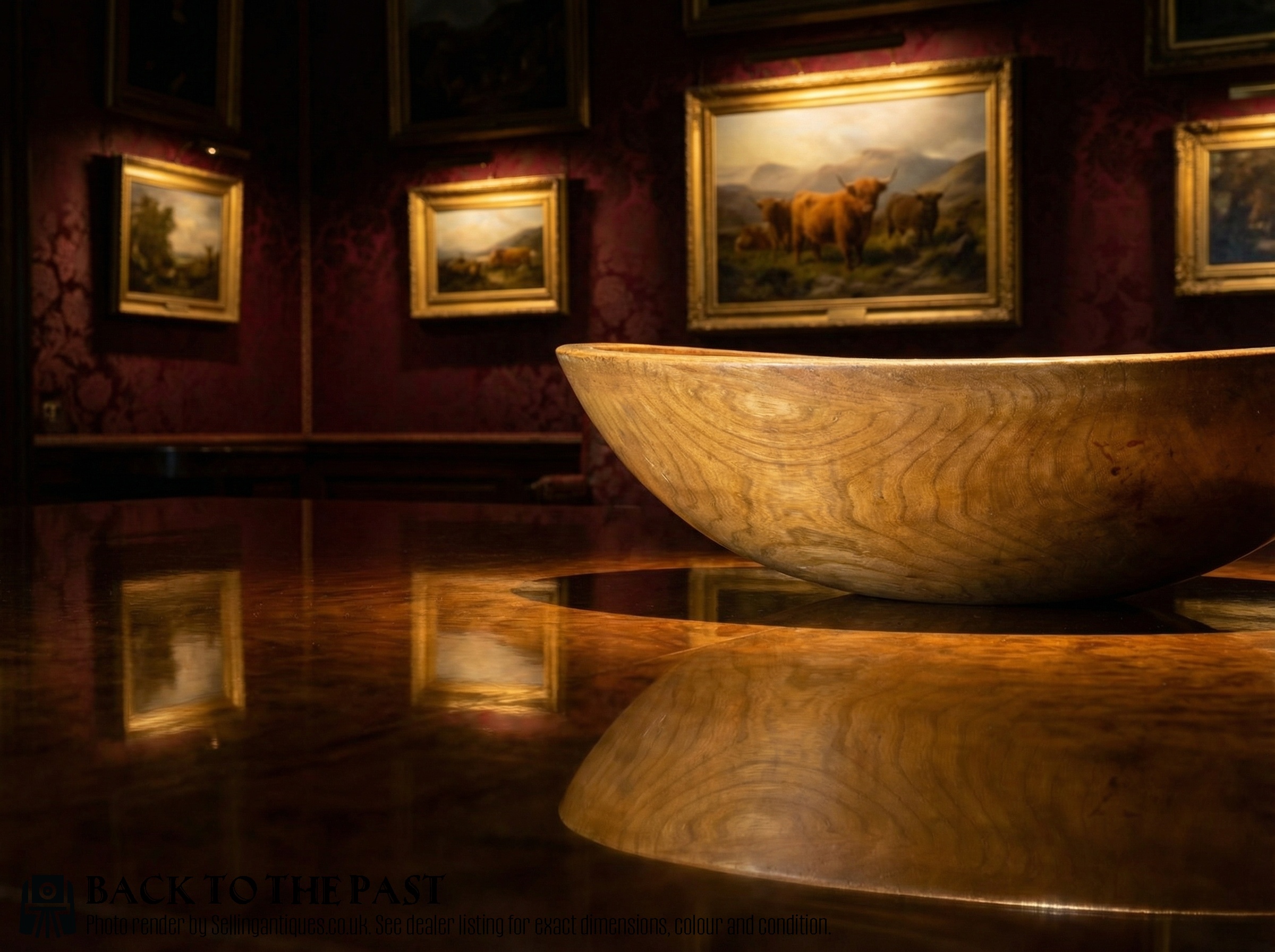
Sycamore Wooden Bowl
The sycamore wooden bowl selections gathered here represent utilitarian vessels from the nineteenth century, most frequently taking the form of traditional dairy bowls and herb chopper mortar bowls. These domestic objects survive from periods such as eighteen-fifty and eighteen-eighty, reflecting rural working life across English and French provincial contexts.
Buyers browsing this category will most commonly encounter domestic dairy bowls alongside specific regional variants like octagonal carved treen examples. Their original functions ranged from milk setting in dairies to food preparation on farmhouse tables, establishing a direct link to nineteenth-century rural craftsmanship.
How they were made
Every sycamore wooden bowl begins as a solid block of sycamore wood, turned or carved by hand to shape the vessel walls. Makers utilised the dense, pale qualities of the timber to create robust domestic items capable of handling daily kitchen and dairy tasks.
Surface characteristics on these pieces develop through decades of use and application, showing carved details on specialised forms like herb chopper mortar bowls. The natural grain of the sycamore wood remains visible beneath warm patinas accumulated over the course of the nineteenth century.
Sycamore Wooden Bowl Retail Price Guide 2026
Typical asking prices for sycamore wooden bowl among the pieces listed under this phrase on Sellingantiques today, from the lower quarter to the upper quarter. They describe what is for sale here now, not the wider market.
The documented forms span traditional dairy bowls, rustic farmhouse vessels, and specialised herb chopper mortar bowls.
What varies in quality
The distinction between ordinary and exceptional examples rests in the depth of the warm patina and the preservation of the original turned or carved surfaces. Pieces that retain their honest working character without excessive timber loss command greater interest among collectors.
Form and proportion dictate the standing of a sycamore wooden bowl, with balanced dairy proportions and crisply rendered octagonal shapes marking out superior examples. The integrity of the sycamore wood itself, free from modern repairs, defines the upper tier of quality.
The Sycamore Wooden Bowl Glossary
- Dairy bowl
- A large, open wooden vessel historically utilised for setting milk and separating cream in nineteenth-century dairies. These pieces usually feature wide rims and flat bases.
- Treen
- Small wooden domestic objects made before the dominance of plastics and mass production. The term encompasses utilitarian kitchenware, bowls, and carved implements.
- Patina
- The surface sheen and colour acquired by wood through age, handling, and regular use over many decades. A warm patina indicates healthy preservation of the original material.
- Herb chopper bowl
- A specialised treen bowl with a shaped interior designed for mincing herbs and spices using a curved blade. These often display distinctive carved or octagonal forms.
Sycamore Wooden Bowl: Frequently Asked Questions
What is a sycamore wooden bowl?
A sycamore wooden bowl is a domestic vessel produced in the nineteenth century from dense sycamore timber, primarily used in dairies and kitchens for food preparation.
These utilitarian pieces survive from rustic contexts in England and France, showcasing traditional woodturning and carving techniques.
How were dairy bowls used?
Nineteenth-century dairy bowls served to hold fresh milk so that the cream could rise to the surface for skimming. Their broad, shallow design maximised the surface area available for this daily farm task.
Over time, these heavy wooden vessels transitioned from active dairy service into general household utility and decorative display.
How do I care for antique treen?
Antique sycamore wooden bowl pieces require gentle treatment, keeping them away from direct heat sources and drastic humidity changes that can split the timber. Regular application of a suitable food-safe oil helps maintain the moisture and warmth of the wood.
Submerging these historic items in water or placing them in dishwashers must be strictly avoided to preserve the original surface and patina.
How do I date a nineteenth century bowl?
Dating relies on examining the tool marks left by turning or carving, the wear patterns on the base, and the overall style associated with the period around eighteen-fifty to eighteen-eighty. Sycamore wood acquires a distinct colour and texture over generations of use.
Comparing the construction methods with known nineteenth-century rural artefacts assists in establishing an accurate timeframe for each piece.