


Traditional English Treen
Traditional English treen comprises useful domestic wooden objects shaped on the lathe and by hand, prized for warmth of timber and historic utility.
Traditional English Treen
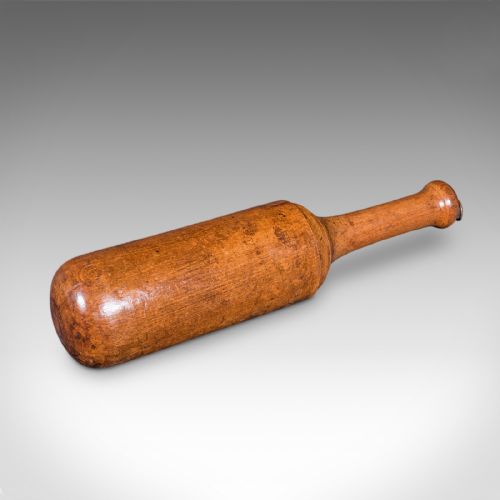
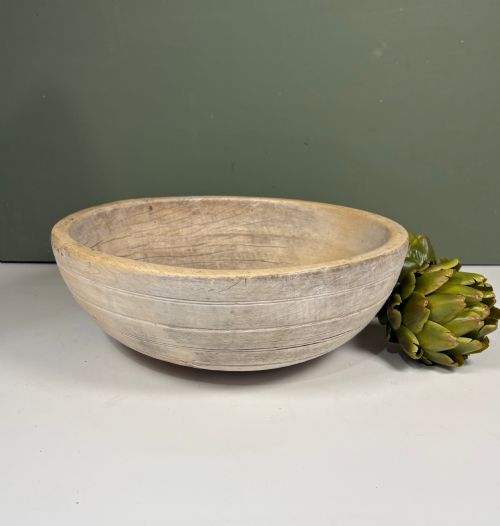
Traditional English treen encompasses domestic wooden items produced across the eighteenth and nineteenth centuries, spanning Georgian and Victorian periods. Collectors encounter utilitarian forms ranging from dairy bowls and spice towers to knitting sheaths and candle boxes.
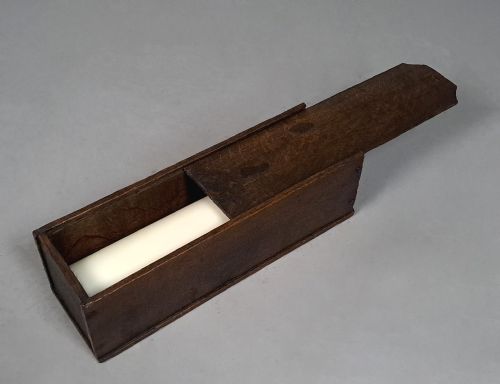
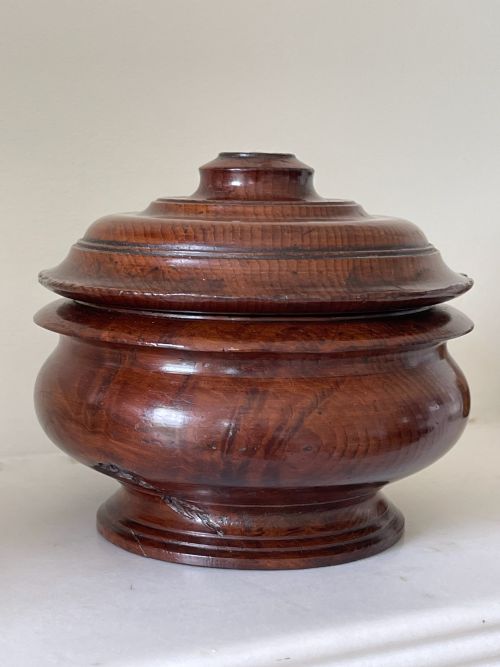
Examples stretch from early eighteenth-century oak candle boxes to late nineteenth-century sycamore jars and covers. Each piece demonstrates the integration of turned wood into domestic routines before mass production.
How traditional English treen was made
Craftsmen shaped traditional English treen using local timbers including sycamore, beech, fruitwood, lignum vitae, oak, ash, and yew wood. Woodworkers selected these native hardwoods for their specific density and grain characteristics suited to domestic tasks.
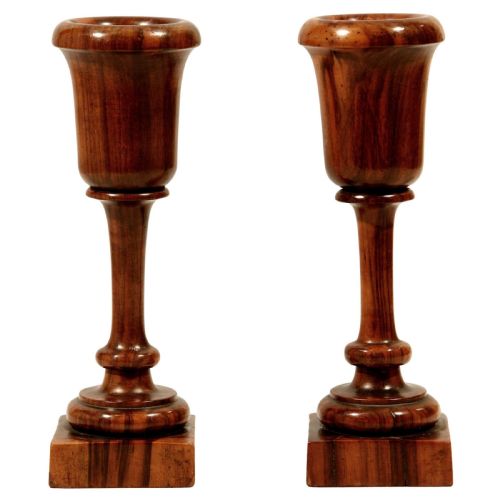
Makers utilised the lathe for turned pieces like urn wood spill stem vases and decanter coasters, creating balanced cylindrical forms. Hand tools carved dairy bowls and punchwork decoration on knitting sheaths, combining turned sections with manual shaping.
Listings feature eighteenth and nineteenth-century periods, including Georgian and Victorian eras.
What varies in quality
Quality in traditional English treen rests upon the crispness of turning, the preservation of original surface character, and the warmth of the timber's patina. Pieces displaying well-retained tool marks and deep, natural ageing stand apart from heavily restored examples.
Proportion and functional integrity dictate distinction among utilitarian forms like spice towers, jars, and dairy bowls. The balance between practical utility and skilled hand-shaping separates ordinary treen from superior specimens.
The Traditional English Treen Glossary
- Treen
- Small handmade wooden domestic objects. The term derives from the Middle English word for tree.
- Sycamore
- A light-coloured hardwood frequently chosen for dairy bowls and kitchenware. Its clean grain resists absorbing strong flavours.
- Lignum Vitae
- An exceptionally dense and heavy dark wood used for turned items requiring durability. It takes a fine finish on the lathe.
- Knitting Sheath
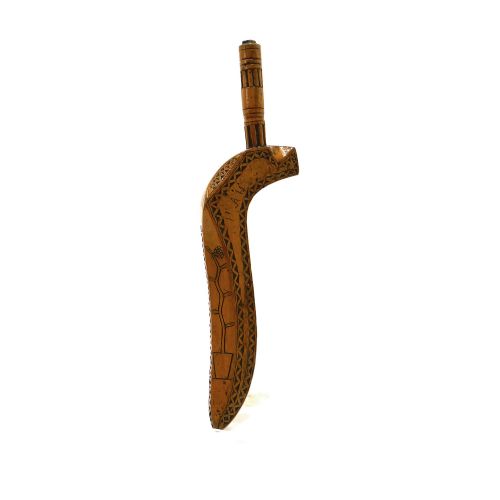
- A domestic tool tucked into a belt or apron to hold a knitting needle steady. Cumbrian examples often feature intricate punchwork decoration.
- Patina
- The surface sheen and colour developed through handling, ageing, and waxing over centuries. It marks genuine historic use.
Traditional English Treen: Frequently Asked Questions
What is traditional English treen?
Traditional English treen refers to small, handmade wooden objects used in the home during the Georgian and Victorian eras. These utilitarian items include bowls, spice towers, and candle boxes shaped from native timbers.
Such pieces combine practical function with the craft of the woodturner and country artisan. They represent everyday domestic life in rural and provincial England before the rise of manufactured wares.
How were treen bowls used?
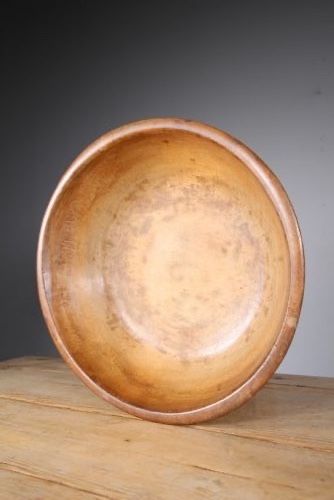
Sycamore dairy bowls served in the preparation and setting of milk and cream in farmhouses. Their clean timber surfaces held dairy products safely.
Larger wooden platters and bowls also held food or served general kitchen purposes. Their daily use over generations created the warm patinas valued by collectors today.
How do I date treen pieces?
Dating treen relies on identifying the timber species, the tool marks left by lathes or hand knives, and the style of the object. Eighteenth-century pieces like oak candle boxes differ in construction from late nineteenth-century sycamore dairy bowls.
Examining the wear patterns and surface patina helps place an object within the Georgian or Victorian period. Subtle details in turning profiles often indicate the manufacturing decade.
How do I live with treen?
Living with treen involves placing wooden bowls, spill vases, or spice towers on tables and shelves where their grain and patina can be appreciated. Keeping them away from direct heat sources protects the timber from drying out.
Treating the wood occasionally with appropriate natural waxes preserves the historic surface without altering the colour. These sturdy domestic objects integrate easily into modern interiors.