


Rustic Country Treen
These rustic country treen pieces are honest wooden domestic items shaped by hand for daily use in past centuries.
Rustic Country Treen
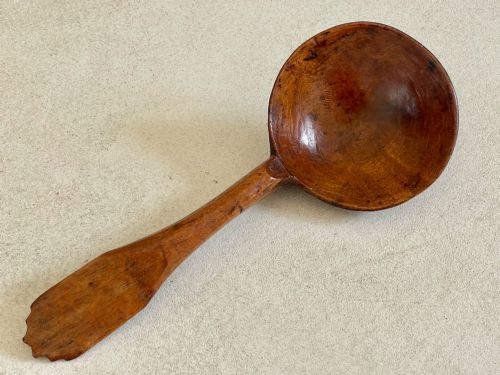
Rustic country treen encompasses domestic wooden items made for daily use in farmhouses, dairies and kitchens across Britain and the Continent. When you browse this selection, you encounter functional objects that served practical purposes long before mass production.
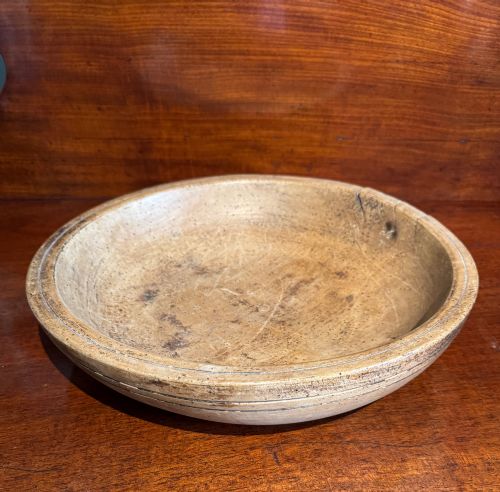
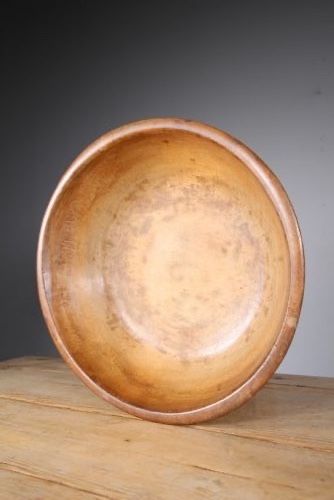
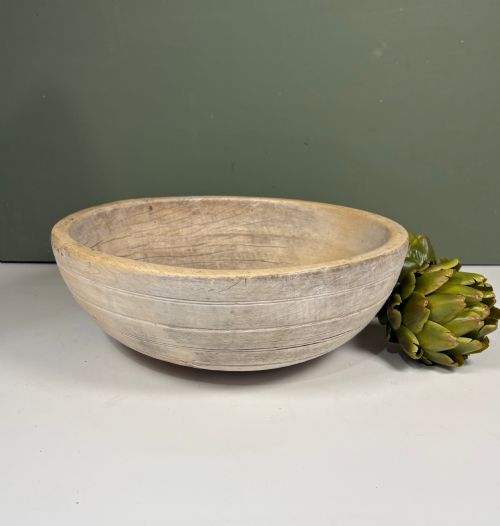
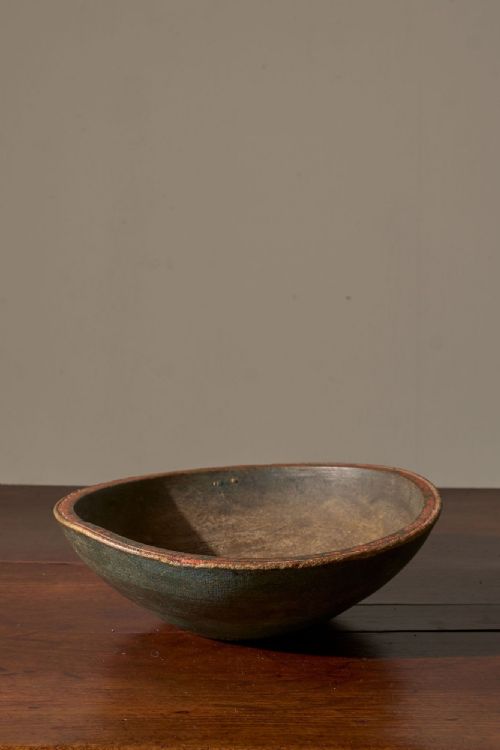
The pieces on this page are predominantly dairy bowls, platters, storage containers and utility vessels fashioned from local hardwoods. Sycamore, oak, ash and beech dominate the forms, reflecting the timber available to rural turners and makers.
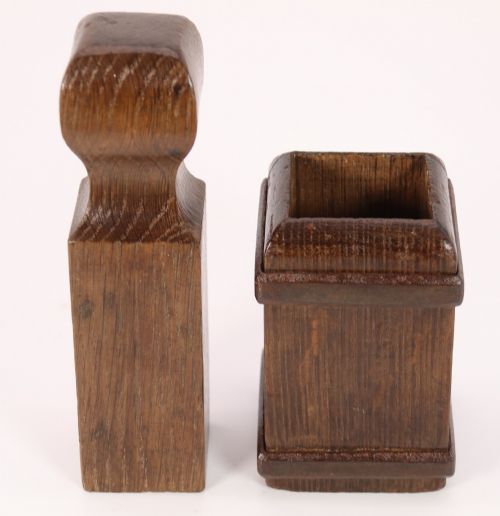
Objects range from simple dug-out bowls and flour scoops to butter tubs, string holders and apothecary mortars. Each item carries the marks of its original labour, connecting the modern interior directly to historical domestic routines.
How they were made
Turners shaped green timber on pole lathes, utilising local hardwoods such as sycamore and ash that yielded smoothly under cutting edges. Sycamore proved especially favoured for dairy vessels because the pale wood imparted no taint to milk, cream or butter.
Larger bowls and troughs were often dug out directly from solid blocks of timber using gouges and adzes, creating thick walls designed to resist splitting. Wrought iron mounts appeared on specific utilitarian pieces like apothecary crushers to reinforce high-stress joints.
Surface finishes relied on natural oils, repeated scrubbing or simple applications of paint, as seen on surviving Swedish examples. Over decades of service, the grain absorbed fats and oils, developing the characteristic warm surface texture.
One unusual container awaits discovery, built specifically to catch the leftover drops of wine.
What varies in quality
Quality in rustic treen rests upon the harmony of proportion and the integrity of the surviving timber rather than elaborate decoration. A well-turned rim and a balanced wall thickness demonstrate the maker's skill at the lathe or bench.
The depth of the patina distinguishes superior examples, formed by generations of cleaning, handling and natural use in the dairy or kitchen. Surface treatments that survive largely intact without modern intervention preserve the historical character of the object.
Proportion and scale dictate desirability, particularly in large dairy bowls and platters where bold turning lines enhance the visual impact of the grain. Objects retaining their original function and uncompromised structural mass command greater attention.
The Rustic Country Treen Glossary
- Treen
- Small handmade wooden domestic objects produced before the advent of modern plastics and mass manufacturing. The term derives from old English words for tree and wood.
- Dairy bowl
- A wide, shallow wooden vessel utilised for setting milk to allow the cream to rise to the surface. These bowls were traditionally scoured clean and left unpainted to maintain hygiene.
- Patina
- The deep sheen and mellow colour developed on the surface of wood over centuries through handling, exposure to light, oils and regular washing. It serves as an indicator of age and genuine use.
- Dug-out
- A method of construction where a single solid block of timber is hollowed out to form a vessel rather than built up from staves or turned on a lathe.
- String holder
- A specialised treen container designed to keep ball twine contained and accessible in a kitchen or shop, often featuring a small aperture for the cord to pass through.
Rustic Country Treen: Frequently Asked Questions
What is rustic country treen?
Rustic country treen comprises wooden utility objects made for households, dairies and workshops before industrial manufacturing became common. These pieces include dairy bowls, platters, saltboxes and scoops fashioned from native hardwoods.
Craftsmen shaped them using traditional lathes and hand tools to serve specific domestic functions. Today, collectors value them for their simple forms and historical connection to rural life.
How were wooden dairy bowls used?
Dairy bowls held fresh milk in farmhouses so that the cream naturally separated and rose to the top for skimming. Their porous wooden surfaces required regular scrubbing with sand and hot water to keep them clean.
Because sycamore wood does not taint dairy products, it became the preferred material for these vessels. Once retired from dairy work, many bowls found secondary uses around the home.
How do I care for antique treen?
Antique treen requires stable indoor humidity away from direct sunlight, central heating radiators and sudden temperature changes. Excessive dryness can cause old timber to shrink and split along the grain.
Cleaning should involve only a dry or barely damp soft cloth to preserve the historical surface. Avoid modern polishes and harsh detergents that strip away the accumulated patina.
How can I tell the age of treen?
Dating treen relies on observing tool marks, timber selection, wear patterns and construction methods specific to different periods. Hand-turned pieces often display distinct ripple marks left by pole lathe chisels.
Examining the base and rim wear helps determine whether an object endured decades of active service. Regional forms and traditional wood choices also offer clues regarding provenance and approximate era.