


Early 19th Century Treen
Early 19th century treen encompasses turned and carved domestic objects in wood, offering tactile utility and folk artistry that collectors prize for everyday historical connection.
Early 19th Century Treen
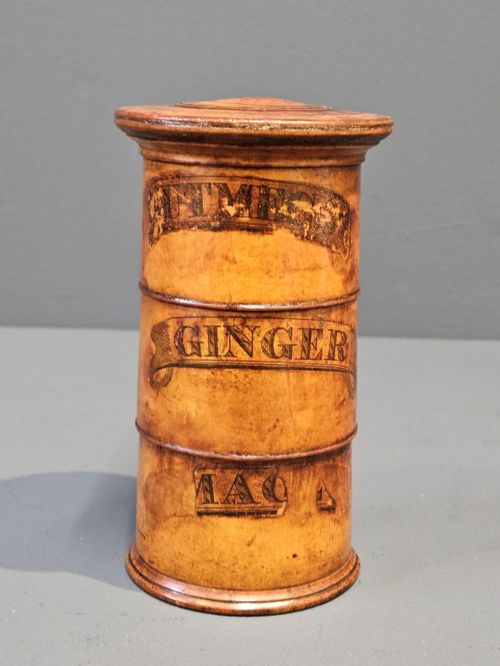
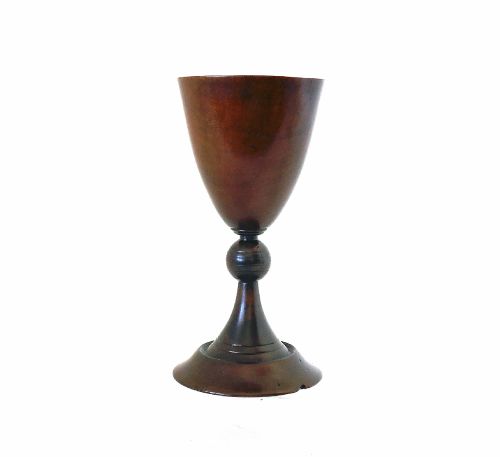
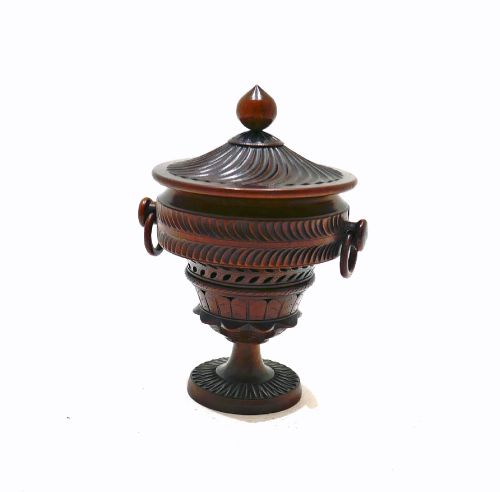
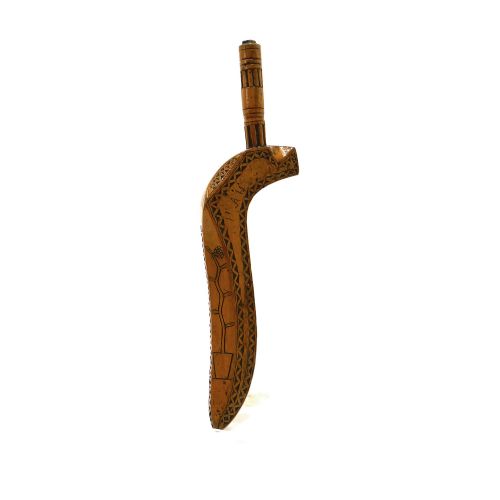
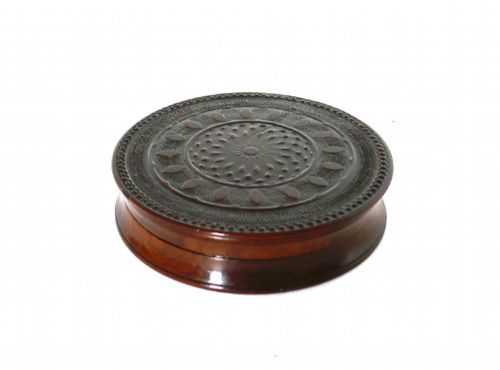
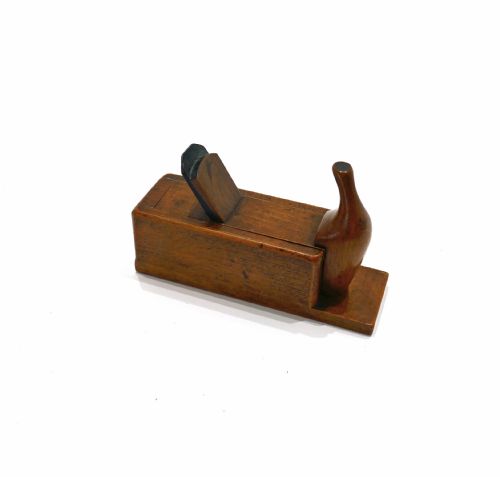
Early 19th century treen consists of small wooden household items, kitchen collectables, and personal accessories produced during the Georgian, Regency, and Victorian periods. Surviving forms include spice towers, lidded cups, knitting sheaths, snuff boxes, goblets, bowls, and dairy items.
The objects derive from English, Scottish, Welsh, and continental workshops, incorporating regional folk art traditions alongside formal Regency and Victorian craftsmanship. Buyers encounter domestic utilitarian items shaped by local turners and rural makers for specific household tasks.
Domestic and personal containers dominate the selection, ranging from pocket snuff boxes and spice containers to larger utilitarian vessels like dairy bowls and plates. These pieces reflect the functional requirements of nineteenth-century domestic life prior to widespread mass production.
Materials and Working Methods
Makers utilised dense native timbers, predominantly turning fruitwood, laburnum, yew, sycamore, and boxwood on lathes to form symmetrical vessels, boxes, and goblets. Grain patterns dictated the visual impact of utilitarian objects, turning natural timber figuring into primary decoration.
Surface ornamentation relied on manual techniques including punchwork, incised line decoration, and engine turning to embellish boxes and knitting sheaths. Certain functional items integrated contrasting materials, combining amboyna wood with tortoiseshell or incorporating turned wooden elements into domestic tools.
Early 19th Century Treen Retail Price Guide 2026
Typical asking prices for early 19th century treen among the pieces listed under this phrase on Sellingantiques today, from the lower quarter to the upper quarter. They describe what is for sale here now, not the wider market.
Makers carved pocket nutcrackers shaped like birds and turned spice containers to resemble miniature architectural cottages.
Judging Quality in Wooden Objects
Quality rests upon the crispness of the turning and the preservation of original surface patination accumulated through handling and age. Sharply defined punchwork, intact threads on lidded boxes, and slender proportions distinguish superior examples from utilitarian wares.
The selection of timber grain and the skill required to shape complex forms, such as articulated miniatures or delicate spice towers, separate standard utility pieces from exceptional vernacular creations. Evidence of tool marks and regional decorative idiosyncrasies further define the character of individual items.
The Early 19th Century Treen Glossary
- Treen
- Small handmade wooden domestic objects and utensils. The term derives from old English words for tree or wood.
- Knitting sheath
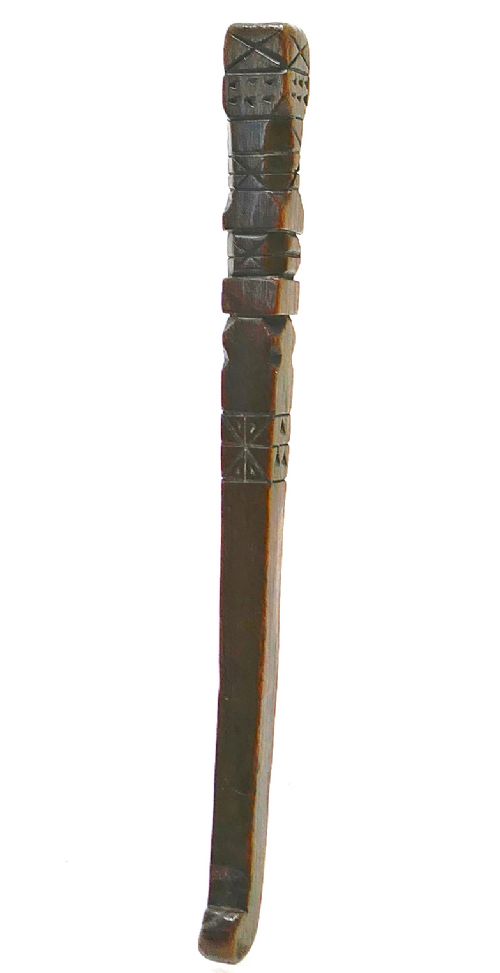
- A carved or turned wooden holder tucked into a belt to support a knitting needle during hand production. These often display punchwork and folk art decoration.
- Spice tower
- A multi-tiered turned wooden container designed for storing culinary spices. Sections fit together horizontally to form a columnar shape.
- Quaiach
- A traditional Scottish two-handled drinking vessel, often turned from wood with decorative stave or solid construction.
- Pounce pot
- A small perforated container used for sprinkling resin powder onto paper to absorb ink before writing. These typically feature turned wooden bodies with pierced lids.
Early 19th Century Treen: Frequently Asked Questions
How were treen spice containers used?
Spice containers held valuable imported spices used in nineteenth-century domestic cooking and medicine. Multi-tiered spice towers allowed households to store several different seasonings within a single compact turned wooden object.
Owners kept these containers in kitchens or dining rooms, utilising their tight-fitting turned sections to preserve the aroma and quality of costly provisions.
How do I care for wooden treen?
Wooden treen requires stable environmental conditions away from direct sunlight, excessive heat sources, and rapid humidity fluctuations. These precautions prevent the timber from drying out, cracking, or warping.
Collectors generally maintain the dry tactile surface patination with minimal intervention, avoiding modern chemical polishes that alter historical finishes.
How can I tell regional styles apart?
Regional attribution relies on timber selection, vernacular forms, and specific decorative techniques associated with English, Scottish, Welsh, or continental workshops. For instance, Welsh vernacular pieces often utilise sycamore for dairy items, while Scottish makers frequently produced laburnum snuff boxes.
Folk art motifs, such as Cumbrian punchwork on knitting sheaths, provide further clues to geographic origins and local making traditions.