

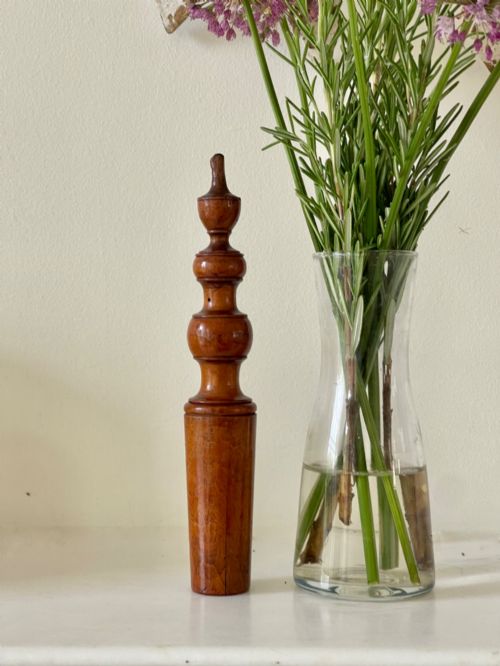
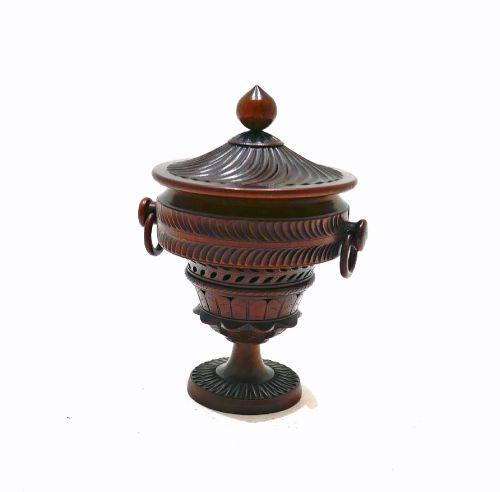
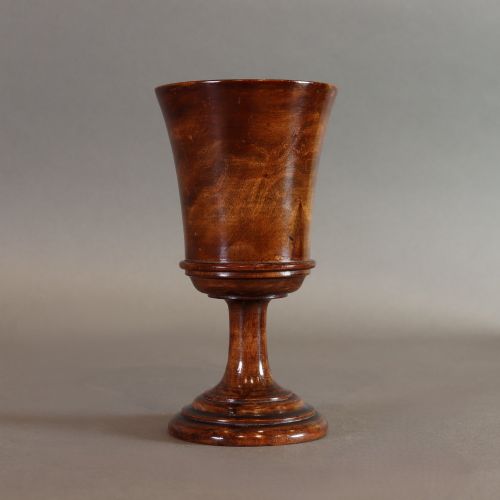
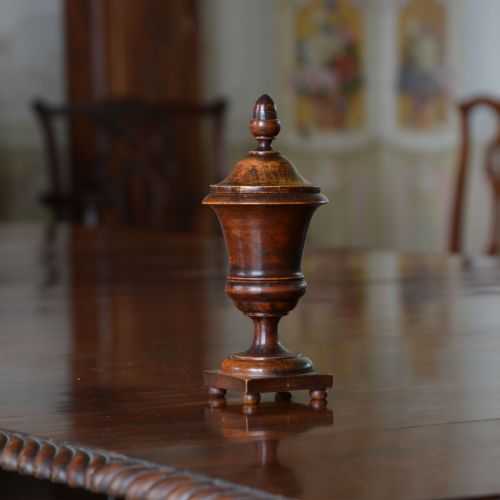


Turned Fruitwood Treen
Turned fruitwood treen comprises small, lathe-turned domestic and utilitarian wooden objects shaped by hand from dense timbers over the past three centuries.
Turned Fruitwood Treen
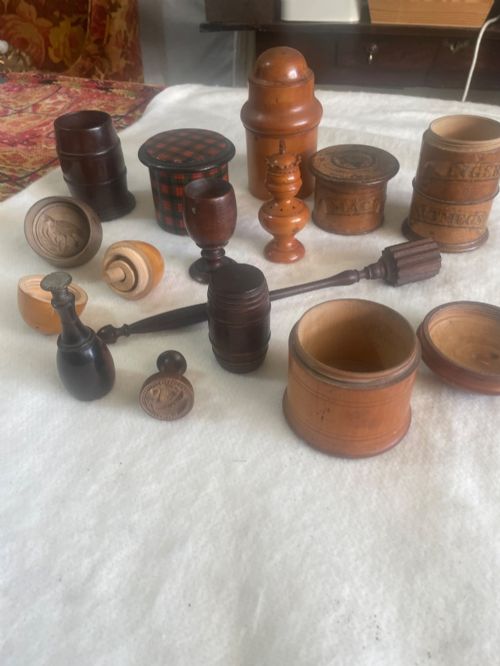
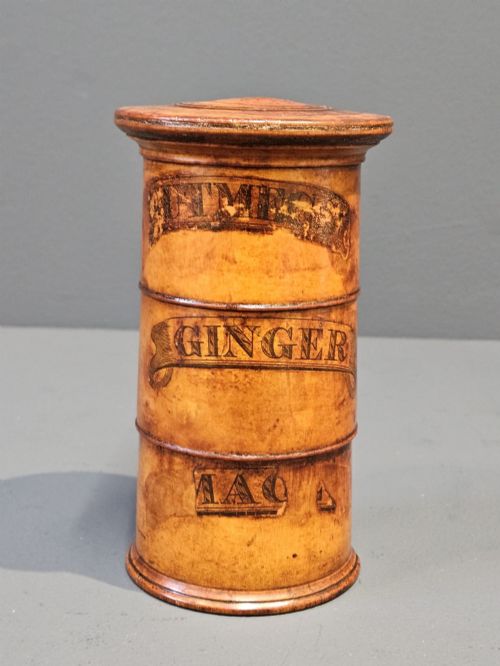
When you search for turned fruitwood treen, you encounter an array of small domestic implements, drinking vessels, and utilitarian wares produced primarily during the Georgian, Regency, and Victorian eras. These items served practical purposes in the kitchen, apothecary, and parlour, ranging from drinking goblets and spice towers to mortars and salt cellars.
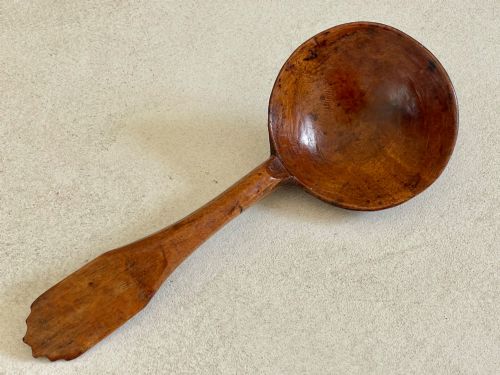
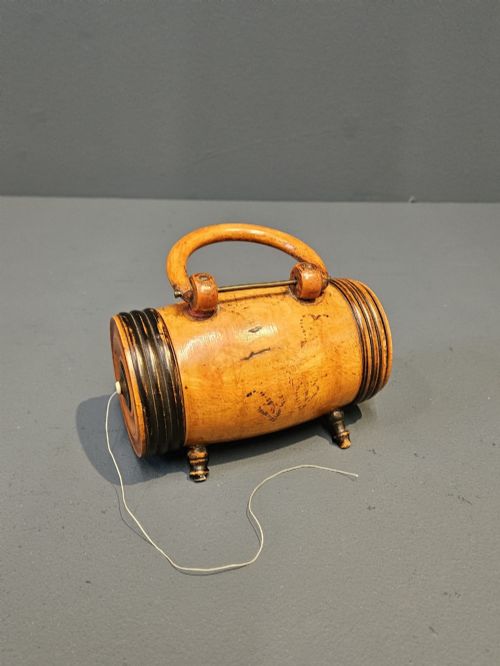
The objects most frequently met on this page are drinking vessels and kitchen utensils, alongside domestic containers such as spice pots and snuff boxes. Makers shaped these pieces on a lathe, producing symmetrical profiles that suited daily handling and household storage.
Examples span the seventeenth century through to the early twentieth century, drawing on regional vernacular traditions from England, Wales, Scotland, and continental Europe. Each piece reflects the functional requirements of its period, executed in compact wooden forms designed for longevity.
How turned fruitwood treen was made
Craftsmen shaped these items using a wood-turning lathe, securing green or seasoned timber between centres to carve symmetrical profiles. The dense grain of fruitwoods such as apple, pear, plum, and related hardwoods allowed turners to cut crisp lines, fine rings, and thin walls without splitting.
Makers finished the surfaces with scraping and polishing tools, often utilising oils or friction to bring out the natural lustre of the timber. Metal components such as pins, hinges, or dials appear on specific instruments like pocket compasses and spice grinders, integrated directly into the turned wooden bodies.
Turned Fruitwood Treen Retail Price Guide 2026
Typical asking prices for turned fruitwood treen among the pieces listed under this phrase on Sellingantiques today, from the lower quarter to the upper quarter. They describe what is for sale here now, not the wider market.
Recorded forms include domestic spice towers, dairy bowls, scientific pocket compasses, and ceremonial mason's mallets.
What varies in quality in turned fruitwood treen
The quality of turned fruitwood treen rests on the crispness of the turning and the preservation of the original surface. Pieces displaying sharp profiles, well-defined ring turnings, and balanced proportions reflect higher competence from the maker.
Surface patination heavily influences the character of a piece, with handling over centuries creating a deep, warm finish. Items retaining their original tool marks and structural integrity without excessive wear or crude alterations represent the better examples of the craft.
The Turned Fruitwood Treen Glossary
- Treen
- Small handmade wooden domestic objects. The term encompasses everything from kitchen implements to personal accessories formed on a lathe or carved by hand.
- Fruitwood
- Timber derived from fruit-bearing trees such as apple, pear, and plum. This wood is prized for its fine, dense grain and suitability for detailed turning.
- Goblet
- A drinking vessel with a bowl, stem, and foot. These turned drinking vessels are among the most common surviving forms in early treen.
- Mortar
- A heavy bowl used with a pestle for grinding substances. Apothecaries and domestic cooks utilised these thick-walled turned vessels for food preparation and medicines.
- Spurtle
- A traditional stirring rod or stick used in cooking. Scottish examples in turned timber are frequently slender and round in section.
- Pounce pot
- A small container with a perforated lid used to sprinkle resin powder onto parchment. Writers used the powder to blot ink and prepare paper surfaces.
Turned Fruitwood Treen: Frequently Asked Questions
What is turned fruitwood treen?
Turned fruitwood treen consists of small wooden household objects shaped on a lathe from dense timbers like apple, pear, and plum. These items include drinking vessels, kitchen tools, and small containers.
Craftsmen produced them for everyday tasks in domestic, scientific, and culinary settings across the eighteenth and nineteenth centuries.
How were these wooden items used?
People used these objects for daily domestic chores, food preparation, drinking, and personal storage. Items like mortars ground spices, while goblets served drinks at the table.
Other specialised pieces held snuff, measured powder, or acted as scientific instruments for navigation and timekeeping.
How do I care for antique treen?
Antique treen requires stable environmental conditions away from direct sunlight, extreme heat, and sudden humidity changes. These factors can cause the timber to dry out, warp, or crack.
Keep the wood clean with a soft, dry cloth and avoid applying modern polishes or water, which can damage the historic surface patination.
How can I tell the age of treen?
Dating treen relies on examining the wood species, tool marks, wear patterns, and overall form relative to known historical styles. Georgian and Regency pieces often feature specific turning profiles distinct from later Victorian items.
Signatures or dated inscriptions occasionally appear, though most pieces remain unsigned and require stylistic comparison with dated examples.