




Swinging Full Length Mirror
A swinging full length mirror gives you an adjustable vertical glass framed to tilt for dressing, grounded by a steady freestanding frame.
Swinging Full Length Mirror
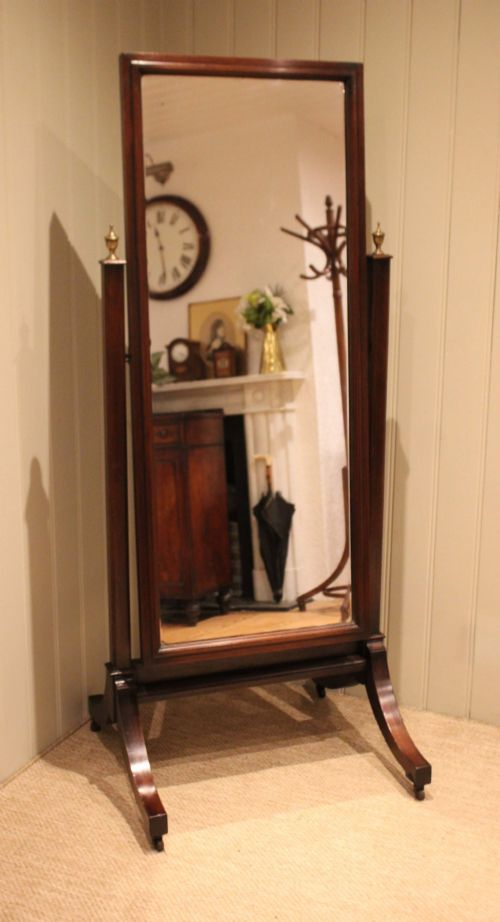
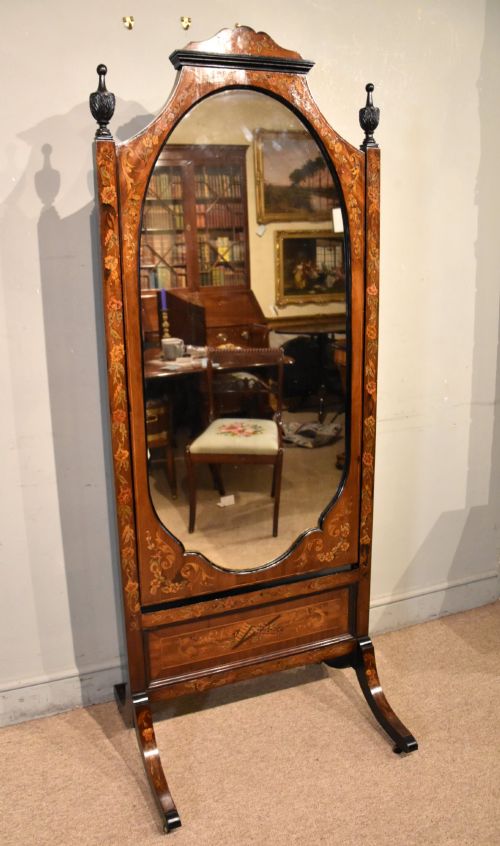
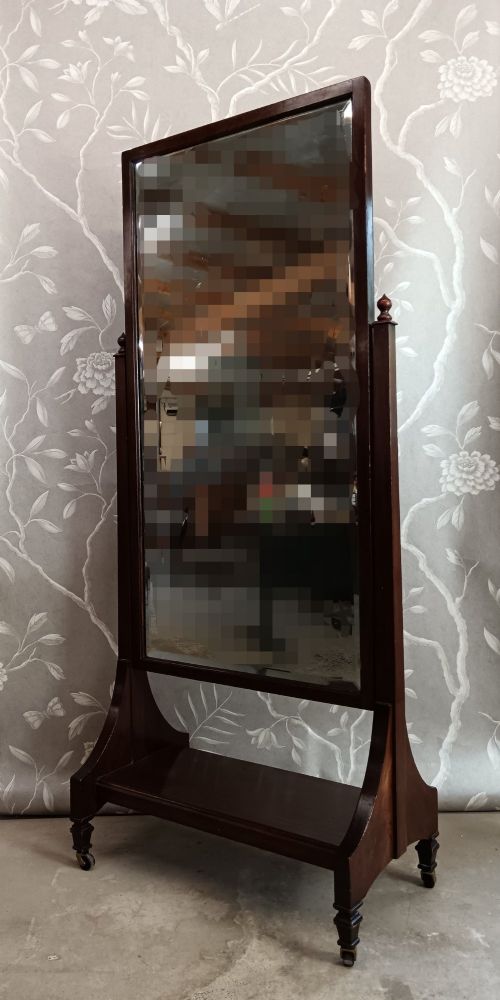
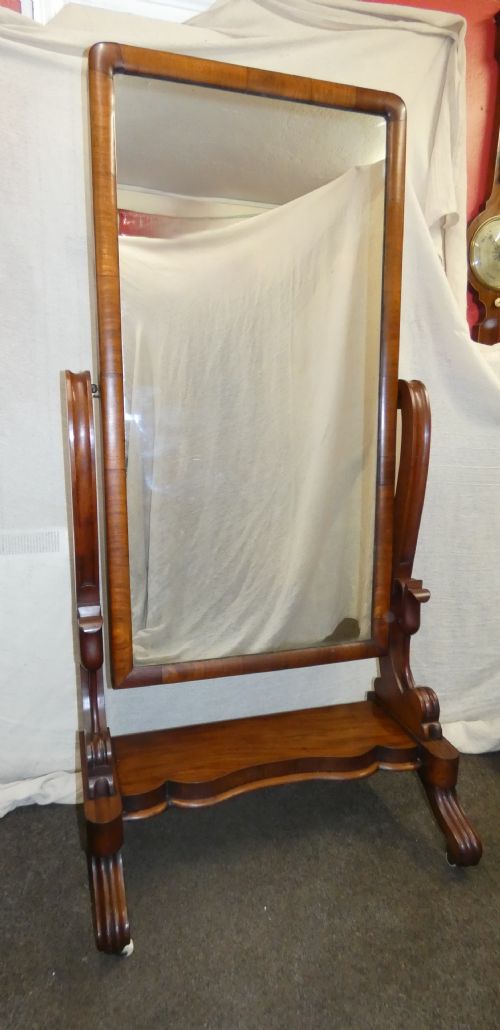
When you search for a swinging full length mirror, you encounter freestanding dressing glasses designed to tilt on pivoted mounts within a stable timber frame. These pieces stand independently on the floor, allowing the user to angle the reflective plate for a complete head-to-toe view.
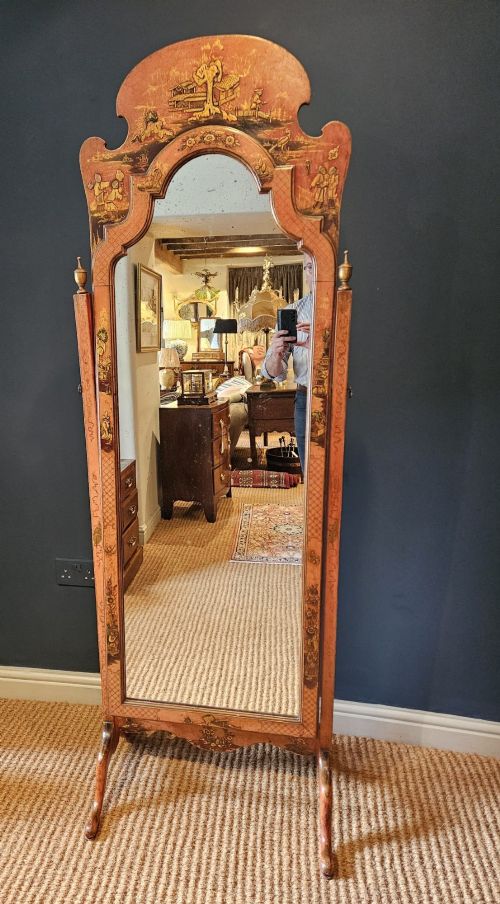
The versions most commonly met on this page date from the Georgian, Regency, and Victorian eras, alongside select examples from the early twentieth century. Mahogany remains the dominant timber across these periods, supplemented by satin birch, walnut, pitch pine, and lacquered wood.
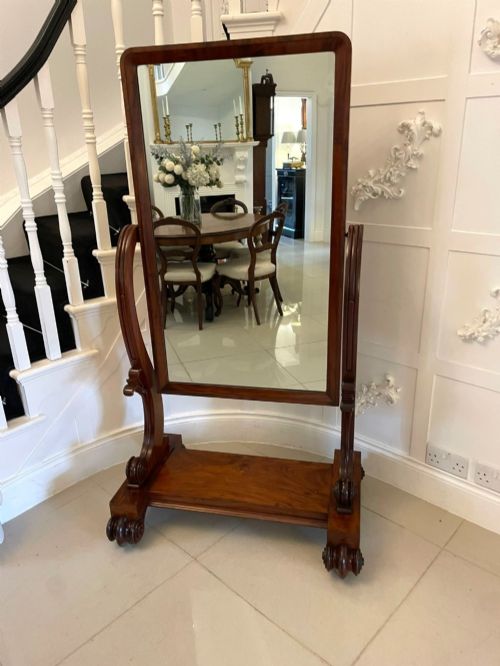
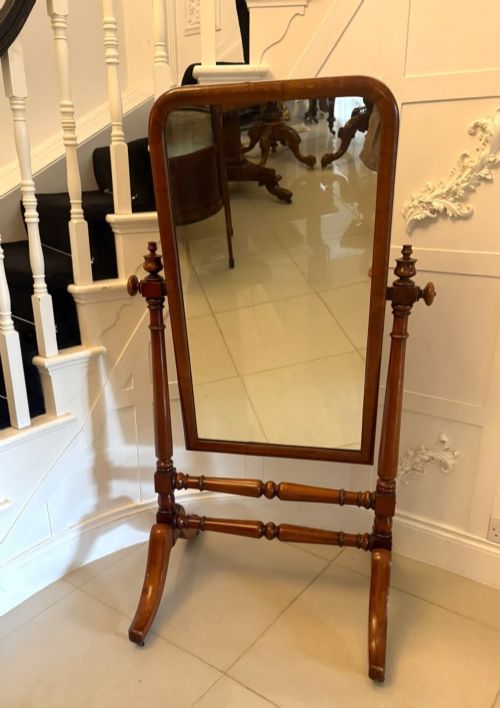
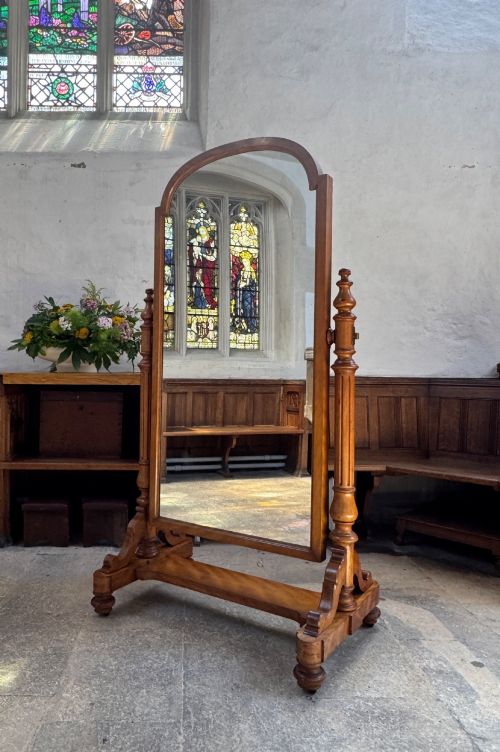
Formats vary from large country house models down to more compact dressing table iterations and elaborate Chinoiserie designs. The core structural arrangement consistently relies on upright side supports connected by a low stretcher or mounted on scrolled feet.
Materials and construction
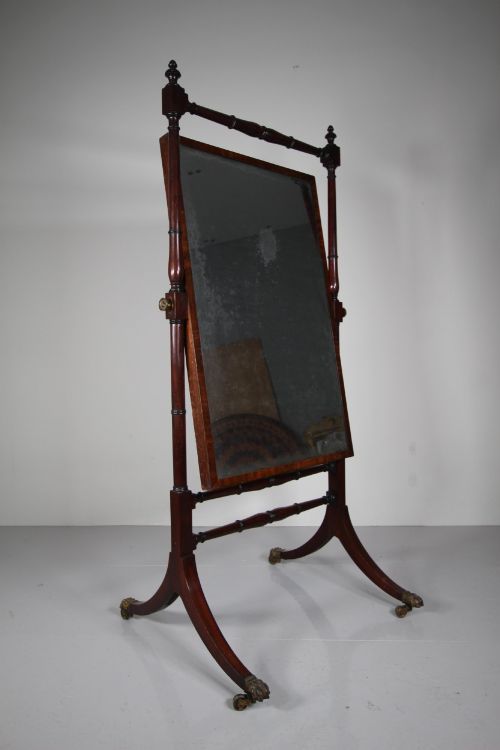
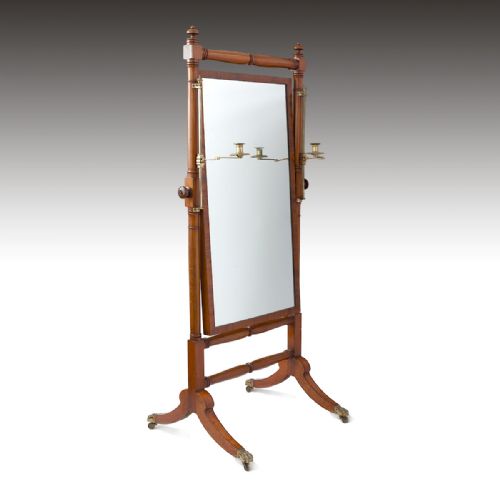
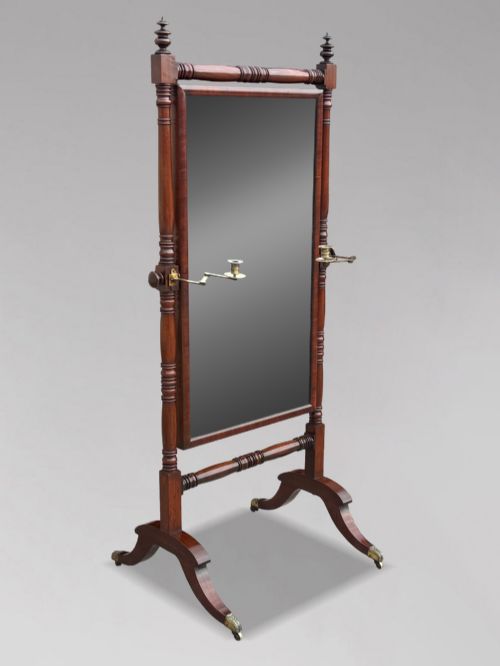
Cabinetmakers constructed the frames primarily using dense hardwoods such as mahogany, walnut, and satin birch, often applying marquetry inlay, gilt accents, or flame veneers to enhance the visual depth. Brass hardware including pivot pins, castors, and articulated candle holders provided both functional movement and structural reinforcement.
The mirror glass itself was typically silvered and held within a secondary adjustable frame suspended between two floor-standing uprights. Turned pillars, carved scroll feet, and cross-braced stretchers ensured the heavy swinging glass remained stable during daily use.
Swinging Full Length Mirror Retail Price Guide 2026
Typical asking prices for swinging full length mirror among the pieces listed under this phrase on Sellingantiques today, from the lower quarter to the upper quarter. They describe what is for sale here now, not the wider market.
Listings feature mahogany, satin birch, walnut, and pitch pine across Victorian, Regency, and Georgian periods.
Craftsmanship and distinction
Quality reveals itself in the selection of figured timbers, such as flame mahogany or well-matched satin birch, and the crispness of any inlaid marquetry or turned ornamentation. Robust framing joints and original brass pivot mechanisms indicate superior workshop execution.
Proportion and scale distinguish standard bedroom pieces from grand country house examples designed by notable makers. The weight and clarity of the glass, together with the stability of the support trestles, separate utilitarian items from fine decorative furniture.
Waring and Gillow
The Swinging Full Length Mirror Glossary
- Cheval mirror
- A freestanding full length dressing glass mounted on a swinging frame between four pillars or feet. The word derives from the French term for horse, referencing the four-legged support trestle.
- Flame mahogany
- Timber cut from the fork of the mahogany tree where the branch meets the trunk, producing a distinctive flickering flame pattern. Cabinetmakers prized this veneer for principal display surfaces.
- Marquetry inlay
- Decorative patterns formed by fitting contrasting pieces of wood veneer into a prepared surface. This technique added intricate geometric or floral detail to the frame.
- Articulated candle holder
- A pivoting metal arm attached to the mirror frame to hold lighting close to the glass. These brass fittings swung outward to illuminate the person dressing.
- Satin birch
- A pale North American hardwood featuring a lustrous, shimmering grain utilised in Victorian bedroom furniture. It provided a lighter alternative to dark mahogany.
Swinging Full Length Mirror: Frequently Asked Questions
Where should I place a swinging full length mirror?
These pieces require adequate floor space to allow the frame to stand stably without obstruction. Position them in bedrooms or dressing areas where ambient light can reflect across the room.
Ensure the floor beneath is reasonably level so the pivoted glass swings evenly without catching on the lower crossbar.
How do I adjust the tilt on the mirror?
Most frames utilise brass pivot screws or threaded tension knobs set into the upright side posts. Loosening these fittings slightly allows the glass to rotate to the desired angle before retightening.
Support the weight of the glass with one hand while adjusting the fixings to prevent sudden movement.
Can I move a heavy cheval mirror easily?
Many period examples feature original brass castors fitted beneath the feet to assist with repositioning across carpets or wooden floors. Lift the piece slightly rather than dragging it to protect both the floor and the lower joints.
For models without castors, two people should lift the frame from the main uprights rather than gripping the swinging glass.
How do I identify a Regency period mirror?
Regency pieces typically display classical restraint, featuring dark mahogany, brass stringing, and bold scroll feet or saber legs. The proportions lean toward architectural clarity with minimal carved ornamentation.
Look for robust brass mounts and pegged joinery consistent with furniture produced in the early nineteenth century.