



Swedish Satin Birch Furniture
Swedish satin birch furniture brings warm, luminous grain to chests, cabinets and seating from the nineteenth and early twentieth centuries.
Swedish Satin Birch Furniture
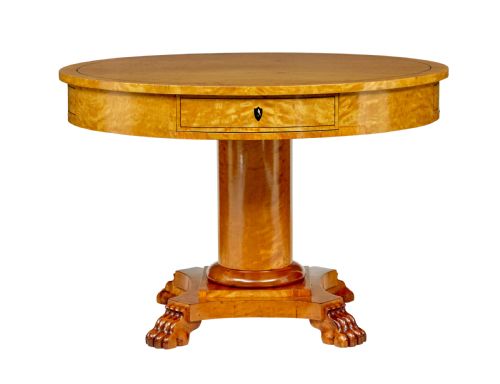
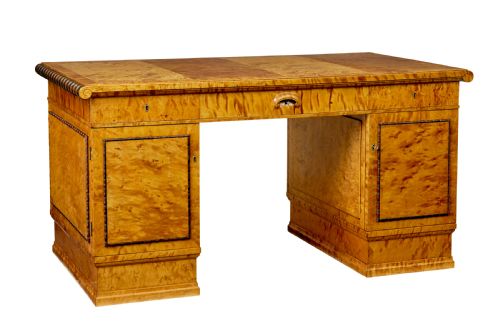
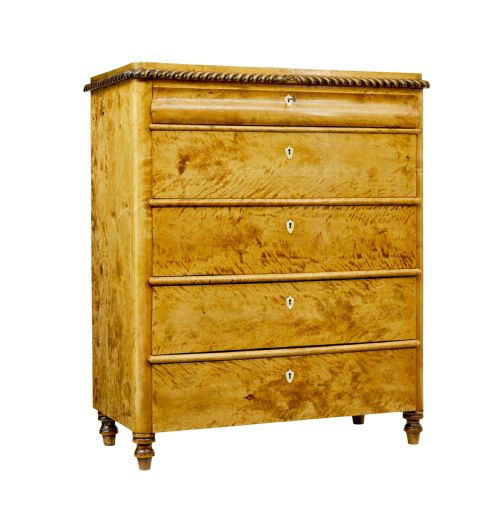
When you search for Swedish satin birch furniture, you meet pieces built across the nineteenth century and into the twentieth, spanning revival styles, Biedermeier and Art Deco. The selection here leans heavily towards nineteenth-century chests of drawers and twentieth-century cabinets, alongside armchairs, tables and desks.
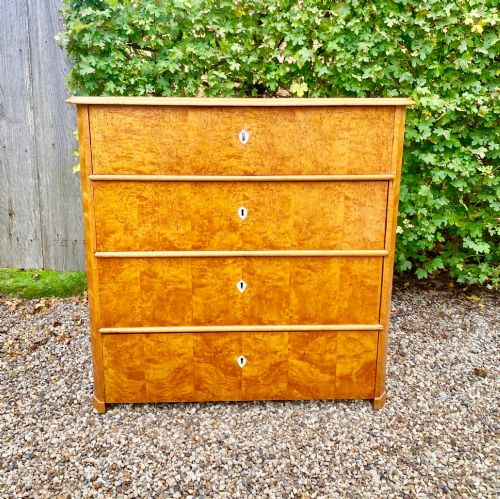
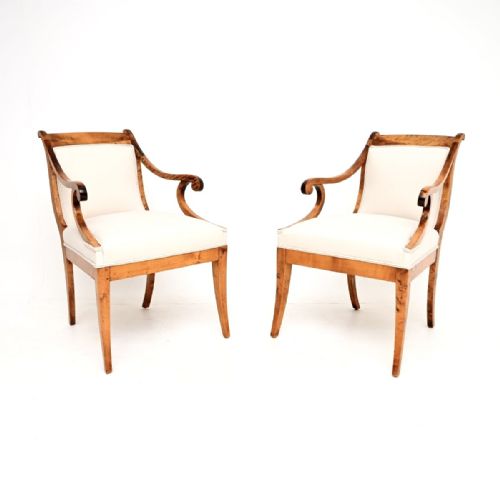
The nineteenth-century pieces include straightforward chests of drawers, secretaire chests and tea tables, often drawing on Empire Revival, Rococo Revival or Karl Johan influences. These sit alongside Biedermeier armchairs and stools that prioritise clean lines and rich wood figuring.
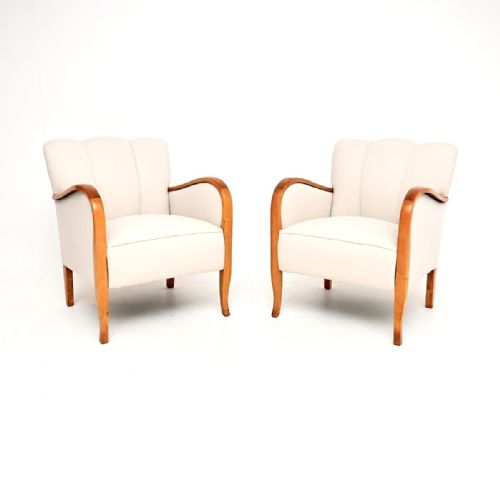
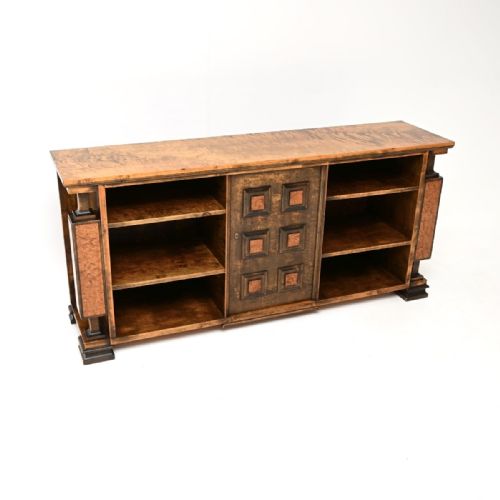
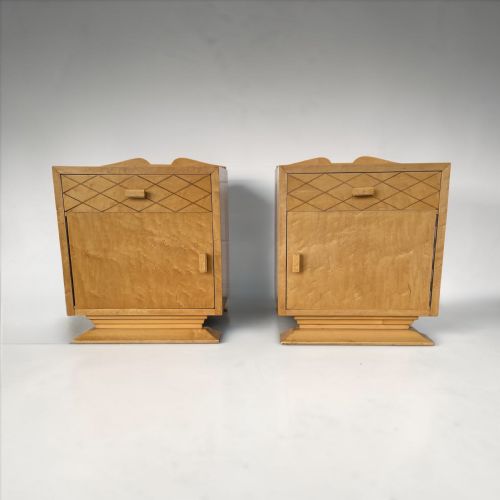
Twentieth-century examples shift towards Swedish Art Deco, Swedish Grace and Scandinavian modernism through pedestals, coffee tables, bedside cabinets and large bookcases. Cabinets and armchairs from the nineteen-thirties combine satin birch with walnut or elm for contrasting tones.
How They Were Made
Maker's hands relied on solid birch, pine for secondary woods, and carefully selected satin birch and flame birch veneers. These timbers were laid over carcases to highlight the natural golden figuring and movement of the grain.
Designers incorporated brass fittings, ebonised wood details, glass panels and marble tops to accent the pale, reflective qualities of the primary wood. Surface finishes were polished to bring out the depth of the striped and mottled grain patterns.
Listings feature nineteen-thirties Art Deco armchairs alongside mid-nineteenth-century chests of drawers in birch and satin birch.
What Varies in Quality
The distinction between ordinary and exceptional pieces rests upon the selection and matching of the veneer. Grain that flows symmetrically across a drawer front or cabinet door elevates a piece far above one with random timber placement.
Proportion and the handling of secondary materials also set examples apart. Well-executed ebonising, crisp carving on nineteenth-century frames, and the integration of marble tops or brass hardware dictate the presence and authority of the finished object.
Sandberg & Co·Otto Schulz for Boet
The Swedish Satin Birch Furniture Glossary
- Satin birch
- A term used for birch timber displaying a lustrous, shimmering grain pattern resembling satin. It is frequently sliced into veneer for cabinets and drawer fronts.
- Biedermeier
- A Central European and Scandinavian design style spanning the nineteenth century, known for utilitarian comfort and clean architectural lines that let wood grains shine.
- Flame birch veneer
- Thin sheets of birch wood cut from sections where the grain twists and curls, creating a fiery, undulating pattern. Makers prized this for statement surfaces.
- Ebonised wood
- Timber treated with stain or polish to imitate dense, dark ebony. It provides stark, dark contrast against pale satin birch.
- Secretaire chest
- A chest of drawers featuring a fitted pull-down writing drawer with small compartments and pigeonholes inside. It combines storage with a compact desk surface.
Swedish Satin Birch Furniture: Frequently Asked Questions
What periods do these pieces cover?
The pieces span the nineteenth century up through nineteen-thirty. You find nineteenth-century examples alongside early twentieth-century designs.
Revival styles and Art Deco make up the later decades while Biedermeier dominates the mid-nineteenth century.
How do I identify satin birch?
Satin birch has a pale, golden colour with a shimmering, reflective chatoyant grain. It looks silky and catches the light.
It differs from plain birch through its distinct rippled or mottled figuring that resembles satin fabric.
Are these pieces purely decorative?
They were built for practical domestic use as storage chests, desks, seating and tables. Their robust construction suits everyday modern living.
Cabinets offer shelving, chests provide deep drawers, and armchairs retain comfortable upholstered seats.
What is Swedish Grace?
Swedish Grace is an architectural and furniture design movement from the nineteen-twenties. It bridges neoclassical restraint and early modernist simplification.
Pieces from this era use streamlined forms while retaining traditional craftsmanship and fine wood veneers.